


How an Indian Immigrant Became One of the Greatest Informants in ATF History
On Ray Khan, storytelling, and the dangers of undercover work.
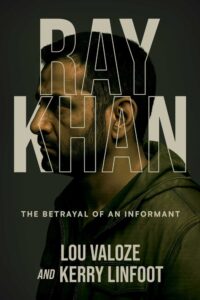
When Ray Khan was born in 1971 in Gujarat, India, no one could have predicted he would become one of the greatest informants in ATF history. Over the course of two decades, however, this unassuming businessman provided information that brought down hundreds of violent offenders and removed thousands of crime guns and thousands of pounds of narcotics from American streets. During that time, Ray infiltrated street gangs, biker clubs, and even the Italian mafia. He arranged meetings between dangerous criminals and undercover ATF agents, becoming an intrinsic part of the most successful undercover storefront operations ever. Whenever anyone hears Ray’s story, they ask the same question: how?
The answer seems simple. Undercover work requires storytelling. It requires crafting believable narratives which inspire trust and withstand scrutiny. This is true, regardless of whether you are law enforcement or, like Ray, you are working for consideration from the government. Undercover operatives work in a gray area. They buy drugs and weapons, befriend criminals, and create alternative narratives used as disguises. But just how simple is this storytelling when your life depends on it?
Long-term undercover work, such as that performed by Ray’s handler, former ATF Agent Lou Valoze, requires building an alter ego and then living it. All day, every day. If you happen to be from New York, well over six feet, and heavily muscled and tattooed, like Valoze, you outwardly wear a narrative. Tweak a few decisions in your past, and your history places you on the wrong side of the law. You become Sal Nunziato – a drug-dealing, gun-buying dealer in stolen merchandise. But what if you are Ray Khan, an Indian immigrant running a couple of gas stations who is just trying to live the American dream? As with any successful, sustainable deception, you start with what is real and blend in the lies. You weave a story into your truth.
Ray Khan is not this informant’s real name. Yet he survived hundreds of encounters with dangerous criminals by becoming Ray: a crooked businessman looking for a good deal. Like many immigrants, Ray built a network of like-minded people. In his case, specifically, his network was comprised of convenience and gas store owners. These businesses offer exposure to all segments of society. All Ray had to do, then, was approach people he suspected were criminals and entice them with enough of a deal that he drew them into the ATF’s storefronts. From there, the undercover agents took over.
This was the basis of Ray’s agreement with the U.S. government. Spend a few minutes with Ray Khan, however, and you soon realize he is anything but basic. Ray exudes a natural confidence, bordering on arrogance. Instead of making himself at home in new situations and experiences, Ray molds those contexts to fit him. He uses this self-assurance to build his businesses, but he built on it to create Ray Khan – a man who created his own narrative.
Despite warnings from Valoze, Ray befriended gang members, even taking day trips with them and visiting their homes. As he dug himself into the unlawful underworld, his exposure to more and worse criminals expanded. Representing himself as the owner of the ATF’s storefront business, Ray sought opportunities to expand that fictitious business on the wrong side of the law. He asked for firearms, driving Valoze’s narrative of buying guns cheaply in the south and selling them for higher prices in New York. Ray asked about narcotics and brought dealers to Valoze who would purchase the drugs. Ray walked into car theft rings and home invasion crews and walked out of every single one unscathed. And he loved this work.
Decades later, however, Ray Khan is still seeking a green card. The government delays their decision on his immigration status repeatedly, citing a past deportation order (which was stayed by ATF in order to use Ray as an informant), and several small criminal charges levelled against Ray during his time as an informant. Some of these charges were frivolous, fueled by professional jealousy and personal vendetta. Some, however, reflect the delicate line Ray walks between being lawful and breaking the law he has been tasked to uphold. Sometimes, when speaking with Ray, you wonder if he recognizes the grey area he has created for himself. Is he still living the Ray Khan narrative to this day?
Undercover work, whether as an informant or as an operative of the government, requires creativity. In order to be successful, an undercover needs to be able to think on their feet, to feel comfortable in the most uncomfortable of situations, and they must be able to sell their story. However, success as an undercover also requires being able to withdraw from that narrative and return to a real, truthful existence. Valoze will tell you this is the hardest part of long-term undercover work. Personally, Valoze almost lost everything. Professionally, his career ended sooner than he expected. But Valoze was able to leave Sal Nunziato behind and move forward.
Ray Kahn still answers to that name. He is successful, rich, and outwardly happy. But how much has Ray’s narrative influenced his real life? Every member of Ray’s family is a U.S. citizen, yet that green card remains tantalizingly just out of Ray’s reach. However, he still assists federal agencies in large-scale investigations. Ray will tell you he does this because he enjoys it. He misses the ATF storefront days and is holding on to that part of his life, that history he helped to write.
The question remains: at what point does that created narrative become Ray’s reality? How much of his identity springs from Ray Khan’s backstory? For better or worse, Ray Khan has become a real person.
***

Kerry Linfoot
Kerry Linfoot is a deputy sheriff and is assigned to a multi-jurisdictional investigative unit. She conducts multi-national narcotics investigations and has acted as the undercover officer for federal narcotics, firearms, and financial crimes cases. She completed her PhD in forensic linguistics at the University of Florida and, in her spare time, she teaches college-level writing classes and writes books. Originally from the United Kingdom, she currently lives in Colorado Springs, Colorado.