
Being There: Memories of Danceteria, Pmaradise Garage, and the NYC Club Scene of the 1980s
The heyday of a subculture.
Nightclubbing, we’re nightclubbing
Oh, isn’t it wild?
–“Nightclubbing” by David Bowie and Iggy Pop
In the summer of 1981 I moved back to New York City after spending three years in Baltimore. Mom moved me and baby bro there from our Harlem home in 1978, a few years before drugs and crime ruined Charm City. As much as I enjoyed attending Northwestern High and my new friends, I looked forward to graduating and returning to my old neighborhood where my grandmother still lived.
That September, I began attending college in Brooklyn at Long Island University’s campus on Flatbush Avenue. Already knowing that I wanted to be a journalist, I joined the school newspaper Seawanhaka, where I began writing record and movie reviews. Downstairs from our office was the radio station as well as the yearbook headquarters where my future friend Paul Price worked alongside a Phillip K. Dick loving West Indian woman named Karen. One afternoon I wandered in by accident and it soon became another campus hangout.
Paul, who was tall as a basketball player and looked like a young John Coltrane, was a laidback guy from the Bronx with a wonderful sense of humor. There was always a bottle of Bacardi under his desk and cans of Coke in the fridge. Eventually I discovered that Paul was socially a “club kid” years before the term was coined, and we soon began hanging-out. Having read about the joys of Studio 54 since I was younger, I couldn’t wait to start clubbing.
Shopping at vintage shops back when those stores were still inexpensive, it was easy to be cheap and chic. Often I dressed as if I’d just stepped out of Esquire, with my wardrobe consisting of vintage overcoats and suit jackets, black or white collared shirts, black or gray slacks, cool ties and polished wingtips. Since the drinking age was still 18, we had free rein to party whenever we wanted.
Our first hang-out was in the winter of 1982 when, after attending a Buster Poindexter (aka David Johansen, formerly of the New York Dolls) concert at Pace University, we took a cab to the Underground on East 16th Street and Broadway. Though allowed to enter, a half-hour later we were falsely accused us of selling drugs and the muscled security kicked us out. We told the brutes that they were mistaken, but the thick neck creeps were mean and aggressive. “Nobody hires bouncers for their brains,” a club bartender told me later.
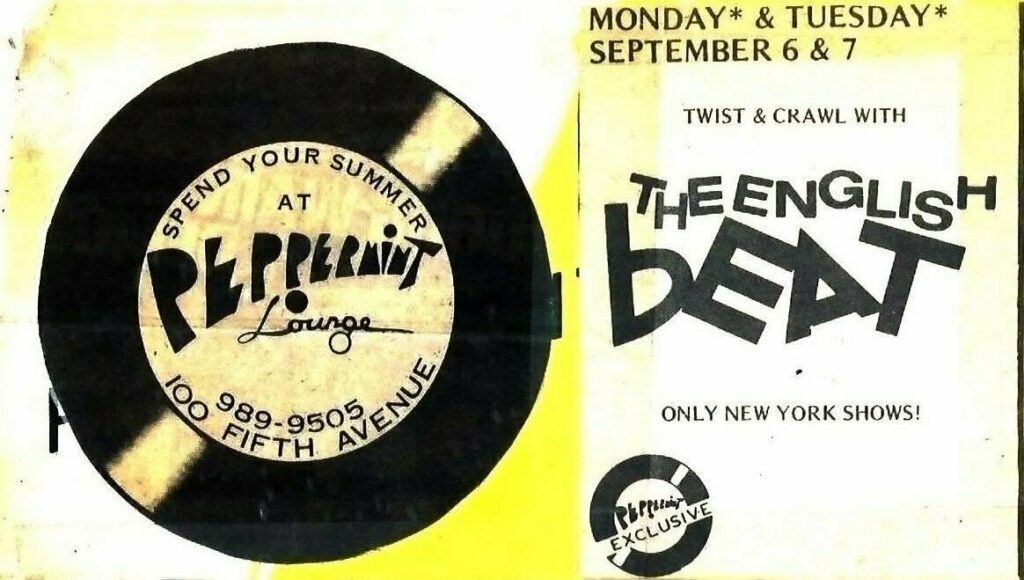
That was my first experience of racism in NYC clubland, but it wouldn’t be the last. However, that same night Paul and I walked a few blocks to the newly relocated Peppermint Lounge on 5th Avenue where we danced the night away to the sounds of Culture Club, Duran Duran and other Brit sensations. Though I wasn’t no Gene Anthony Ray, the girls I danced with didn’t seem to mind.
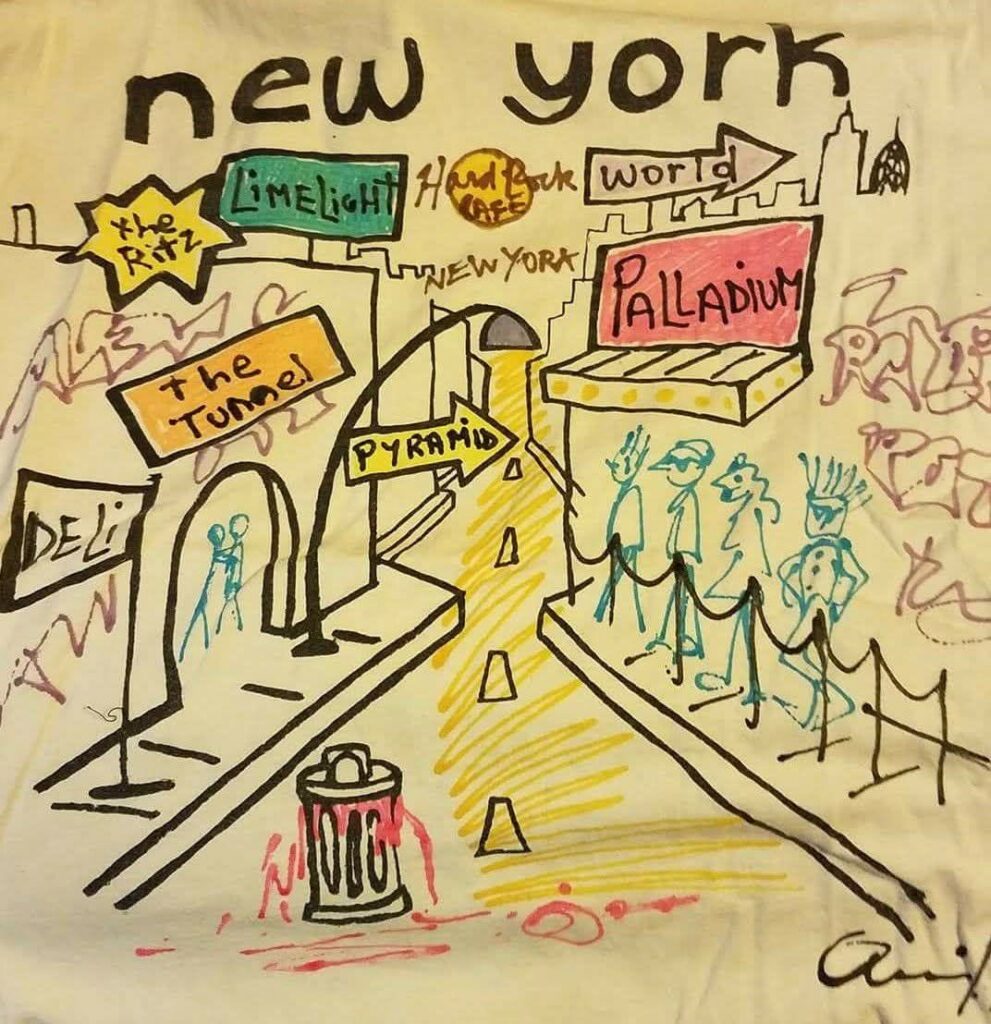
After that night Paul and I rolled together often, sometimes in the company of my other best friend (and future crime novelist) Jerry Rodriguez. Paul often had passes that were mailed out by various promoters. One evening we might be at the Black discos Bentley’s or Silver Shadow, where we once spotted Eddie Murphy clad in a purple leather jumpsuit, while days later we’d be digging the scene with punks, post-punks, new wavers and Goths at the Pyramid Club or Danceteria.
The first time I stepped inside Danceteria was New Years Eve, 1982, and a grown man wearing a diaper was dancing on the bar with a yellow boa constrictor wrapped around his neck. There were several floors and each one was a separate adventure. Afterwards I started going there every few days on my own just to chill. I liked simply observing the crowd, which was a delightful mixture of styles and fashions, but without a lot of pretense. In addition, like the Peppermint Lounge, I never had to endure any racism getting in; doorman Haoui Montaug never gave me or my friends any problems.
Danceteria was also the only club I would go to by myself, as I enjoyed simply being there. Really, it became my second home. Months later, when I interviewed the club’s chic German owner Rudolf Piper for a music magazine Black Beat, he told me, “As long as a person looks good, they can come in.” My homey Jerry came with me to snap pictures, taking an image of Rudolf and his stunning It Girl wife Diane Brill. When our interview was done Rudolf presented me with a VIP card that would get me and a guest into the club forever.
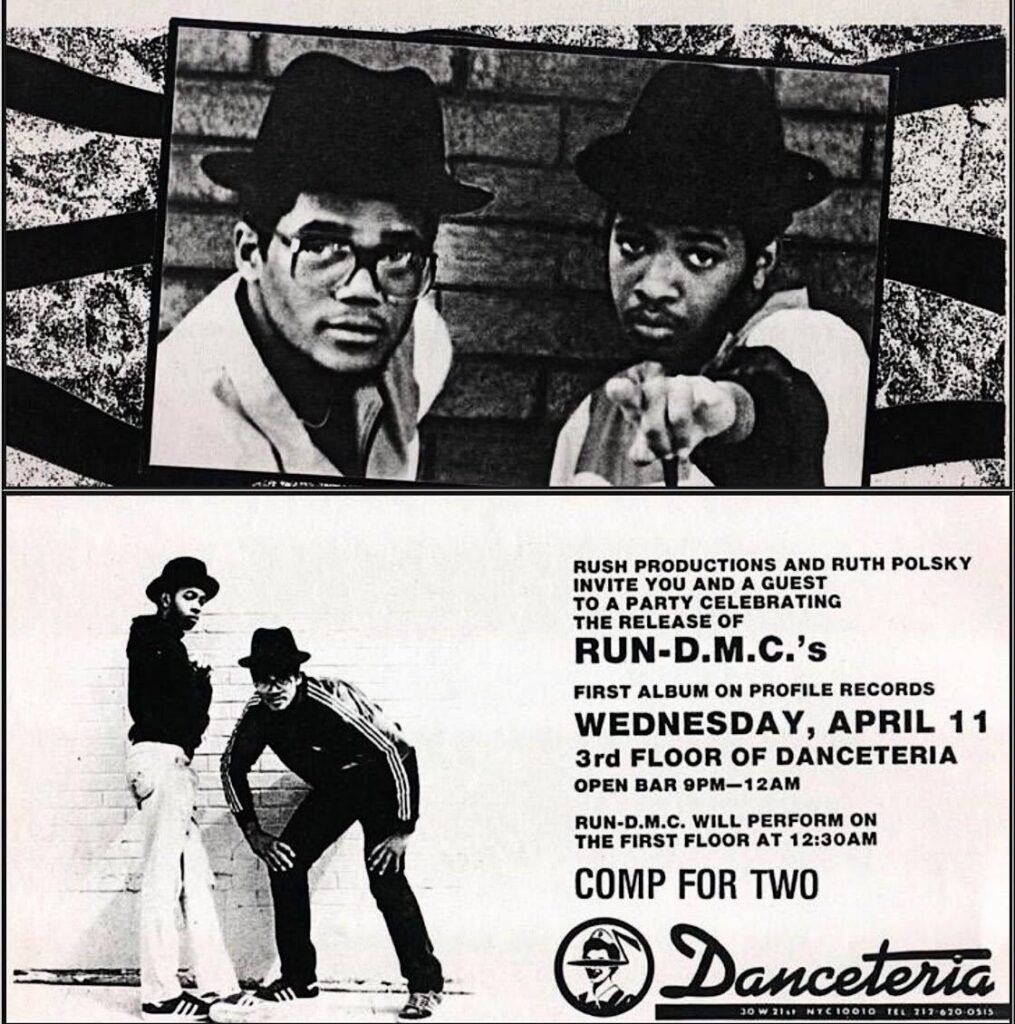
Danceteria would soon be known as an early performance space for Run-DMC, Madonna and Kid Creole and the Coconuts as well as one of the few downtown clubs to play rap music. While other downtown DJs played the sameo sameo, DJ Mark Kamins had no problem switching up the sounds. Although I lived within walking distance of hip-hop clubs Broadway International and The Rooftop, I wasn’t into hanging at either spot, preferring to exit the hood on my iron horse (aka the #1 subway) and ride downtown.
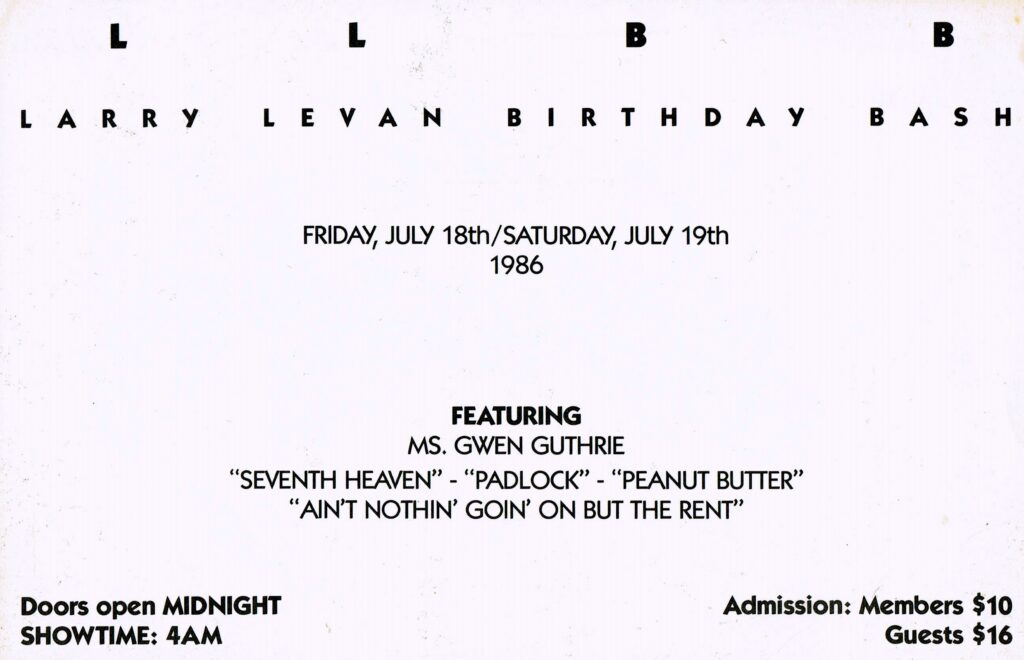
One afternoon Paul called me at home. “I got it, man,” he screamed. “I got a membership to the Paradise Garage!” A few seconds passed before I finally asked, “What the hell is the Paradise Garage?” Days later we were inside the massive SoHo space where DJ Larry Lavan was the star and his relentless beats were the rhythm of the night into the early morning. The mostly women band ESG performed their funky single “Moody.” Levan was the first club DJ I knew by name and was known as the best in the city in the 1980s.
Though the Garage didn’t serve liquor, there were always rumors that the juice and/or water was spiked with mescaline. Attending a few more nights, including one thrilling New Years Eve jam as 1984 melted into ‘85, I saw performances from Grace Jones and a young Whitney Houston, still a year away from releasing her debut. Visionary cultural critic writer Greg Tate, once declared, “Folks lie about going to the Garage the way people once lied about marching with Martin Luther King.”
The club closed in September, 1987, and almost 40-years later, folks are still talking about it. “The last night of the Paradise Garage, was a bittersweet affair,” journalist Frank Owen reflected in the November, 1993 Vibe magazine. “People traveled from all over the world to attend the closing weekend. Under the spell of Levan’s narcotic mix, people seemed to transcend human limits. Men crawled about on their hands and knees howling like dogs, while others gyrated and leaped as if they could fly.” After a 24-hour marathon, an exhausted crowd gathered in front of Levan’s DJ booth and pleaded, ‘Larry, please don’t go.’”
Another club we frequented was Madame Rosa’s, where former Danceteria employee Karen Binns was the doorperson. A full-figured light-skinned beauty, I had a serious crush on her that lasted for years. The last time I saw her she was wearing an animal print coat in the Nenah Cherry video for her remake of Trouble Man. While hanging with our friend Willie, we (me, Jerry and Paul) almost got into a fight with a crew of drunken Italians, who got mad that we were dancing with their dates. “We’re just dancing with them, we’re not fucking them,” Willie screamed. Thankfully two bouncers intervened before a brawl broke out happened.
Me and Paul’s hangin’ with the homeboy’s routine went on until I got a night shift job in 1986, working midnight to 8 AM at a homeless shelter in Brooklyn which was the same year I started dating Initia Durley, an arty actress from Detroit. A nightlife kind of soul sister, she liked bars, restaurants and clubs equally, and we spent much time in various downtown spots on my nights off. In addition, I also had a side gig at Cover, a downtown arts paper where I wrote music features and reviews.
Initia’s sister Chane was the real queen of the downtown scene. Working as a restaurant hostess, club doorperson, photographer assistant and various other cool gigs, she seemed to know everyone mentioned in the gossip columns of Michael Musto and Stephen Saban. In 1987 she met her future husband Frank Owen, a British music journalist at Melody Maker. Writing mostly about hip-hop, house and techno, he was in the states as much as he was in England.
Eventually Frank moved to America, married Chene at City Hall and took a series of gigs that included freelancing for Spin and The Village Voice while also doing promotions at dance/rap label Sleeping Bag Records, which was co-owned by Arthur Russell. That year Frank also teamed up with his friend Patrick Moxey and began promoting Sunday night hip-hop parties called Brutal at The World on 2nd Street between B and C.
The Lower East Side neighborhood where The World was located looked like something out of a post-apocalyptic movie. Giant rats roamed the streets, drug dealers stood on stoops, heroin junkies nodded on the corners, muggers chilled in the shadows and the latest dope fiends, jittery creatures of the night known as “crackheads,” were everywhere trying to scrap-up change for their next blast. Living in the beat down tenements on the block were a mixture of artists, squatters and regular poor folks of all colors just trying to get through the day and live through the night.
The World, described as a “crumbling former wedding hall” and an “impeccably depraved playground” by Interview magazine, was the place to be. Opening in the early 1980s, The World was first a hang-out for rock stars, writers, fashion folks and local party people. Zoe Lund, the star of Abel Ferrara’s classic Ms. 45 as well as the co-writer of Bad Lieutenant, was there often as was designer Stephen Sprouse and singer Debbie Harry. My homegirl Beverly remembers seeing disco queen Sylvester perform one night. For a late blooming b-boy such as myself, on Brutal nights The World opened their doors to whoever wanted to come inside and experience boom box anthems. Though originally Brutal was held on Sundays, there were also various special events and parties on different nights.
The first Sunday night a disorganized crowd of b-boys sporting gold chains, boy-girls squeezed into tight jeans and some Bowie looking folks who’d obviously come on the wrong night, but stayed anyway. That particular night, the already famous Afrika Bambaataa was blaring the latest street beats on New York City labels Cold Chillin’, Sleeping Bag, Warlock and Def Jam. Bambaataa, the aural auteur behind the electro-hip-hop smashes “Planet Rock” and “Soul Sonic Force,” was known for having diverse tastes and a massive vinyl collection; the brother wasn’t beyond mixing some Henry Mancini or cartoon themes into the grooves. “Party over here!” somebody screamed as Initia and I pushed our way through the crowd.
There was nothing fancy about the World. It reminded me of Norma Desmond’s dilapidated mansion. On the main floor was some weird lounge area where people sat on old furniture and chatted, but upstairs there was the main ballroom and a bar where the drinks were cheap. It was the era when cigarettes were still a necessary accessory, but people also smoked weed, woolies (a mixture of weed and coke) and crack openly.
An hour or so later there was an announcement that rapper Big Daddy Kane was “in the house.” Kane’s hard as concrete single “Raw,” produced by Marley Marl complete with its James Brown sample and kick-ass drums, was one of my favorite songs that year. Deciding to do an improv performance, Bambaataa spun the “Raw” instrumental as Kane jumped up on a stage that had a big hole in the center. As they say, “hip-hop don’t stop,” and neither did Kane as his volcanic voice erupted through the speakers of the ancient venue as he did his best not to fall in.
“Our idea was to mix acid house and hip hop,” Frank Owen told writer Michaelangelo Matos in 2013, “but we stopped that after the first time some homeboy stuck a gun in the DJ’s face and told him if he played that (acid house) crap again he’d shoot him.” Owen, who years later wrote the celebrated book Clubland, also told Matos, “That’s where I met everybody who would subsequently be in Clubland: Steve Lewis, Michael Alig, Lady Bunny, Kenny Kenny. At the door I would let anybody in. I had trouble back then turning people away.”
Though I had a great time at The World, the place was a firetrap with unstable dance floors that quaked and a downstairs chandelier that looked as though it might crash to the floor at any minute, which made me paranoid. After going every weekend for a month, I simply stopped. Unlike other clubs I went to during that era, there was also a sense that something dangerous was about to happen, which Owen learned a few months after Brutal began.
“The whole thing ended six months later,” Frank told Matos We threw a big party for Afrika Bambaataa and the Zulu Nation. It ended up in a huge fucking riot. People were going up and down the street, shooting each other. We basically all got fired because of that. It was a disaster. That was my brief career as a club promoter.” The World kept their other parties going, at least until March, 1989 when it was cited for serving drinks to minors and became a “focal point of police activity.”
Club owner Paul Garcia and his investors reportedly did what they could to save The World, but it was a losing battle. They closed the popular spot in April, 1990. However, a few months later, The World was being managed (though some sources claim he was a co-owner) by Steven Venizelos, a Staten Island resident who had been in the carting business in Queens for 15 years. Venizelos was described as, “[a] corpulent man with a penchant for gold jewelry.” He bragged to the bouncers and bartenders that he had connections with city government officials who would expedite the much needed liquor license.
In the meantime he held private parties there and even tried reopening the club as a juice bar for minors, but was still closed down by the police three times. In the summer of 1991 Venizelos, who turned 37 that year, was still opening The World sporadically while also leasing space to a film production company making a feature called Chain of Desire. There were scenes shot there and equipment was also stored on the balcony, where Venizelos’ office was located. On June 27th, 1991, Venizelos was at the club, but left at 7pm with four friends to have dinner. That was the last time he was seen alive.
A few minutes after midnight the Chain of Desire locations manager walked up to the balcony and discovered Venizelos bullet riddled body in a pool of blood. According to New York Times journalist James C. McKinly Jr, he was shot three times at close range: twice in the face and once in the torso. There was no wallet or cash, but his gold chains were left behind. Reading that story on the morning of the 29th I felt a great sadness for a man I’d never met, though, at 28-years-old, I hadn’t been inside The World or any other spot for awhile. While I wasn’t ancient, I didn’t want to be the old guy at the club.
Decades later, with Jerry having died in 2008, Paul retiring to Florida and me taking care of my elderly mother in Baltimore, I still clearly remember the decade that was the 1980s when I was young and free and partyin’ like a wild man throughout the city with friends, lovers and a building full of intimate strangers.
Michael Gonzales
Harlem native Michael A. Gonzales is a cultural critic, short story scribe and essayist who has written for The Paris Review, The Village Voice, Wax Poetics, The Wire UK, Maggot Brain and Pitchfork. His fiction has appeared in Under the Thumb: Stories of Police Oppression edited by S.A. Cosby, Taint Taint Taint, Dead-End Jobs: A Hit Man Anthology edited by Andrew J. Rausch, Black Pulp edited by Gary Phillips and The Root. Upcoming stories will appear in The Book of Extraordinary Femme Fatale Stories edited by Maxim Jakubowski, Get Up Offa That Thing: Crime Fiction Inspired by James Brown edited by Gary Phillips, Killens Review of Arts & Letters and Obsidian Literature & Arts in the African Diaspora.