Encyclopedia Brown and the
Ethics of Amateur Sleuthing
What do fantasies of kid detectives using unorthodox methods to track down wrongdoers mean in an era of mass misinformation and institutional distrust?
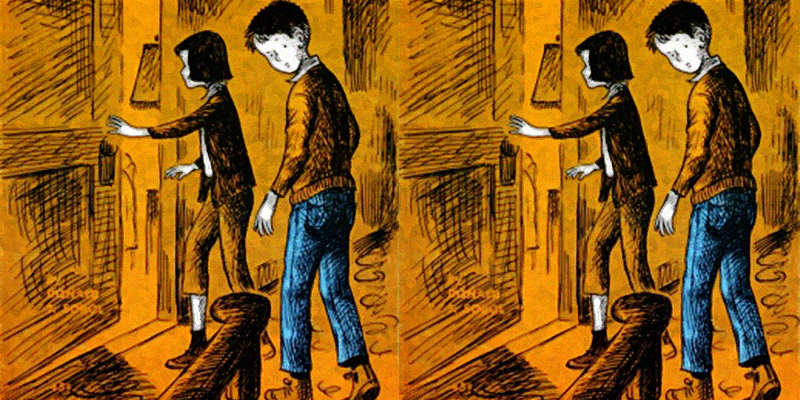
I, like virtually every other younger small-town American millennial I know, grew up reading a series called Encyclopedia Brown. You must know the one: A tweenage resident of an unspecified state catches criminals left and right whom the town’s police chief — whose ineptitude strains believability at times — hasn’t been able to crack. It’s not just him, though: Encyclopedia takes you, similarly tweenaged, along for the ride. You pore over the clues alongside him, you read and reread, and you eventually flip to the back of the book, where the answer to the puzzle awaits.
I’d never loved books about real detectives, and I wasn’t even a particularly good puzzle-solver, but I still inhaled the adventures of Encyclopedia Brown. I begged my parents to read me chapters every day. When I was old enough, I bought the books for myself. I remember the sense of pride that flooded me if my answer ended up matching Encyclopedia’s. We, the kids, had cracked the case.
That hankering for the young sleuth, from what I can see, has only grown. Some of the hallmark books of the current YA generation feature teenagers taking cases into their own hands that adult authorities have gotten wrong or prematurely closed. A Good Girl’s Guide to Murder. A Long Stretch of Bad Days. Missing Clarissa. Truly Devious. And so on. What is it about the scrappy teenage detective that is sweeping today’s young readers away? Whenever I read yet another thinkpiece about the dubious ethics of true crime or overhear a discussion of the genre’s latest podcast at a bar, I often find myself drifting back to Encyclopedia Brown, the packaged and participatory way with which it presented vigilante justice, and pondering what it was about the series that captivated me so. I’ve come to believe that the answer is twofold—partially timeless and partially a product of our time.
The teenage years often bring increased awareness (of ethics and morality, of global affairs, of the goings-on in one’s own community) and a heightened sense of responsibility (for one’s own future, for the wellbeing of others, for the state of the world) without a corresponding rise in agency or institutional power. I remember feeling as if I were watching my life on a monitor during that time, watching things go by, various adults throwing me this way and that, as I helplessly hurtled toward adulthood. The promise of the teen detective tale is an escape from this frustrating state. Such stories reverse the power dynamics that watermark many teenagers’ lives, enabling a fantasy in which teenagers could take back control and patch the holes they see adults as having left open.
But such an escape has evident appeal for older readers as well. We live in a time of unusually weak trust in America’s institutions. Gallup found this summer that Americans’ confidence in entities such as the presidency, the military, and the medical system has trended sharply downward over the past several decades. Confidence in the nation’s justice and political systems, in particular, is at a historic low.
Encyclopedia Brown is no longer a wizard with gifts we readers can only dream of obtaining; he’s someone anyone with the right time and technology could become.
At the same time, today’s internet offers the public more tools than they’ve ever had before to take judicial matters into their own hands. Some of streaming’s biggest hits involve armies of online vigilantes digging culpability from the depths of the internet. A journalist’s reopening of a 15-year-old Baltimore tragedy has spawned one of today’s most booming podcast genres. Encyclopedia Brown is no longer a wizard with gifts we readers can only dream of obtaining; he’s someone anyone with the right time and technology could become. We increasingly distrust the people officially empowered to find the truth just as we’re acquiring the tools that could help us do so ourselves.
I’m of two minds when it comes to this revelation. I think everyone benefits when a populous is informed. The past several years have been littered with occasions on which U.S. institutions have brazenly failed to live up to their mandates, and determined communities have stepped up to care for each other in their absence. On the other hand, Encyclopedia Brown is fictional. So, too, despite the delightful sincerity with which they are written, are his lighthearted stories. He solves the mystery, and all is well once again. The final sense a reader takes away from many of today’s popular wunderkid sleuth narratives is one of victory and relief; the culprit has been exposed, the innocent exonerated. Less often does resolution center on the path the heroes took to get there — one that often involves behaviors that would be alarming in real life, from lies and deception to trespassing, invasions of privacy, and the exposure of deeply personal information.
Guide to Murder’s Pip Fitz-Amobi breaks into homes, hacks Facebook accounts, and tracks her suspect’s location. Stevie Bell of Devious sneaks into multiple private spaces and eavesdrops on investigative proceedings. The protagonists of The Agathas drug a suspect and rifle through his financial and family-related documents. All, of course, end up uncovering the truth and emerging victorious — overshadowing, if not erasing, any ethical question of ends, means, and what their suspects were owed. The triumphant conclusions of today’s teenage sleuth narratives don’t just reward crafty amateur detectives; they can retroactively moralize their methods.
Here lies the central tension of the teenage sleuth, perhaps adjacent to the broader perennial debate about true crime as entertainment. When those in power have lost our trust, should literature celebrate amateur sleuthing – a package that pairs noble minds and a laudable refusal to accept the flaws of the status quo with natural and inevitable imprecision?
Again, I’m of two minds. Fiction is fiction, entertainment, not doctrine, and art is not obligated to draw the same harsh lines between right and wrong as legal systems must. I’ve seen no evidence that the current popularity of YA sleuth narratives has led to any real-life rise in teenagers breaking into houses. On the other hand, stories written for young people have a unique power and a unique opportunity to take their readers seriously — to acknowledge their frustration with the systems adults have created and their desire to escape their stifling reality — and paint a diverse canon of actions such readers might take when they, too, can finally act.
There is room for all sorts of books, with all sorts of endings and themes and moral systems, on the young adult shelf. Missing Clarissa interrogates its own fantasy, examining the fallout after teenage podcasters publicize their suspicions of a potentially innocent man. Promise Boys puts three wrongfully accused murder suspects behind the sleuthing wheel, imagining young people not only escaping broken systems but actively contesting them. Such imaginings need not end with a teenager proving adults wrong. They can also ask and explore what comes next: how the desire to escape a broken reality might eventually fuel the ability to create a better one.
***


Monica Chin
Monica Chin is a journalist, editor, and writing instructor whose work has appeared in publications including The Verge, Business Insider, Tom’s Guide, and Mashable. Monica is a graduate of Brown University’s Literary Arts program. Monica's debut novel, Don't Print This, is now available from Page Street YA.