
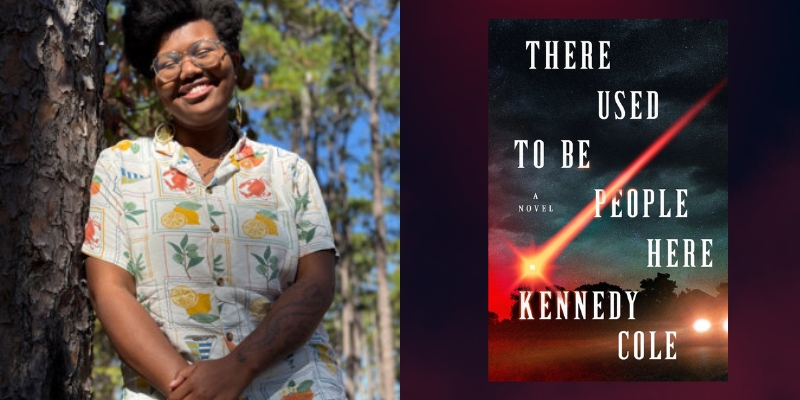
Kennedy Cole on writing about race through invasion horror and parasitism
The author of There Used to Be People Here explores racism, homophobia, and more in her debut
This essay will break down the themes of racism, homophobia, and existing as other that I touch on in There Used to Be People Here. I’ll expand on my thought process behind Samuel’s dilemma with the taur, and explore some of the complex moments that happen in the book (as much I can without spoilers). Imposter syndrome and belonging are two of Samuel’s biggest struggles; I plan to touch on that in aspects of my own life, and as an issue Black people deal with as a whole.
Foreign occupation of the body has always been a particularly terrifying horror element to me. The idea of losing control of not just our mind, but our being—autonomy, duality, and person—sounds so far out there that to some, it might be too impossible to fear.
Of course, it is an impossibility, in some ways. Very rarely, if ever, does one quite literally lose control of themselves to an outside source. In some ways, though, the idea is very real.
Take imposter syndrome, for example, the intrusive thought that you as an individual don’t belong in a room you’ve been—presumably—welcomed into. It happens to all of us, doesn’t it? We question our ability to be, wonder whether or not we truly belong in a space we, more often than not, do.
We allow, then, ourselves to change. We lose ourselves to paranoia. We become invisible in a space that originally valued us because of our unique ability to shine.
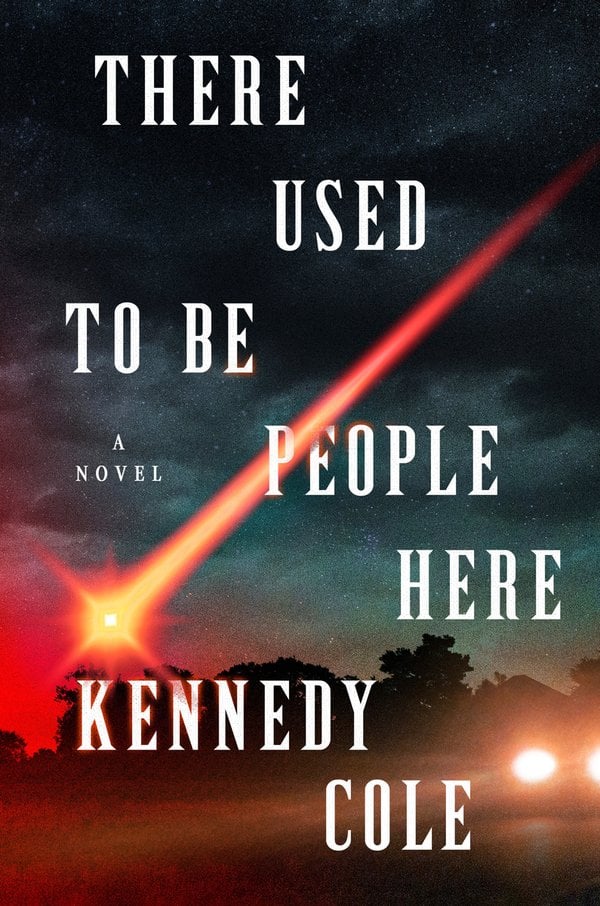
In my debut, There Used to Be People Here, Samuel Barkley is the only Black detective in a small police department in Mississippi, 1978. He works alone by choice, but also by default. He consistently questions his own worth, mostly as a result of the constant stares and pressured environment created by the officers around him, but also as a result of his own deeply buried trauma. Things shift when he’s introduced to a new case—a strange murder that starts in a gay bar—and an odd new partner who he has uncertain feelings about, Harvey Wilkins.
And of course Samuel wonders, do I deserve this?
As a Black woman, I’ve often asked this question myself whenever I find I’ve been given new, and most often exciting, opportunities. I attended a predominantly white K-12 school from Kindergarten until graduation, so trust me when I say I’ve had my fair share of stares and pressure and deeply buried trauma.
I’ve also had privilege: the privilege to learn at a private institution, to explore creative writing in a passionate environment, to research subjects I love and be encouraged to grow. At every turn, though, I found myself questioning my (what I now know is natural) ability to do so.
I found myself questioning my Blackness, because many other people around me—both Black and white—were doing the same. Was I truly talented, or was it a case of borrowed opportunity? Were my dreams tangible, or faraway wonders? Could I truly achieve all that I set my mind to, or was I just the only Black girl pretending to be white?
The taur—the worm-like, parasitic hive-mind antagonizing Wenton, Mississippi in my debut—propose this question in the most fitting way possible: by occupying the body. They feed on Samuel’s twisted desire to be invisible by creating an environment where this is true. To Samuel, the taur’s true motivations are murky, but their plans are clear: to make everyone, everywhere the same.
The idea of sameness can be beguiling to those of us who face discrimination because of our innate, unchangeable qualities. Samuel’s position as a detective in the Wenton Police Department is earned, and yet his role as the only Black man in the room pushes him to call his sense of self into question, much like I did as the only Black girl in my grade for thirteen years. It’s easy to wish ourselves away, to wonder whether homogeneity would erase the questions and stares altogether and allow our inner selves to shine.
And though in theory it would, our innate, unchangeable qualities are lost as a result. Our Blackness—which, even in a room full of people who are not, does matter—becomes invisible. We forfeit our bodies. We allow the parasite within us to win.
Throughout the story, Samuel’s autonomy does become forfeit, not because of a parasitic entity infecting him, but because of his own fear of existing as other. His queerness, which he discovers through his unique partnership with Harvey, is something he attempts to fold away for later. Over time, Samuel’s work as a detective shifts from a childhood dream to a tool determining his self worth. Working his way up through the ranks is his only true talent. And to Samuel, his Blackness is only an obstacle.
When I first began writing There Used to Be People Here, my identity had yet to be fully determined. In many ways, it still is wholly undiscovered. I’m a twenty-three year old woman publishing my very first book, preparing to be married to the love of my life in just under a year, and still looking for a job in my field long after graduating with a bachelor’s degree. I’m living this life for the first time, taking it one day at a time just like everyone else.
My sense of self, though, is much stronger than it was when I started my debut. I can think of no better reason for this than Samuel.
I parallel my novel’s main character in more ways than one. What frightens him frightens me. As Samuel works through his fear of unifomity—and the temptation to try it for himself—I was finding my voice as a queer Black writer.
To be blunt, writing about my race has been difficult for me. Up until this point, I’d never centered any of my stories around a Black main character, let alone a Black man. I wouldn’t realize it until I was well into drafting, but writing There Used to Be People Here challenged everything I’d learned about what it means to be a writer. My own work forced me to face the pattern I’d perpetuated, and in the context of the story, forced Samuel to look inward and face himself.
Now, I can look back and map Samuel’s journey alongside my own. Our Blackness—our innate, unchangeable worth—destines us to be othered. So, we shine not in spite of it, but because of it. We choose diversity, not because we welcome discrimination, but because our differences are a direct reflection of our autonomy. We reject the parasite and embrace each other, because our worth is determined by the depth of our love.
Imposter syndrome has nothing on that.
***
Kennedy Cole
Kennedy Cole is a speculative author with a BFA in Creative Writing and a Certificate in Publishing. Born in North Carolina, she lives by the beach with her partner and enjoys playing games, puzzling, sipping matcha, and collecting tattoos. Her creative portfolio includes an array of published fiction, poetry, and nonfiction with Oakland Arts Review, Carolina Muse, Second Story Journal, and others. There Used to Be People Here is her first novel.