How the Manson Murders and Dominique Dunne Case Transformed LA True Crime
Naomi Kaye Honova explores the legacy of two defining Californian mysteries
“Many people I know in Los Angeles believe that the Sixties ended abruptly on August 9, 1969, at the exact moment when word of the murders on Cielo Drive traveled like brushfire through the community, and in a sense this is true. The tension broke that day. The paranoia was fulfilled.”
–Joan Didion, The White Album
“I didn’t know that the last words I would ever say to my sister would be ‘Dominique, I’m so sorry, can I call you tomorrow? I’m running late for a movie.’ I meant to call the next day but didn’t, nor did I the day after that, which was October 30, the date Sweeney showed up at Rangely Avenue, holding a bag of Halloween cookies he’d just baked. Ten minutes later, his hands were around her throat.”
–Griffin Dunne, The Friday Afternoon Club
*
For native Los Angelenos, or simply those who find the metropolis fascinating, two major true crimes of the twentieth century continue to compel and horrify years later. These two incidents are the Manson murders of the 1960s, and the murder of Dominique Dunne in the early 80s. Many older locals have vivid memories of both occurrences, recalling what they were doing when they heard the news of the brutal crimes.
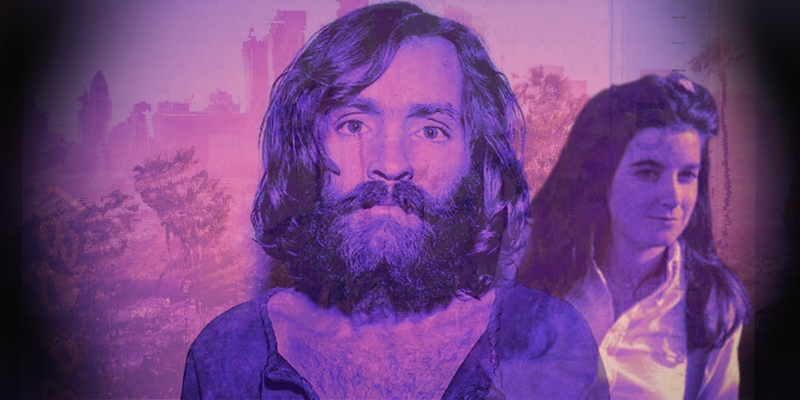
The Manson murders occurred in August 1969, when members of the Manson Family cult drove to the home of actress Sharon Tate and actor/filmmaker Roman Polanski and brutally murdered the pregnant Tate and several other people who were there at the time. Dominique Dunne, an up-and-coming actress who had just had a very successful role in Poltergeist, was brutally strangled by her former partner in 1982 and passed away several days later after being taken off life support.
In many ways, the crimes feel significantly and specifically linked to Los Angeles: they involve celebrities, as well as people’s obsessions and fascination with celebrity culture and gossip, which is indelibly connected to the Hollywood community and the greater Los Angeles metropolis.
Los Angeles has also had its share of cults throughout the past sixty years or so, from Heaven’s Gate to the more contemporary NXIVM, giving the Manson cult connection another regional angle. (One could even argue that various Hollywood trends popular in the metropolitan area over the years have had some cult-like aspects to them, from diet gurus to exercise fads.)
Less specifically locale-bound, other human-interest reasons that have made these infamous crimes so noteworthy is that they were “close to home” acts: the Manson murders took place inside a private home and were carried out by outsiders, which evokes the longstanding human fear of home invasion. Dominique Dunne’s murder was carried out by a former partner.
While many films and documentaries have been made about both crimes, both fiction (such as Once Upon a Time in Hollywood) and factual, both the Manson murders and Dunne’s murder have also played a role in the literary realm. The vast majority of books about both topics have been nonfiction, such as memoirs and detailed accounts of the murders and their aftermath and associated trials.
Some of the more well-known nonfiction books about the Manson murders include Chaos by Tom O’Neill, Manson In His Own Words by Nuel Emmons, Helter Skelter by Vincent Bugliosi, and Member of the Family by Dianne Lake (the youngest member of the Manson Family).
Two of Dominique Dunne’s family members, brother Griffin and father Dominick, have published memoirs or essays about the event and the ensuing trial and the effects on their family and personal lives. Dominick Dunne went on to write several novels and nonfiction works that focus on murder and the justice system, and also reported on the O.J. Simpson trial for Vanity Fair.
Both events have also influenced a number of fiction works as well, whether showing up as reference points in a plot or serving as a general inspiration for a crime storyline. The Girls by Emma Cline follows a similar framework to the Manson murders, focusing on a teenage girl in a California cult in 1969 who gets swept up in crime and carnage.
And while The Hurricane Blonde by Halley Sutton is much less explicitly referencing Dominique Dunne’s murder as well as being a cold case, there are many elements in the novel that evoke the Los Angeles thematics of celebrity, identity and obsession.
I’m of the mind that there will continue to be further works of literature in the future that continue to derive thematic materials from these tragic murders, as cultural obsession with celebrity, cult-like behaviors and privacy continues to be a major topic in today’s world.
***

Naomi Kaye
Naomi Kaye Honova is a freelance writer based in Germany and originally from California. She's written for numerous publications, including New Lines Review, Wine Enthusiast, Lonely Planet, and Nameberry. Some of her myriad research interests include cults, the history of Disney parks, rare diseases, and the Mitford sisters.