Tomes That Teach: Jonelle Patrick on Learning the Past Through Historical Fiction
The author of The Samurai's Octopus brings the ancient world to life through novels
Can fiction really be a more powerful way to learn history than nonfiction?
Have you ever been on a trip and walked into a place that zaps you with déjà vu, even though you’ve never been there before? Have you ever jumped into a conversation with a fascinating factoid about Buddhist religious practices, even though you never studied theology? Has something in real life ever hit differently after reading a book and seeing the world through the eyes of a character who’s not at all like you?
If so, you’ve experienced one of the superpowers of fiction—when we immerse ourselves in a book, we live the lives and feel the feelings of characters who are figments of the author’s imagination, but we also absorb all kinds of knowledge about real places and historical events.
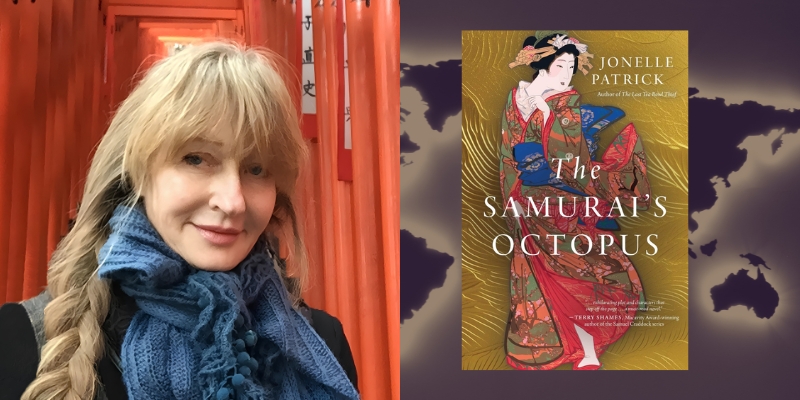
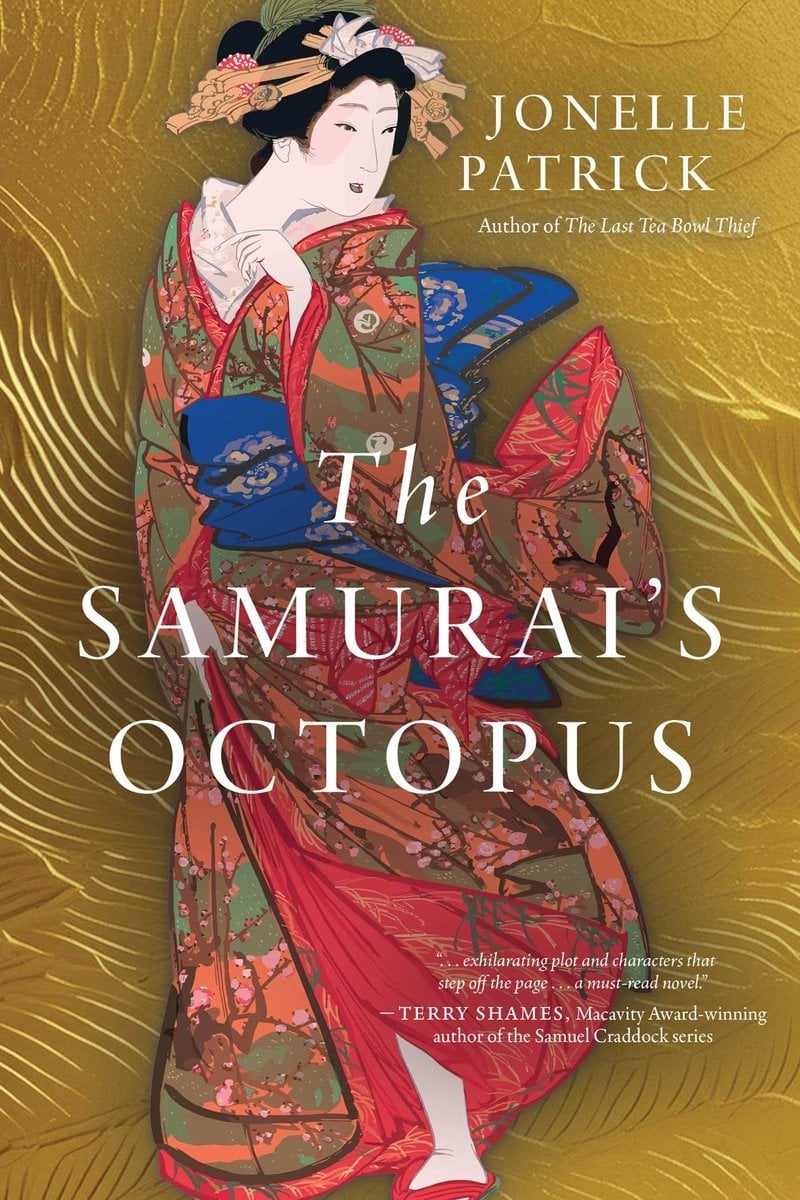
In good historical fiction, the characters and story aren’t real, but the setting, society, culture and times in which they live have to be. You have no idea how boring tenured academics can make the samurai era sex trade until you’ve spent countless hours with a highlighter in hand, poring over tax records, disease statistics and white papers on the economics of eighteenth century Japan’s red light district, but no historical mystery fan would want to read The Samurai’s Octopus unless the world inhabited by the flamboyant first-rank courtesans and their free-spending patrons was built on solid facts.
But what makes fiction such a powerful teacher? As it turns out, it’s not in spite of being written to entertain, it’s because it entertains. Historical fiction makes you feel the urgency of escaping the scene of a crime as the Great Meiwa Fire of 1772 roars toward you, consuming everything in its path.
It invites you to conspire with the most desired woman in the pleasure quarter as she weighs which of her tricks will reel in a rich patron the fastest. It delivers the mingled smells of charcoal, moat water and roasting tea first thing in the morning, the sound of the temple bell tolling the hour, the difficulty of walking while teetering on platform sandals that make you three handspans taller.
A good book doesn’t just tell us what it’s like to inhabit another world; it makes us feel it in our bones. And after we close the cover, the information it leaves behind is stored more like vivid memories than gray facts.
As a book works its magic and draws us into the hopes, fears and calamities faced by its characters, the real historical events affecting their lives become important to us. I learned far more about the devious political maneuverings of Thomas More and his arch-nemesis Thomas Cromwell in sixteenth-century England from reading Hilary Mantel’s Wolf Hall than I did from cramming for Modern European History at university.
And if Samurai’s Octopus readers come away without being able to pontificate with confidence on the impact of Japan’s samurai era isolationism on trade and why women who practiced the world’s oldest profession were an essential cog in samurai era society, I haven’t done my job.
Another thing fiction can do more powerfully than nonfiction is concentrate the experiences of many into a single life. You could read a dozen biographies detailing the horrendous evils done to slaves in nineteenth-century America, or you can read Colson Whitehead’s The Underground Railroad and never forget a single harrowing atrocity (no matter how much you wish you could unsee them). When they’re experienced by a handful of characters we come to care about, we understand on a deeper level how such hardships changed them, and how the effects might still echo down the decades to our own time.
Fiction can also amplify a short, pivotal period of time, which becomes a microcosm of far grander movements in history. In the Merchant-Ivory film Jefferson in Paris, the personal relationship between Thomas Jefferson, a noble Englishwoman, and the slave Sally Hemings examines the nature of freedom. Not just the American and French revolts against the oppression of monarchy, but the strictures of society and the greater humanitarian question of slavery. Great and sweeping issues are reduced to human scale, making the grander movements more understandable and approachable.
And finally, fiction can expand our minds by the way the story is told. James Clavell’s Shōgun was written as a classic example of superior Western technology swanning in to save an ally and institute regime change. But the award-winning 2025 production takes the exact same facts and shifts the perspective.
Instead of seeing this conflict through the eyes of the brave, swashbuckling Westerner who saves the day, we see the situation through the eyes of the Japanese, who are far from the savages imagined by Westerners. In the new production, they adopt Western weaponry as a crude but useful tool, but the balance of power shifts due to the wheels-within-wheels of superior strategy and cunning use of whatever advantages present themselves. Same facts, with assumptions challenged.
So the next time someone asks what you’re reading, and you’re tempted to apologize for devouring a page-turner of a historical murder mystery, tell them you’re boning up on eighteenth-century Japan, sixteenth-century English politics, or the history of slavery in America instead!
***

Jonelle Patrick
Jonelle Patrick is the author of The Samurai’s Octopus and five other novels, as well as contributing to Japanagram, The Tokyo Guide I Wish I'd Had, and Only In Japan. A graduate of Stanford University and the Sendagaya Japanese Language Institute, she’s a member of the Mystery Writers of America, International Thriller Writers, Sisters in Crime, and the Historical Novel Society. She lives in Tokyo and San Francisco.