
How to Recreate the Techniques of Horror Films in a Novel
What writers should (and shouldn't) learn from Rosemary's Baby, The Shining, The Stepford Wives, and other movies
I can’t remember the first scary movie I saw but I read my first horror novels and ghost stories probably far too young: enjoying Stephen King, James Herbert, and M.R. James from the age of ten. Horror movies soon caught up though and when I was in my teens I watched three over and over: Rosemary’s Baby, The Shining, and The Stepford Wives (the original).
Maybe those films appealed to me because they are all based on novels, which I read later, and they must have seeped into my subconscious because later still—2023 in fact—everything came together and I began writing my sixth novel, Hunger and Thirst. In it, three characters also watch these films over and over, and one of them, Sue, makes her own short horror film.
Both Rosemary’s Baby and The Shining feature creepy buildings, as does Hunger and Thirst, and all of them have elements of domestic horror. But I love them for their quiet intensity which hooks the viewer in, their slow creeping dread which rises to breaking point.
I was curious after I finished writing Hunger and Thirst about how much these movies informed my novel and what novelists can learn from film and what we should ignore.
*
Rosemary’s Baby
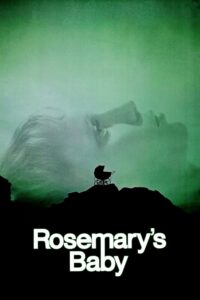
Rosemary’s Baby is a feminist horror movie without any big scares. Rosemary and her husband move into an apartment in an old building in New York, and discover an armoire hiding a cupboard, which in turn is hiding a door. They meet their neighbors, Minnie and Roman Castevet, and when Rosemary falls pregnant, they take an obsessive interest in the pregnancy.
The build-up is slow and psychological: paranoia, suicide, a warning about The Bramford building from Rosemary’s closest friend. There are unanswered questions from the beginning which, when I’m teaching Creative Writing, I call story questions – moments when the reader is curious to know more.
For the first half of the movie, Rosemary is pretty passive. She’s feeling ill but Guy and the Castevets put this down to her pregnancy. They recommend a doctor who says the same. But when Rosemary and Guy have a party, her girlfriends get her in the kitchen and convince her that feeling this sick isn’t normal. When the viewer realizes what’s happened to her, how this supernatural event could be possible is never explained.
Without giving too much away, the ending is both inevitable and a surprise. It’s quiet, restrained and completely perfect for what’s gone before and for who these characters are. And what happens after the film ends is inconclusive.
Hunger and Thirst is about Ursula, a famous and reclusive sculptor who is looking back to 1987 when she meets wild-child Sue, who becomes her best friend. The buildup is deliberately slow, and Ursula is a passive character for the first half of the novel.
I wanted to focus on character, place and situation before I got into anything really scary, but I still put in plenty of story questions to keep the reader invested: Who is dead? Where is the body? And what is the macabre history of the suburban house called The Underwood? Since the novel is written in the first person, the reader can only know as much as Ursula knows, so not everything is explained, and the ending is deliberately ambiguous.
The Shining
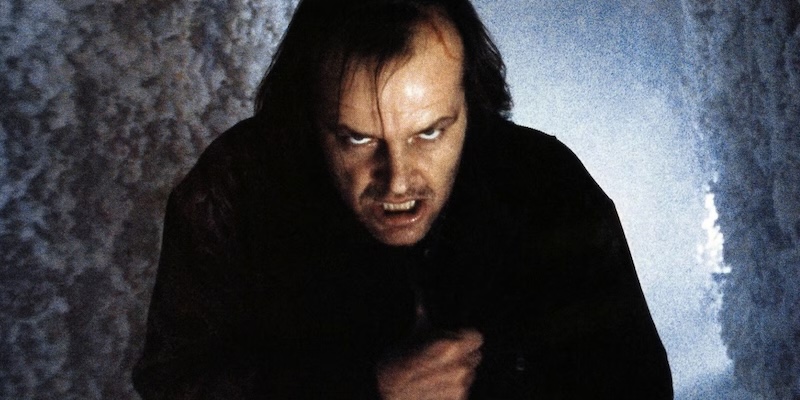
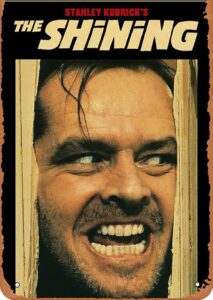
In The Shining, Jack Torrence accepts a job at The Overlook, a remote hotel which is closed for the winter, taking his wife and young son, Danny with him. There, he intends to write his novel, but the hotel is haunted and he goes slowly mad. But it’s not just that the building is cursed, Jack brings his own backstory of recovering alcoholism, anger and violence to create an atmosphere of menace and ultimately terror.
A weakness in a horror story, whether novel or movie, can happen when the antagonist is only bad because of an external effect; they are more realistic, and therefore scarier if the badness comes from something internal: personal demons, backstory, history.
In Hunger and Thirst, Ursula (who could be both protagonist and antagonist) has a complicated history. She was brought up in foster care and was involved in a traumatic event with her mother at a young age. What happens to her when she’s older could be read as horror or psychological trauma.
Although the first third of The Shining has that unsettling feeling that something bad is coming, the first truly scary scene happens when Danny, cycling along the empty corridors of the hotel turns a corner and sees twin girls. This is forty-nine minutes into a hundred-and-forty-four-minute film. Kubrick, the director, isn’t hurrying things.
A little later, Jack kisses a young and naked woman in a bathroom and as he steps away, she becomes old and decayed. It’s an iconic scene and I admit that it wasn’t until I was writing this essay that I made the connection that in Hunger and Thirst Ursula is terrified by bathrooms, and the bathrooms in The Underwood and in the Overlook are both a lurid green.
The Stepford Wives
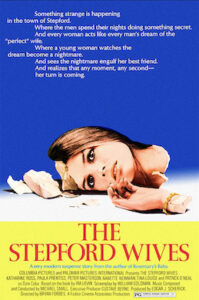
The Stepford Wives is domestic horror at its finest, and even if you haven’t seen the film or read the book, no doubt you will have heard the term “Stepford wife” and know it means a submissive and docile woman who conforms to what her husband expects of her.
Joanna has a fledging career as a photographer when she reluctantly moves from New York with her husband and children to the town of Stepford. Her husband joins the Men’s Association and Joanna makes friends with a neighbor, Bobbie. When they try to encourage other local women to start a group discussing women’s liberation, Joanna and Bobbie discover that none of the women are interested, they would rather talk about cleaning products.
There are big themes in this movie of feminism, conformity, the horror of suburbia and domesticity, and how women potentially give up so much, including making art.
In Hunger and Thirst, Sue wants to be a director of horror movies. Although Ursula finally becomes a famous and reclusive sculptor, she is hiding from her past. She’s making art, but she’s continually drawing and sculpting the same images. Just like Joanna, neither Sue nor Ursula make the art they set out to.
The thing I find so interesting about The Stepford Wives movie is the ending. Joanna is our final girl, as is Ursula, but neither of them quite fit the trope. Joanna has lost and like her neighbors is walking around the supermarket contentedly buying groceries, meanwhile Ursula might not yet defeat the thing that is coming for her.
*
What Novelists Should Ignore About Horror Movies
Although there’s much that novelists can learn from horror movies, books can take days or weeks to read, while most horror movies are over in an hour and a half. They’re never going to be the same. The biggest difference is that unless a director (or producer) decides to employ that clunky technique of the voice-over, there won’t be any explicit interiority, whereas novels can, and I’d say should, have that in spades.
And all horror movies will rely on other filmmaking techniques to create atmosphere: sound effects, and music to at best indicate, at worst manipulate, to the viewer that we’re meant to be feeling scared. Whereas novels can make the best use of description to have the reader create the scene in their head.
A novelist can also more easily keep the “monster” opaque, whereas in film it usually has to be explicitly shown or not. For me, monsters are always the scariest when we are allowed to create them ourselves.
I owe a huge debt to these three films and many other classic horror movies for lessons in how to try to unsettle a reader, how to create memorable characters and a sense of place, and how to write an ending the novel deserves. In fact I felt that I owed them such a debt, that I hid in Hunger and Thirst more than ten Easter eggs, or intertextuality if you want to get fancy. If you read it, let me know if you spot any.
***


Claire Fuller
Claire Fuller was born in Oxfordshire, England in 1967. She gained a degree in sculpture from Winchester School of Art, but went on to have a long career in marketing and didn't start writing until she was forty. She has written three novels: Our Endless Numbered Days, which won the Desmond Elliott Prize, Swimming Lessons, and Bitter Orange, forthcoming October 2018. She has an MA in Creative and Critical Writing from the University of Winchester and lives in Hampshire with her husband and two children.