How Would Ian Fleming Write James Bond Today?
Kim Sherwood considers the challenge of continuing an iconic series for a modern audience
When Ian Fleming’s family commissioned me to expand the world of 007, it was a lifelong dream come true. I played as Bond in childhood imaginary games and Fleming was one of my favorite authors since first reading From Russia with Love aged twelve. The Flemings gave me just two criteria: introduce new Double O agents and set the story in the twenty-first century. While the movies have kept pace with us, the novels have often remained period, retaining Fleming’s own socio-political context for Bond. I quickly realized there were two catches to this dream, now it had arrived.
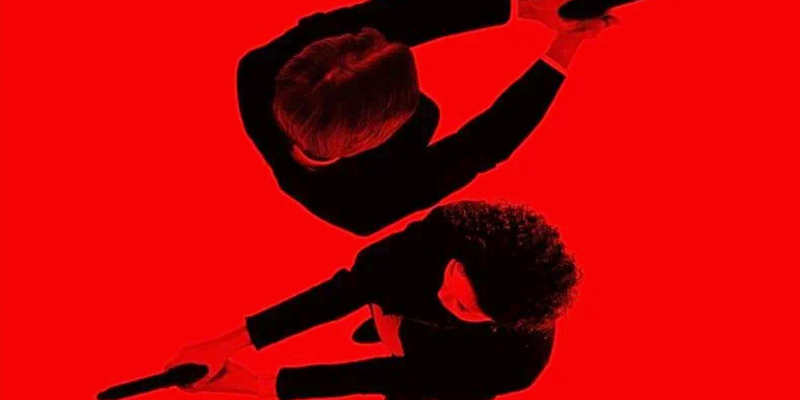
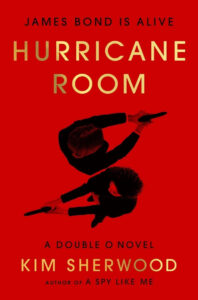
Firstly, if I were to invent new Double O agents and position them as the heroes, what would happen to Bond? The trouble is Bond’s star power. Like a real star, Bond has his own gravity. When he’s on the page or screen, all eyes go to him. That would leave my new protagonists – Joseph Dryden (004), Johanna Harwood (003), Sid Bashir (009), Conrad Harthrop-Vane (000) and freelance diamond thief Rachel Wolff—in the dark. I decided to fold this challenge into the story itself. In Double or Nothing (2022), the first in my Double O trilogy, James Bond is missing, and MI6 don’t know if he’s been captured or even killed on a mission. Moneypenny, now Chief of the Double O Section (in the world’s most overdue promotion), dispatches her new crop of agents to find 007 and avert a climate catastrophe at the hands of an evil tech billionaire. In A Spy Like Me (2024), the follow-up, the Double O agents confront a smuggling ring funding terror, and 003 inches unexpectedly closer to Bond. In Hurricane Room, the final novel – out now – James Bond is back.
The Flemings gave me just two criteria: introduce new Double O agents and set the story in the twenty-first century.
The decision to move Bond out of the spotlight gave me time and space to develop my new heroes, all of whom have ties to Bond: Bond and Harwood shared a doomed love affair; Bond mentored Bashir; and Harthrop-Vane desperately wants to overtake him in the eyes of my new M, Sir Emery Ware. But in Hurricane Room, the spotlight swings back to 007, as Harwood drags him out of the hellish prison where Colonel Mora, leader of terrorists-for-profit Rättenfanger, has held Bond in brutal captivity for the past twenty-one months.
For me as a writer, this was an exciting but daunting moment, as I finally brought Bond onto the page in the fictive now, rather than flashbacks. We’ve had six different actors’ interpretations, multiple continuation authors, video games, comic books: so many different angles on the same face. Who is my Bond? There’s the second catch. As a devotee of Fleming, I wanted to maintain Bond’s character, but how could I make his 1950s psyche viable for the 2020s? There are the obvious cultural differences, which the films have negotiated for decades. That said, Fleming reads more progressively than he’s often credited for, and when it comes to issues such as Bond’s sexism, it wasn’t hard to find other text-based reasons for the character’s lack of long-term relationships. Fleming’s Bond is an orphan whose first love betrays him and kills herself, and whose wife is murdered on the wedding day. It’s not really a surprise he can’t commit. But given these barriers, how does one make Bond feel like Bond today? I also wanted to bring something new to the table, otherwise why continue Bond at all, why not simply reread Fleming? (Something I encourage you to do).
Much as I turned the problem of Bond’s star power into a creative solution, this new question became a driving force for the final novel. Indeed, it is the question at the heart of Hurricane Room, summed up in the opening line, narrated by M: ‘You’ll know him when you see him. You’ll know the type.’ Will we? As Bond tells Harwood:
“You want my confession? Here it is. Tiger Tanaka asked me once why I seem to value my life less highly than other Westerners. A doctor told me it was patriotism, at the root: apparently I am a weapon animated by death or glory for my country. Sounds good, doesn’t it? But I’ve had time on my hands, lately. Time enough to wonder if death and glory leave nothing behind”—he gestured like a magician revealing a trick, except the trick was his body—“no man to take out of himself. You start thinking about the face in the mirror when it’s your only company. Not that I had a mirror, when they kept me in the cave. Only a dog bowl for meals, though I did use that to bash in a guard’s brain pan once. It’s the little things, in the end. But here’s the punch line, darling. After twenty-one months, the face that looked back at me from that mirror was blank.” He straightened. “My number is 007. My name is Bond, James Bond. But I don’t know what that means anymore.”
To answer Bond’s question—who am I? —I returned to Fleming for inspiration. This involved taking cues from Fleming’s writing, and the gaps in his writing.
My source text for Hurricane Room was Moonraker (1955), where Bond refers in passing to the time M attached him to the British Embassy in Moscow. Fleming never follows up on this thread, so I decided to see where it would lead me. Hurricane Room opens in 2004 with Bond stationed in Moscow in his mid-twenties, before he achieves Double O status, alongside Moneypenny as his runner-in-the-field. This nugget gave me a new way to write about Bond: in Hurricane Room we get Bond’s early origin, and Bond now in his mid-forties, scarred and lost. Fleming writes that forty-five is the mandatory retirement age for Double O agents; it’s also their life expectancy. As such, Fleming gives us Bond perpetually in his mid-thirties, and the film franchise similarly us a fairy-tale immortal Bond (until recently). It’s all middle. Hurricane Room provides the beginning—and the end.
If Moonraker was the source text, From Russia with Love (1957) —my favourite Bond novel—was the key. In Fleming’s fifth novel, we open in the Russian point of view as they plot Bond’s downfall as a way to destroy Great Britain’s morale. Fleming often studies Bond from the outside, notably in The Spy Who Loved Me (1962)—my second favorite—which is narrated from the perspective of the female lead, providing the female gaze onto Bond. In Hurricane Room, Bond is literally coming from Russia, liberated by Harwood from a St Petersburg prison, and their sections are narrated through 003’s perspective. Much of the novel follows their escape—also inspired by Slavomir Rawicz’s The Long Walk (1956) —across Russia. I also took my cue from Fleming’s twelfth and thirteenth novels, where Bond makes the same journey but in reverse at the end of You Only Live Twice (1964) only to be caught and brainwashed by the KGB ‘in the big grey building in Vladivostok’ in The Man with the Golden (1965).
There are other Easter eggs, characters taken from Fleming’s short story ‘The Living Daylights’ and structural devices from ‘007 in New York’ and Casino Royale (this last one was actually pointed out to me by structure guru John Yorke, after he read Hurricane Room, but I don’t want to give you any spoilers, so if you catch me at a book event ask me about it.) Fleming also provided cues for setting, with a section of the novel set in 1980s Berlin inspired by ‘The Living Daylights’ and his travel book Thrilling Cities.
If I have Fleming to thank for structure, characters, and setting, I also have him to thank for Bond’s ideology and identity (crisis) in Hurricane Room. Indeed, the title of the novel is taken from my favorite Fleming image:
In the centre of Bond was a hurricane-room, the kind of citadel found in old-fashioned houses in the tropics. These rooms are small, strongly built cells in the heart of the house, in the middle of the ground floor and sometimes dug down into its foundations. To this cell the owner and his family retire if the storm threatens to destroy the house, and they stay there until the danger is past. Bond went to his hurricane-room only when the situation was beyond his control and no other possible action could be taken.
At the start of Hurricane Room, Bond has been buried alive inside this mental citadel – can Harwood draw him out?
Fleming treated torture seriously in his novels, as any military veteran would, and he places Bond’s will under duress at the centre of his characterization. Bond’s reflection in Hurricane Room on the wellspring of his endurance is directly inspired by Fleming’s words in You Only Live Twice and The Man with the Golden Gun, but it’s in Goldfinger that Fleming best dramatizes Bond’s refusal to give up. In the film adaptation, this scene gives us the famous rejoinder: ‘Do you expect me to talk?’ ‘No Mr Bond, I expect you to die!’ In the novel Goldfinger, Bond is willing himself to die as a means to escape the torture he is put through. But he can’t let go:
What was this ridiculous will to live that refused to listen to the brain? Who was making the engine run on although the tank was dry of fuel? But he must empty his mind of thought, as well as his body of oxygen. He must become a vacuum, a deep hole of unconsciousness. Still the light burned red through his eyelids. Still he could feel the bursting pressure in his temples. Still the slow drum of life beat in his ears. A scream tried to force its way through the clamped teeth. Die damn you die die damn you die damn you die damn you die damn you die …
It’s Bond’s limitless, indomitable will that first caught my imagination when I saw Bond on screen as a child. I still remember the particular moment: Pierce Brosnan bouncing down the side of the Millennium Dome (the construction of which took up a lot of conversation at the time), hitting the ground, and getting back up again with a roll of the shoulders to walk forward.
I encapsulated this will in Hurricane Room with a new motto for Bond, taken from Devonware crockery, which I’ve given to his mother as a collectors’ item: ‘Hope On, Hope Ever.’ The phrase comes from a Victorian poem by Gerald Massey, which Bond chooses as his covert radio signal:
HOPE on, hope ever! though to-day be dark,
The sweet sunburst may smile on thee to-morrow:
Tho’ thou art lonely, there’s an eye will mark
Thy loneliness, and guerdon all thy sorrow!
Tho’ thou must toil ‘mong cold and sordid men,
With none to echo back thy thought, or love thee,
Cheer up, poor heart! thou dost not beat in vain,
For God is over all, and heaven above thee—
Hope on, hope ever.
The iron may enter in and pierce thy soul,
But cannot kill the love within thee burning…
This felt like a perfect encapsulation of Bond’s courage, loneliness and love. If that’s Bond’s defining characteristic, I sum up his way of life in Hurricane Room with three words: ‘move, want, give.’ Bond is built for verbs, for action. What happens to his sense of his self when he’s locked in a cell, unable to move, nothing to want, with nothing he’s prepared to give?
***

Kim Sherwood
Kim Sherwood is a novelist and a Lecturer in Creative Writing at the University of Edinburgh. Her award-winning debut novel Testament was released in 2018, and in 2019, Kim was shortlisted for the Sunday Times Young Writer of the Year Award. Her latest novel, A Wild & True Relation, was described by Dame Hilary Mantel as "a rarity - a novel as remarkable for the vigour of the storytelling as for its literary ambition. Kim Sherwood is a writer of capacity, potency and sophistication." Double or Nothing is the first in an acclaimed series of Double O novels expanding the world of James Bond.