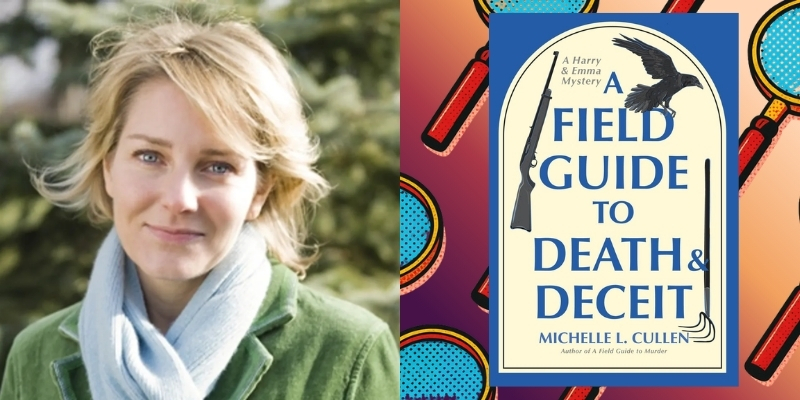
Michelle L. Cullen on the Secret Weapons of Cozy Amateur Sleuths
Breaking down how to make inexperienced detectives accessible and trustworthy in cozies
Cozy mystery amateur sleuths always seem to stumble into solving murders with surprising results. Their day jobs may seem like ordinary professions on the surface, but once a mysterious death occurs, the skills required for them to run successful businesses morph into investigative superpowers.
A pet groomer, a tea shop owner, a bookseller, or even a cheesemonger may pick up clues that law enforcement officers miss. These seemingly commonplace jobs provide a steady stream of social interaction, making these amateur sleuths privy to juicy gossip and everyday routines and able to spot uncharacteristic behavior.
Constant contact with their communities builds trust, while offering these sleuths credible reasons to ask prodding questions. And because so many of these everyday heroes have either pursued their jobs as a lifelong dream or turned to them after some staggering setback, they’ll do anything to protect what they’ve built—including chasing down a cold-blooded killer.
For those of us who love these fun and inventive mysteries, there’s no shortage of unique professions that provide opportunities for amateur sleuths to investigate when crime occurs.
*
The Unexpected Jump from Day Job to Crime Scene
Some of the genre’s most memorable sleuths have professions that couldn’t seem further from crime solving. In Maddie Day’s Murder on Cape Cod, Mac Almeida runs a bicycle repair and rental shop. After a neighborhood handyman is stabbed to death, Mac and her brother become suspects. To clear their names, she relies on her fascination with cozy mysteries and her practical, methodical mindset as a bike mechanic, which requires diagnosing problems, tracing faults back to their source, and working systematically until things click into place.
Mimi Lee in Jennifer J. Chow’s Mimi Lee Gets a Clue runs a pet grooming shop. When a local breeder is murdered, Mimi combs through clues with her investigative partner Marshmallow, a talking cat with a sharp sense of humor. Marshmallow’s observations add a layer of feline logic that no human co-investigator could replicate.
Bibliotherapist Nora Pennington helps people heal through carefully chosen books in The Secret, Book & Scone Society by Ellery Adams. Because of Nora’s profession, people share their deepest secrets with her, which means she knows who’s hurting, who’s hiding something, and who’s acting out of behavior. When a visiting businessman suspiciously dies, Nora’s unique role provides her with a level of access the police envy.
In The Plot Is Murder by V. M. Burns, Samantha Washington is on the cusp of opening a mystery bookstore; something she’s wanted to do her whole life. But her plans are shelved when murders start piling up in her small Michigan town. With the police focusing their attention on her, Samantha draws on investigative tactics she’s learned from the books she reads and loves to save herself and her dream.
The Killer Ingredient: Restaurant Sleuths Who Cook Up Clues
Food businesses also provide excellent backdrops for cozy mysteries. Restaurants are at the center of both Mia P. Manansala’s Tita Rosie’s Kitchen Mysteries and Vivien Chien’s Noodle Shop Mysteries.
In Arsenic and Adobo, a food critic is murdered, forcing Lila Macapagal, the prime suspect, to chase down the killer using her aunt’s gossipy network and the connections around her aunt’s restaurant to clear her name. In Death by Dumpling, everyone involved in Lana Lee’s family restaurant is under suspicion when the restaurant’s property manager turns up dead. Lana’s steely resolve to save her family and friends sparks her drive to investigate.
This same grit and determination is on full display when cheesemonger Willa Bauer must clear her name after a magazine reviewer is killed in Cheddar Off Dead by Korina Moss. With her freedom and French-inspired cheese shop at threat, Willa taps shop regulars and nosy neighbors for information, churning up secrets and motives.
In Mindy Quigley’s Six Feet Deep Dish, Delilah O’Leary is on the verge of opening a gourmet deep-dish pizzeria in a quaint resort town when a dead body, and her elderly aunt caught holding the murder weapon, threaten to derail everything she’s worked for. Determined to protect her aunt and salvage her dream, Delilah channels her perfectionism and attention to detail to serve up the real killer before her new life goes up in flames.
Vera Wong, who runs a tea shop in Vera Wong’s Unsolicited Advice for Murderers by Jesse Q. Sutanto, is convinced no one is better suited for solving crime than a suspicious Chinese mother. Her unstoppable curiosity and ability to get people to talk over steaming teacups turns every conversation into a hunt for clues. Vera’s need for harmony and order also drives her to manage the lives of every suspect until she deduces which one is the killer.
*
Sleuths Who Never Quite Left Their Old Careers Behind
Annie Murray is a bookseller organizing a mystery book-themed festival in a charming Northern California town in Ellie Alexander’s The Body in the Bookstore. When an old college classmate is found dead, Annie dusts off her criminology degree to help her former professor, now the lead detective, solve the murder.
China Bayles in Susan Wittig Albert’s Thyme of Death is a former attorney who walked away from the law to open an herb shop in a small Texas town. After a friend’s apparent suicide, China’s deep knowledge of plants, including their healing properties and toxic potential, gives her an investigative edge that the local police simply don’t have. There are nearly thirty books in this series — a testament to how well a good profession can sustain a sleuth across decades of crime.
*
The Real Secret to Crime-Solving Success: Access, Trust, and a Good Reason to Snoop
What all these cozy mystery professions share is simple: they make the amateur sleuth accessible and trustworthy, create believable reasons to ask questions, and let them overhear secrets while moving through spaces where clues are hiding in plain sight. Instead of relying on police procedure, these sleuths solve crimes by being socially embedded, observant, and hard to ignore, which is exactly what makes these stories so entertaining.
In cozy mysteries, the best detectives are the ones who would never seem like detectives at all.
***

Michelle L. Cullen
Michelle L. Cullen is the author of A Field Guide to Murder. She has lived, traveled, and studied all over the world: from working as a (decent if powered by enough espresso) bilingual secretary in Paris; to backpacking around Europe, Central America, and Southern Africa; to helping rebuild communities after war throughout Africa, East Asia, South Asia, and the Pacific. She earned her master’s degree in anthropology at Melbourne University in Australia and her PhD in sociology at the London School of Economics in England. A fan of adventure, she has a black belt in Taekwondo, has summited nine hundred feet rock climbing, and has flown a helicopter (once, during a lesson, for five terrifying minutes). She currently lives in Annapolis, Maryland, where she’s either doing yoga, playing outside, or plotting murder.