
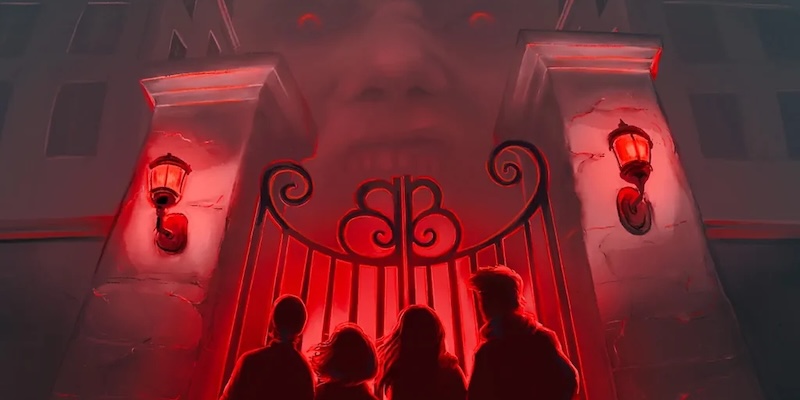
Neil Kleid on Learning to Write Horror as Someone Afraid of Jumpscares
A tour of the ten novels, films, and comics that inspired Return To The Motherfreaking Fun Factory
Look, let’s get right down to it: horror movies scare me.
They always have, since my initial viewing of Poltergeist in 1982 at the tender young age of seven or eight. Due to the fog of time, the reason I watched it in the first place—or was allowed to—definitely escapes me (I’m fifty-one; I barely know what I did last summer…though I can firmly say, it was not a viewing of the horror movie, I Know What You Did Last Summer.)
But I know this: watching that hand come through a television set, reaching for five-year-old Carol An ne Freeling (“they’re heeeeere”), was enough to put me off unnerving visuals, heart-hammering jump scares, disturbing faces, haunted houses, and darkened basements forever.
Nope nope nope; not this guy. If I’m at the movie theatre (even with my kids) and a frightening trailer creeps out before my eyes, with that eerie, foreshadowing music or specific hushed vibe…I’m gonna close my eyes or look away and wait until it’s replaced by Jumanji 4. No Ring for me, thanks. Keep your creepy smile to yourself, Parker Finn. The Backrooms? Forget about it. Gimme a well-lit lobby right up front, where the people are, where a guy can be safe.
So, yeah. Horror movies? Not for me. Instead, I’ve spent a life indulging in televised crime sagas, the convoluted mess that is super-heroic cinematic fiction, all the thirty-minute comedies I can get, and of course, a really good period drama or war film. The Odyssey. I mean, have you seen it yet? You freaking should.
And for the most part, when crafting literature of my own, I’ve gravitated to same. Three of my most well-known comics and graphic novels are crime stories (and Jewish crime stories, at that.) I’ve dabbled in superheroes, toyed with family drama, indulged in period fiction, and my last co-authored comic book mashed up baseball, Mark Twain, medieval Camelot, and a good old bloody brawl. Hey; I write what I want to read, yeah? Hopefully, others want to read it too.
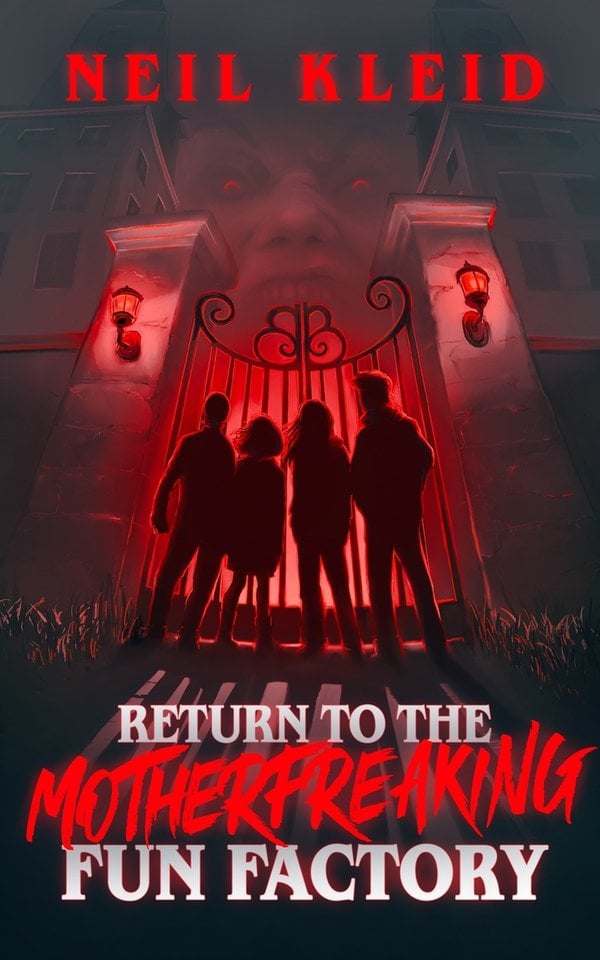
So why the heck did I write an out-and-out disturbing horror novella full of page-turning jump scares, then? What made me write Return To The Motherfreaking Fun Factory—a tense, creepy, blood-soaked thriller coming this Fall from Blackstone Publishing that forces Roald Dahl’s Charlie and The Chocolate Factory to come face to terrifying face with Stephen King’s IT?
Well, a couple of things right off the bat.
While horror movies have me diving beneath the covers (oh and television, too; sorry, HBO—I don’t care if your killer clown is serialized weekly in the comfort of my home, next to my beloved Knight of the Seven Kingdoms instead of on the silver screen. Go to hell, scary episode of Punky Brewster that terrorized my dreams throughout my childhood. I won’t have it. I’m not watching)….I will say that I’ve never shied away from horror novels.
Quick story: back in 1990 at age fifteen, still living with my parents in a Detroit suburb, my father bought a copy of IT around the time ABC debuted the televised mini-series starring the late, great Tim Curry as Pennywise the Clown. Dad read it in solitude, I gather, because the book was always on the counter when I needed to retrieve something from my parents’ bathroom, cover face-up, featuring Curry’s dreadful silver-dollar eyes peering up at me like a hungry cat from beneath a white-pancake dome and black, comically rounded, sinister eyebrows. Seriously, I could not go in there for a long, long time…
…until I finally watched the TV movie at my father’s urging. And yeah, it gave me horrible nightmares for weeks. But…
…I was intrigued enough to try the novel. Which I read, cover to cover. Twice.
I don’t know—something about the terror being on the printed page, and being able to control where and when I read it, how I felt about it, what my reaction would be to the various terrible things Pennywise inflicted on two generations of Derry residents… it spoke to me. I loved the book. So I read more, devouring most (if not all) of King’s bibliography.
And I went on from there, incorporating a healthy list of horror authors into my must-read pile, from masters of the genre to contemporary visionaries. Dean Koontz, Shirley Jackson, Peter Straub, and Mary Shelley. Robert Louis Stevenson. A little Lovecraft and Barker. Stephen Graham Jones. Paul Tremblay, Tananarive Due, and Joe Hill—King’s son, come into his own, and one of my favorites (his most recent hardcover doorstop, King Sorrow, is brilliant and horrible and fun.)
I devoured horror comics, too: Black Hole by Charles Burns; Locke and Key by Hill and Gabriel Rodriguez; Something is Killing the Children by James Tynion and Werther Dell’Edera; varying shades of zombie comics ranging from The Walking Dead to Afterlife with Archie (yup, look it up); I even went hunting for back issues of Eerie, Creepy, and Tales from the Crypt (modern versions of the latter two, by the way, included stories I managed to co-author as I came up in the industry, though perhaps less “scary” than they are “mildly unnerving.”)
So, horror movies? No, sir. Horror books and comics? Yeah, why not.
And being who I am, an anxious and driven writer whose brain never ceases its guttural mumbling and demented chatter, never quits snapping away mundane thoughts and spitting them back with new, unusual, fucked-up situations for frightened, hapless protagonists…well, over the last few years I happened to think up a few ideas for horror stories of my own.
This October—the witching season, just ripe and ready for fucked-up situations and frightened, hapless protagonists—I get to unveil Motherfreaking Fun Factory, my very first, alongside the trusting folks at Blackstone Publishing. Hopefully it will be the first of many (I have a few zombie ideas of my own, as it were…and a cruise ship in my head full of feasting, vulnerable, fatted calves.)
But as you skip up to my gates—like innocent, trusting children, completely unaware about the dangers within—and prepare to enter Barnaby Bigby’s long-silent, terrifying toy factory this October sixth, I thought it might be fun to tell you about some of the horror novels, comics, and movies I have enjoyed, the media that has…well, if not inspired this first book, at least stirred my now-voracious appetite for telling even more tales of dread, decay, and doom (the letter “D” is for doomed, by the way. Don’t believe for a minute what Sesame Street tells you; it isn’t for dog, dance, or dinosaur—it’s for doom. Don’t forget that.)
What I’ll say is this—your mileage may not be the same as mine: you may dig something scarier, a lot scarier, than I did. You may want more blood and guts, or something more distributing and gut-wrenchingly horrific than my stomach can manage. I say to you, dive in to it all. If you want to watch Terrifier, watch Terrifier and make friends with Art the Clown. If you only want to read Tales From The Crypt comics, do that too. My selections may be tamer than yours. Yours may be tamer than mine. Ultimately, these are the books and media that helped grant me entry into a world that scared the tar out of me — yours may be wildly different.
So, step on up, friends. Come check out what I have to offer. If, like me, you’ve only got a hunger for crime stories, well, trust a storyteller who felt the same and give these books, films and comic books a whirl: for, when you think about it, really, what is crime without just a little bit of terror?
Here we go. On with the tour.
*
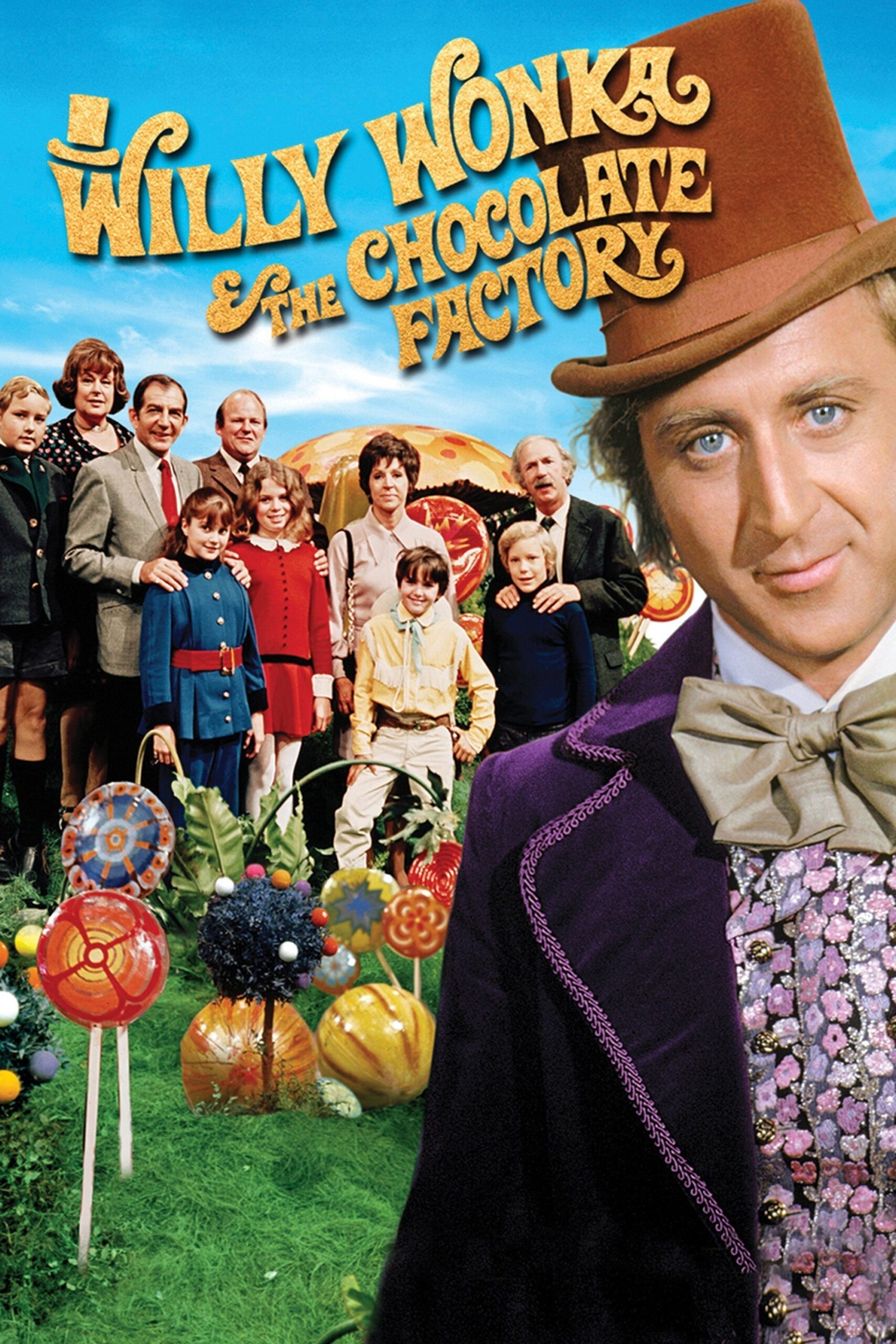
Willy Wonka & The Chocolate Factory (Film)
Look, let’s stop fooling ourselves: Willy Wonka is a monster.
Sure, Chocolate Factory is a movie about imagination, wonder and delight, and stars Gene Wilder in what may be his smarmiest role ever… but it’s also about an emotionally-stunted, whimsical hermit who lures five kids (and their closest family member) into a candy-coated deathtrap filled with a small army of orange minions pledged to do his bidding.
Based on a book by Roald Dahl, billed as a cautionary tale about moral failings and replete with psychological terror, the movie depicts Wonka subjecting each of his targets to torture designed to break their will and even results in drowning, body horror, incineration, and mental manipulation. Hell, the boat scene alone—”There’s no earthly way of knowing / Which direction we are going”—is a prime example of the horror genre, playing on atmosphere, tension, jump scares, psychological twists, and the unknown in order to elicit fear in the protagonists…and the viewer.
This film ain’t no “scrumdiddlyumptious children’s fantasy,” Rotten Tomatoes—it’s a brightly-colored, claustrophobic horror-show orchestrated by a gleeful, sinister, vindictive mastermind. Heck, it’s so dark that Tim Burton couldn’t wait to get his hands on it for the remake—when the king of gothic horror and dark fantasy wants his turn with a concept, you know there’s something disturbing enough to merit a closer look. Which, you know, is the key reason I decided to write Return to the Motherfreaking Fun Factory in the first place.
Sure, keep thinking otherwise. But Willy Wonka & The Chocolate Factory is an out and out horror movie…and can also serve as a gateway film for kids curious about the genre, if you lead them to understand that as truth.
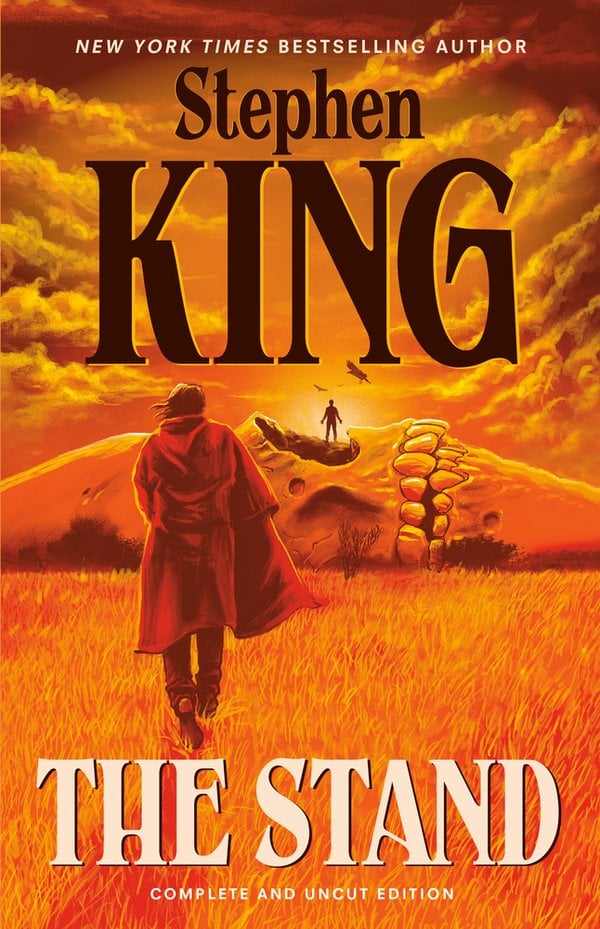
Stephen King, The Stand (Novel)
So, I could probably write about each book in the vast, weighty catalog of novels written and released by one of the genre’s most popular, famous and notable masters, Mr. Stephen King from Bangor, Maine. I mentioned IT above, and how both the book and film affected a younger Neil…but since then, I have devoured nearly all of King’s novels, comics, and short stories, and even sat through many of the films based on those works.
I could go on for pages about some of his more disturbing shorts—”The Raft,” “The Mist,” “The Jaunt”—and spend the next few years simply typing and talking about his magnum opus, The Dark Tower cycle—King’s uber story, which touches a great many of his works. But instead, let’s talk about The Stand.
A horror story? Of course—it’s about a super flu, a widespread global epidemic that eliminates most of humanity and leaves two factions of survivors, setting them against one another as they endeavor to rebuild the world they knew, a world that died. There are some truly disturbing moments in this tome of a novel, penned early in King’s career and adapted twice for television. Dead bodies litter the landscape, and depictions of claustrophobic terror—in abandoned hospitals, in the Lincoln Tunnel—and religious fervor elevate some truly gripping moments throughout.
Ultimately, like its less-effective, more popular sequential successor, The Walking Dead, the true horror in this book is about what we as humans inflict upon each other in the face of tragedy and apocalypse—who we are when the world has passed us by. But yeah, The Stand is a scary book (and I’m not talking about the daunting page count!) If you haven’t read it yet, and want to dig into some more King after running from Pennywise the Clown, the end of the world is a good place as any for escape.
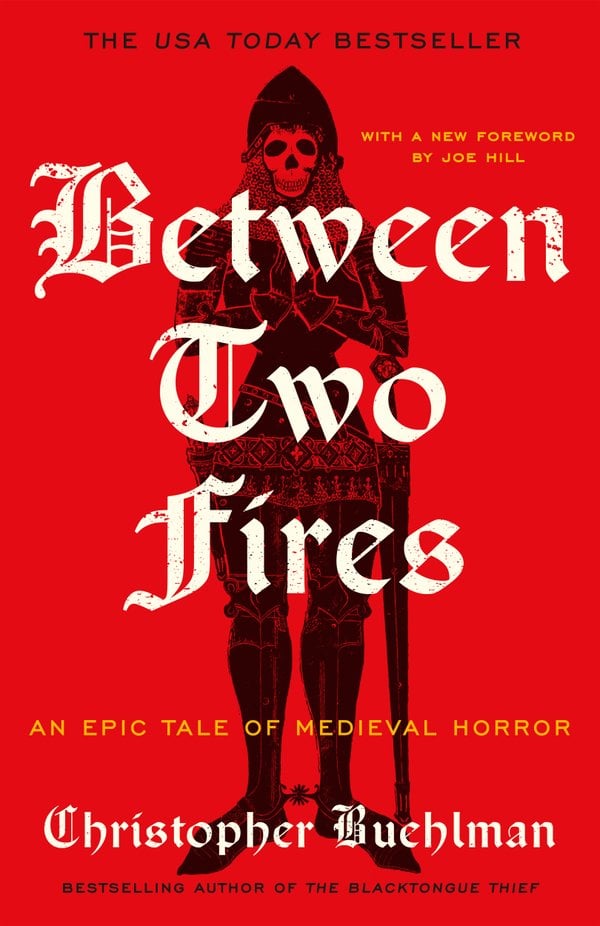
Christopher Buehlman, Between Two Fires (Novel)
I’m new to Christopher Buehlman’s work, but I am absolutely haunted by his medieval horror novel, Between Two Fires, the story of a knight, a priest, and an orphan wandering the French countryside during the Black Plague. While obviously death lingers around every building and at the end of every road in this novel, there are some truly unsettling scenes and scenarios with the demons who populate the underbelly of the world in Two Fires, and the monsters our trio face—both human and inhuman—on their quest to deliver the aforementioned orphan on a divine mission to Avignon.
There is a scene during which our party camps at what is essentially a haunted castle that will set all our senses to flee and toss the book aside, and also a truly harrowing encounter with a possessed statue that is distressing as all hell.
There is a very slight language barrier to those unwilling to read something that isn’t written for contemporary audiences, and also some cultural acceptance that must be done to immerse the reader into fourteenth-century France (especially if, like me, you bristle at antisemitism assumed as cultural norm.) But overall, a fantastically riveting and gut-churning horror story and entry into an entirely new set of books by an expert in the craft. Give it a look.

Ryan Coogler, Sinners (Film)
I’ve already said how much I hate watching unnerving trailers for horror movies in the theatre, and when Ryan Coogler’s Sinners was nearing release, I figured I’d feel the same. But, here’s the thing…when I finally did see a trailer for this movie…
…I was intrigued as hell.
Again, I’m a sucker for a good period piece, and Coogler’s Black Panther films are, of course, cinematic triumphs even without being based on comic book characters that I love. Like Panther, Sinners is a celebration of culture and community at a certain point in America’s bleak history, highlighting what it means to come together as one despite racial prejudice and monsters both within and without, and those who might steal a community’s joy, its spirit, the music it requires to survive, and its lifeblood in the space of a single night.
Unnerving? Oh, sure. Less so that other horror movies I’ve flinched away from on the small and silver screens? Maybe in terms of the monsters and blood. But unnerving in other ways, too, in smaller more desperate, more intimate moments…when lovers and family are torn apart, or when a kindly presence may or may not have been turned into a vicious monster, and until you extend a hand across the threshold, you simply don’t know if that friend will take a bite. Unnerving in levels of scale—the ratio of vampires to humans, of those infected against those who aren’t—and the heart wrenching realization that nearly everyone at the juke joint is destined to die tonight.
There are parts of Sinners, being who I am as a human being at this time in my life, at this level of privilege for whatever you want to call privilege, to which I will definitely be unable to fully relate or appreciate. As a writer though, and as a man easing himself into the horror genre, I can definitely appreciate what Coogler, cast and crew have captured on film. I wish I had not waited so long to watch it in the first place—it came out April 2025, and I saw it August 2026.
But in finally doing so, it helped me realize that maybe trying more unnerving horror films, opening my eyes just a little bit more as trailers dance across a silver screen, could lead me to cinematic gold.
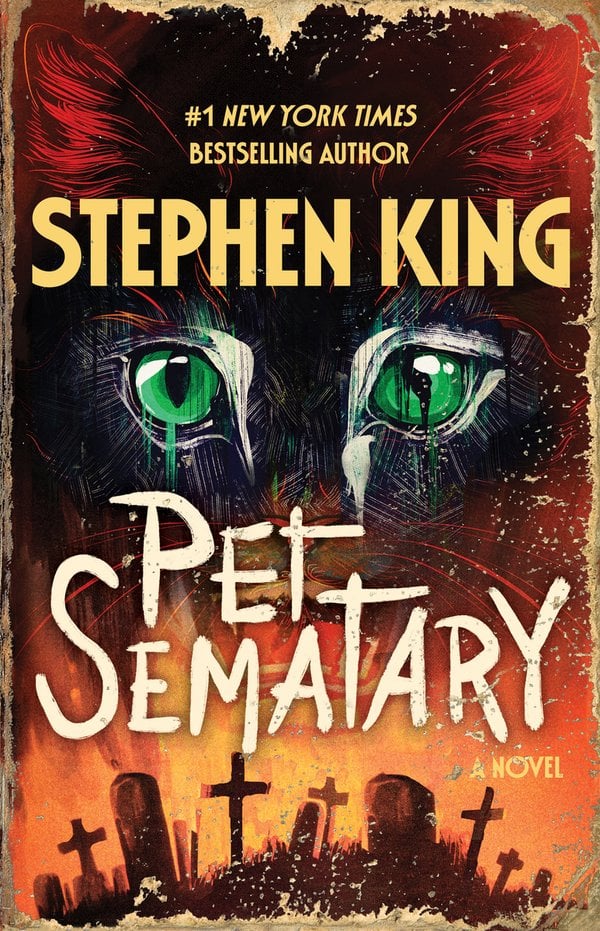
Stephen King, Pet Sematary (Novel)
Back to Stephen King, and a novel whose trailer, unlike Sinners, failed to hook me into a viewing because it was more disturbing than I would have liked.
Okay, full disclosure: I read Pet Sematary when I was a teenager. The first filmed adaptation came out in 1989, and the second version came out thirty years later. I have seen neither. The book is about—you guessed it—an evil pet cemetery in Maine which resurrects dead animals and a father who tries to use it in order to resurrect his dead son.
Harrowing and creepy, disturbing in so many ways—especially if you’re a parent. I have toyed with reading it again, now that I do have children of my own, but have yet to pick up a shovel and dig in, so to speak. I can say that as a younger Neil, the trailer— that handprinted “sematary” sign with the askew tombstones, Stephen King as a priest, a montage full of odd jump scares—was a surefire way to get me to leave a theatre or turn off a television set. Older Neil, who would do anything for his kids if something terrible should happen to them, well…I don’t know. I’m not sure I’d have the stomach for a new adaptation, or to read the book again.
Why not judge for yourself?
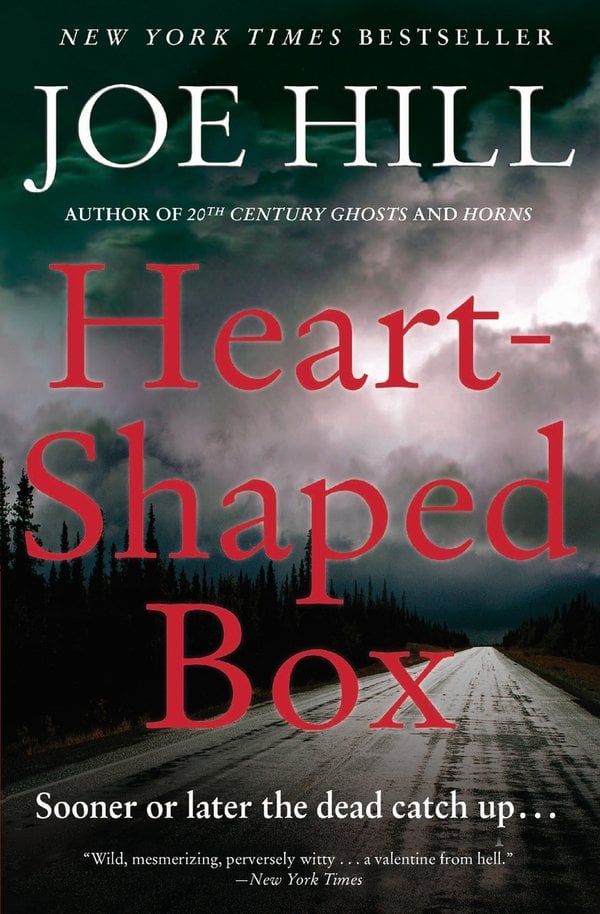
Joe Hill, Heart-Shaped Box (Novel)
The only Joe Hill novel on this list, though I could have easily filled it with nothing but (NOS482 is a terrifying mind fudge; and as I said earlier, give both King Sorrow and Locke and Key a read.) Heart-Shaped Box was the first (and oddly, because life is a circle, the most recent) Hill novel that I ever read. The story of rock-star Jude Coyne (“Judas Coyne”—get it?), a heavy metal goth type who collects weird shit, the more disturbing and frightening the better, it depicts what happens when he buys an old man’s ghost (by purchasing his suit)—which just happens to be out for revenge on Jude.
Haunting and frightening, putting the protagonist into various hard-to-escape corners and harassing everyone he loves at every turn (of whom there are few), Box is also a story about parents and children, and the regrets we make as both along the path through life to the nightroads beyond…which, as we all know, are never quite as straight and narrow as they appear to be.
Filled with the kinds of minutiae and detail that truly define a well-told Joe Hill book (seriously, read King Sorrow), Heart-Shaped Box is a pretty easy read, even if it is a book you may not want to read at home at midnight on Saturday with the lights out and no one around.

Alfred Hitchcock, Psycho (Film)
I first watched Alfred Hitchcock’s Psycho during a film class in college, circa 1995, after viewings of other cinematic classics like Citizen Kane and The Man Who Shot Liberty Valance. Now that I think about it clearly, this was probably the very first horror film I’d truly seen after my brush with the 1990 adaptation of IT. But as you probably know, comparing Hitchcock’s cinematic masterpiece of tension and terror with a two-part slapdash televised version of a brilliant novel that cameras wouldn’t be able to do justice to for years to come was like comparing delicious, crisp apples with a pile of wet seeds.
We all know the visuals: the Bates motel, starkly lit on the crest of a hill; the visceral, sudden attack in the iconic shower scene, and the flow of Marion Crane’s blood, swirling down the drain, set to fading, eerie, screeching strings. Norman himself, both shrunken and tragic, monstrous and unassuming all at once. And the ultimate reveal—maybe not as surprising to modern audiences, but nearly as much as a shock to viewers at the time as the reveal of Luke Skywalker’s parentage to moviegoers in the summer of 1980 (shh; don’t spoil it.)
A tour-de-force from start to deadly finish, if you haven’t had the pleasure of viewing Psycho yet I strongly urge you to see it in theaters if there’s a showing near you. If not, grab a friends and some popcorn, settle in, turn off the lights, and visit the Bates motel…where there is always a vacancy.
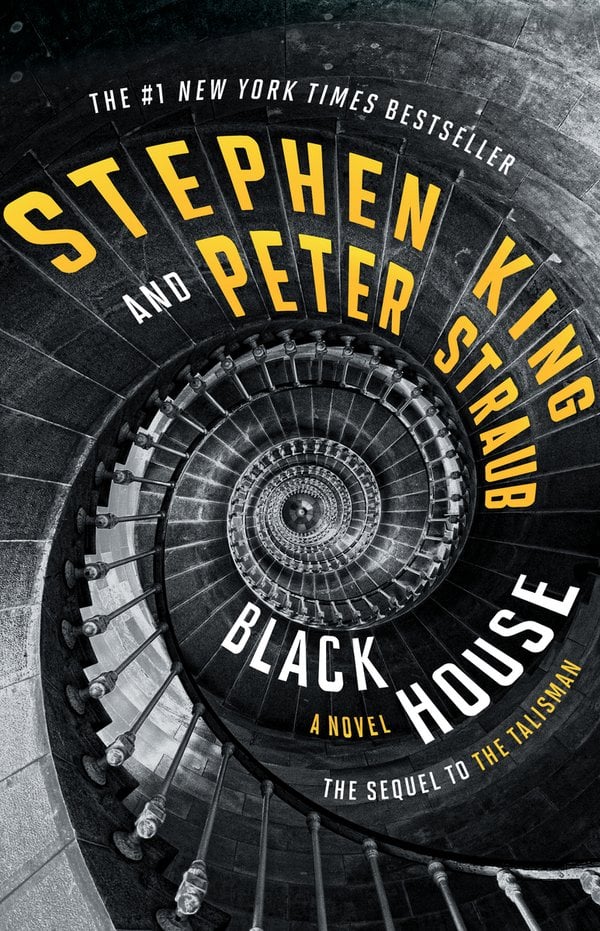
Stephen King, Peter Straub, Black House (Novel)
While we’re discussing strange and murderous locations in unassuming locales, let’s rise on the wings of a nearby crow and fly east from the Bates motel in Nevada…across the midwest and north to French Landing, Wisconsin, and settle at the edge of Highway 35—we dare not venture any closer—and peer through the woods to a black house on a black road, leading to well…another world? Hell itself?
Yes, me fine buckos, we’re back in Stephen King country but this time he’s brought along a friend for the disturbing motorcycle ride: the late Peter Straub, novelist and poet, known for Julia, Ghost Story, and many others. Together, Straub and Stephen King penned The Talisman in 1984, a fantasy novel about two worlds and a boy, Jack Sawyer, who has to travel them both in order to find an artifact that will save his mother—and another reality—or die trying.
Black House, cowritten and released nearly twenty years later, is Talisman’s long-awaited sequel, a horror novel meets detective story which also ties in neatly to King’s other world-spanning series, The Dark Tower. In Black House, Jack is an adult—a homicide detective in Wisconsin, transplanted from California—and helping to solve a set of serial vanishings from the town of French Landing alongside the local cops.
The story, of course, is hardly your traditional crime novel in that the monster out there kidnapping kids, eating them, leaving notes and giving allegiance to something more…otherworldly than the book’s very mortal villain, is a loathsome, horrible presence throughout the book—and King/Straub’s depiction of the murder sites, the murders themselves, and the mind lurking inside the killer, are enough to set you heading for the state line on the back of the nearest Harley Davidson motorcycle.
Talisman was thrilling, but Black House is monstrous. The authors’ description of the book’s eponymous, vertigo-inducing structure itself is a meal set for vivid nightmares. An unsettling, geometrically fluid, labyrinthian house—ancient and in disrepair, painted all in black—it repels any who might approach, deterring them from entry. This haunted house welcomes no foolish mortals other than those dragged into its depths by its caretaker, the monster with its key, using it as a portal between worlds.
Whoo. Yeah. If you feel like traveling with Steve, Peter, and Jack Sawyer to Wisconsin, grab your bike and come along for the ride. You may or may not want to read The Talisman first (and there’s a third book, Other Worlds Than These, coming out in October) but I think you could probably get all the context you need from Black House itself.
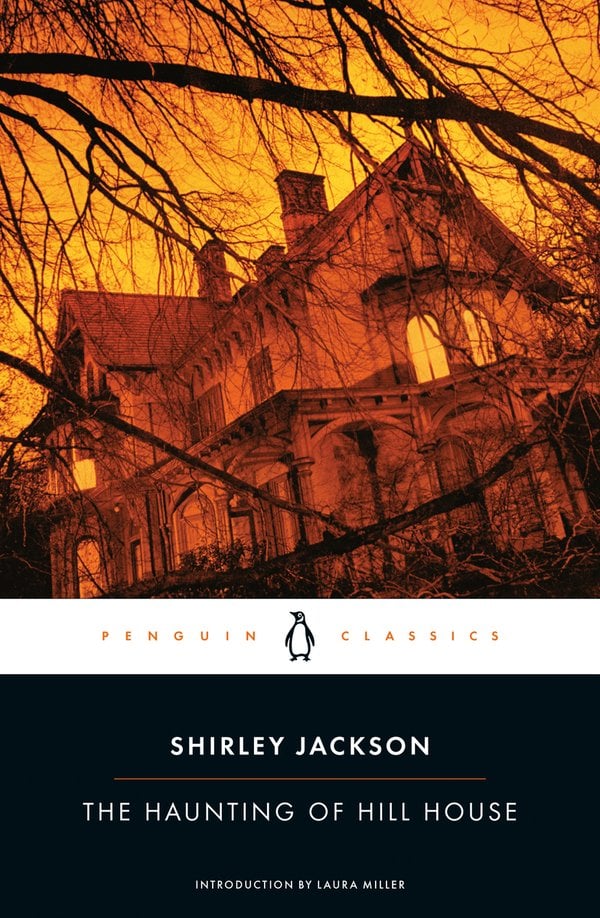
Shirley Johnson, The Haunting of Hill House (Novel)
Speaking of haunted houses, it would behoove us to stay clear of Hill House— a mansion in some unspecified location, visited by a group of “paranormal experts” looking for ghosts, none of whom have had the good sense to accept my warning. Psychologically distressing, Shirley Jackson’s prose (she wrote The Lottery, a very different kind of provincial horror story) sends all of its characters reeling as a series of supernatural events send them running afoul of spirits and inexplicable writing, culminating in blame for all the weird phenomena settling squarely in the lap of one of the visitors to the house.
The book was loosely adapted as a television series for Netflix in 2018, with a follow-up in 2020, titled The Haunting of Bly Manor. Full disclosure: I’ve seen neither; maybe you have. But the poster for the first series was enough to put me off because, as I’ve stated, until recently I’ve been a bit of a visual coward when it comes to this stuff. That said, I was quite taken with Jackson’s novel, so maybe I’ll give it another look.
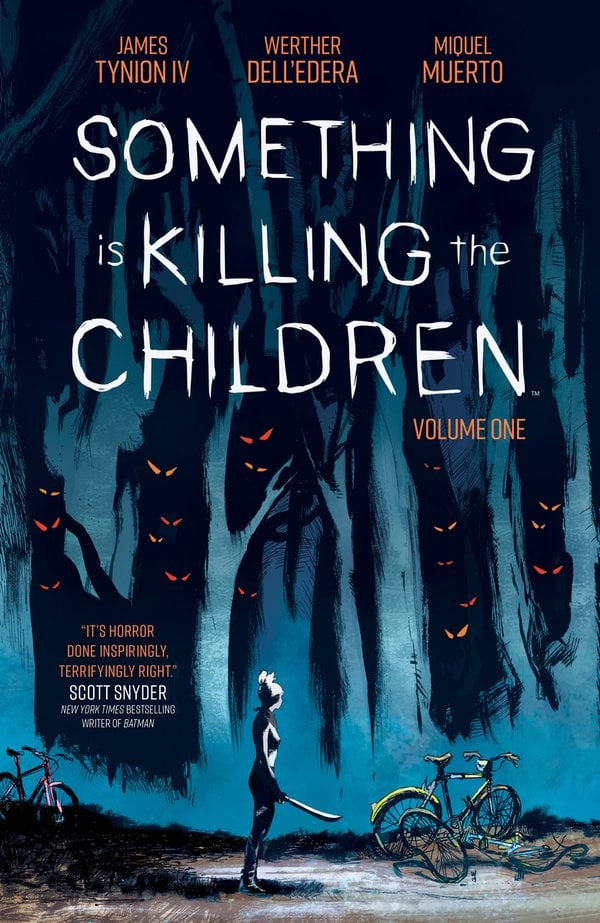
James Tynion, Werther Dell’Edera, Something Is Killing the Children (Comic Series, 2019 – Present)
The only comic book on this list (I was going to add Locke and Key, but this list is already too full with Stephen King and Joe Hill as it is), SITKTC is coauthored by James Tynion and Werther Dell’Edera, published by BOOM Studios, and is being developed right now for television and film. I’m new to the world of monster hunter Erica Slaughter and the “Slaughterverse”—a series of comics spanning characters and factions in Chicago, London, and New Orleans, all with allegiance to the Order of St. George, an organization that has been hunting and killing monsters for several centuries, keeping their prey secret from the public as best they can.
The main comic focuses on Erica and the locations to which she travels as a Black Mask in the Order of St. George (there are different colors—black, white, scarlet, azure, etc.—each with a different task pivotal to the overall organization), and the monster types she tracks and kills. The thing that makes this series so terrifying is that the monsters themselves (like in Stranger Things) can’t be seen by adults unless specially/surgically treated to do so…and are usually created by children and then stalk children.
Moody and atmospheric, bloody and brutal, there are parts of SIKTC that are definitely more horrible than others, and like The Walking Dead and The Stand there are many sections devoted to the horrors the various factions and humans inflict on one another. But yeah, SIKTC IS freaking horrible and frightening and hard to read. And I love it to (bloody) pieces.
The world-building alone (which I understand Tynion really fleshed out after the initial series became a hit) is worth the price of admission. But if you dig horror and monsters and blood and adventure and travel, get on the Something Is Killing the Children train before it becomes a global phenomenon.
*
And there you have it: ten stories across several forms of media you, as a crime writer, can absorb to dip your toes into horror. I’ll admit, now that I’m traveling down the nightroads myself, I still can’t believe I’d been so reluctant in the first place. As a fledgling horror writer, my plan is to keep peeking through my fingers at the movies and haunting my local bookshops for choice novels and comics that I can hide in my freezer when I’m too scared to read them at twilight.
Visually squeamish and prone to anxiety, it may take a little time until I’m ready to walk the Backrooms, or come face to face with the monsters of my childhood—Freddy, Jason, Chucky, and the like. But still, every step forward in the darkness seems worth it, to me as both a reader and writer. I’ve learned to embrace the jump scare, and am ready to love the horror.
Because in the end, it feels like a crime not to.
***

Neil Kleid
Xeric-Award winning graphic novelist Neil Kleid authored Ninety Candles, a graphic novella about life, death, legacy and comics, as well as the graphic novels Brownsville and The Big Kahn, and the novel Return to the Motherfreaking Fun Factory. He has written for nearly every comic book publisher in the industry, adapted Jack London's Call of the Wild into sequentials for Penguin Books, did the opposite for Marvel Comics' seminal Spider-Man storyline "Kraven's Last Hunt," and is collaborating on the digital creator-owned series Kings and Canvas, with artists Jake Allen and Frank Reynoso for Monkeybrain Comics. By day, Neil is the Art Director for the Topps Company's digital suite of trading card apps. He lives in New Jersey with his wife and four kids, where he roots for the Tigers, grills like a king, writes like a champ.