
Planting the Seed: How Agatha Christie's Techniques Shaped the Modern Thriller
Robert Gold on rereading, hidden clues, and writing his latest twisty thriller Ten Seconds
In Sleeping Murder, Miss Marple visits the fictional British seaside town of Dillmouth. She warns the novels young protagonists, Gwenda and Giles, not to investigate past events at their new home, telling them to let well alone. Miss Marple then proceeds to uncover and solve a decades old murder, where only the killer knew a murder had taken place.
Sleeping Murder is one of my favorite Christie novels for the way she seeds the constantly unfurling plot, leaving clues for the reader at each stage of the story. By the end of the book, Miss Marple has uncovered the victim, where and how she was killed, where she is buried and, of course, who the killer is. Throughout Sleeping Murder, Christie takes us on a brilliant journey of discovery where one revelation leads to another, before the killer is finally exposed.
In reading the novel, a casual reader can enjoy the story for what it is: an adventure in a seaside town with classic characters and a great twist at the end. However, Christie knew other readers liked to read in forensic detail. Searching for clues, acting as detective, they follow the seeds she carefully plants along the way.
Reading a Christie thriller for a second time gives you a true appreciation of her genius. All thriller writers wanting to learn from her skill should take the time to revisit her classics. A second reading, when you have full knowledge of the final denouement, lets you share in all of the authors brilliantly seeded delicious twists and turns.
In every one of her novels, she seeds the truth, but very often secrets are planted so deep they are impossible to appreciate upon first reading. Early in Sleeping Murder, the author gives us such a definitive steer on the location of the body, long before the confirmation of an actual murder, reading the book again you wonder how you missed it.
Anyone wanting to relive her genius, I would steer towards a second reading of the Poirot novel, After the Funeral, where the murderer is hidden in plain sight throughout the book. Equally, the classic Murder on the Orient Express, surely the greatest final revelation of any thriller, seeds its unthinkable conclusion throughout the book. Read it again and you’ll see.
Without realizing it, when I wrote my first thriller, Twelve Secrets, I was enormously influenced by Christie. My ambition was to write a thriller with a cast of characters set in a close-knit community, where bubbling below the surface every character kept a secret. Written in twelve parts, each section ends with its own revelation and the killer lives in plain sight throughout.
When I first sat down at my kitchen table to write the book, like many authors, I knew the beginning and the end but had little idea what would happen in between. As I wrote the story developed, as did the characters. I rewrote the first half of the novel seven or eight times over, and that has become the writing pattern I’ve adopted for all of my novels. The first half of the novel grows and matures and in each of the rewrites, I plant the seeds for the ultimate conclusion.
A writer needs to know their characters and plot to be able to sow the seeds for a truly twisty ending. When it comes to writing the ending, all of the groundwork has been done, and I find myself frantically pulling all of the strands together.
One of my greatest learnings from Christie was the fact she never cheated. While clues might, at times, be almost impossible to spot, a second reading demonstrates that all of the pieces of the jigsaw are there. Never cheating is an absolute rule I take into all of my own books. For a reader, there is nothing worse than a revelation which makes no sense or simply doesn’t fit the facts already presented. A conclusion cannot be built upon a far-fetched series of events and a series of the most unbelievable coincidences.
For each of the four thrillers I’ve written to date, I’ve been fortunate enough to work with the same wonderful editor, Rosanna. An author and editor develop a close understanding of each other and the brilliant thing about Rosanna was she was happy to challenge me every step of the way.
Some writers like to deliver a part manuscript and work with their editor on the plot as they progress, but I’ve always delivered the whole book. Once I did, Rosanna would then take me to task with a string of questions. Often, we’d sit for hours, ensuring all of the clues I’d strategically set along the way were fully developed. It became a mental battle between us. At times she definitely caught me out and found an unanswered question, but equally I took delight in going back to her to say, the clues are there!
By the time we edited our fourth book together, she often said to me, I know the answer is there somewhere, but can you show me. And then she’d remind me, if a clue is too hard for her to spot when she’s looking at every detail, a reader who is sat on a packed commuter train, noise all around them while they think about the day ahead, is never going to spot it.
Just like with a brilliant magician, the reader can simply enjoy the trick, or they can choose to look at every detail to try and understand how it is done. As a writer, you have to deliver for both. That’s the genius of Christie and something that all modern thriller writers aspire to.
Developing the plot for a twisty thriller can give a writer enormous joy. It certainly does for me. In my second book, Eleven Liars, I began with a single idea—the revelation of the wrong body buried in a coffin. How it got there and who it was I would worry about later! I just liked the idea and the story potential it offered.
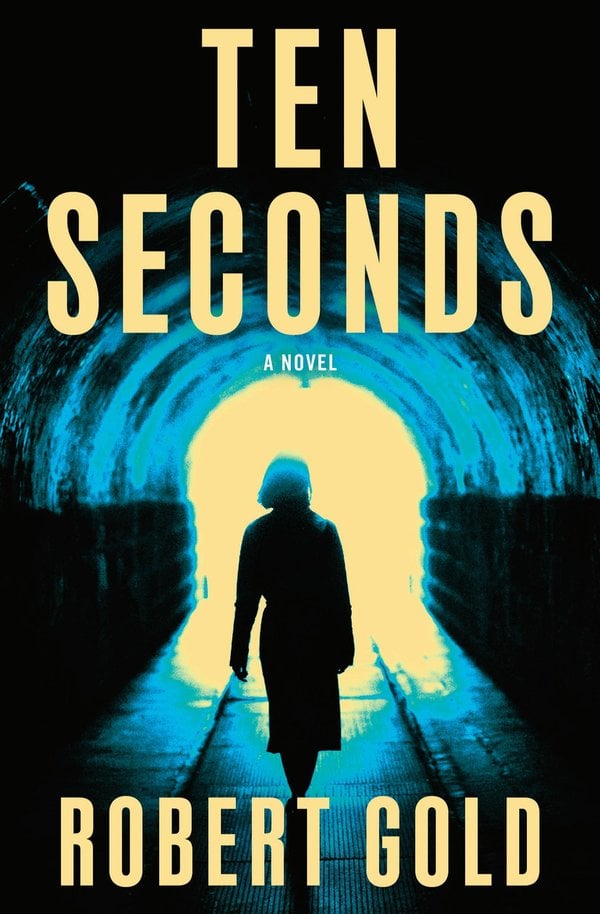
In my new book, Ten Seconds, after a kidnapping at the start of the story, I set out to create a chase. One event leads to the next, and hopefully close readers will enjoy the seeds planted along the way, leading them to the final twisty conclusion. As I would say to Rosanna, the clues are there!
***

Robert Gold
Robert Gold is the Sunday Times bestselling author of the Ben Harper series, which includes Twelve Secrets, a Richard and Judy Book Club pick, Eleven Liars and Ten Seconds. Originally from Harrogate in North Yorkshire, Robert Gold began his career as an intern at the American broadcaster CNN, based in Washington DC. He returned to Yorkshire to work for the retailer ASDA, becoming the chain's nationwide book buyer. He now works in sales for a UK publishing company. Robert now lives in Putney and his new hometown served as the inspiration for the fictional town of Haddley in his thrillers.