Pop Novelist: Rereading Michael Crichton’s 'Sphere'
Ian Mackenzie on the formative reading and the lasting influence of an underwater space orb.
Somebody occasionally points out that vastly more words have been published about Kafka than Kafka himself wrote in his lifetime. Somebody’s probably writing a book about Kafka this very minute. I’d wager the same cannot be said of Michael Crichton.
That isn’t to say Crichton is an author whose reputation needs resuscitating. He doesn’t require a critical enterprise on the level of the Kafka industrial complex to keep his name above water; the man was his own industrial complex. The world-conquering achievements of the Jurassic Park franchise—two novels that rampaged through the bestseller list like a genetically-engineered indoraptor on the loose, a film series seven deep and ever-growing, theme parks, Lego sets, a brand whose imperial conquest of the collective imagination stands just a rung below that of Harry Potter and Star Wars—ensure that a story he wrote will be known to large numbers of human beings as long as there are human beings who consume stories. His conceit, an ingenious and just-scientifically-literate-enough confection about the profit-motivated resurrection of dinosaurs, is wired into our general consciousness as firmly as the stories of the Bible. Maybe more so. If someone tells you to imagine God, I’m not sure who’s going to pop into your mind; if someone tells you to imagine a dinosaur, I know for a fact that you’re imagining a dinosaur from Jurassic Park. It’s never going anywhere.
But I’m not here to talk about Jurassic Park. I’m here to talk about Crichton’s best novel, Sphere. I first read it when I was ten or eleven, which is to say five or six years after its publication in 1987. I’m sure Jurassic Park led me there: like a lot of boys around that time, I was ensorcelled by everything to do with that book and its film adaptation. And it didn’t end with the dinosaurs—eventually I would devour a large chunk of Crichton’s oeuvre. I read Rising Sun and Disclosure. I saw the movie versions of Rising Sun and Disclosure, to the considerable chagrin of my parents. I even read A Case of Need, the abortion-themed medical thriller Crichton published under the pseudonym Jeffery Hudson, in 1968, one year before The Andromeda Strain (and five years before Roe v. Wade). I hadn’t yet reached puberty. What on earth was I doing reading these things?
The answer to that question is Sphere. I loved Jurassic Park because I loved Jurassic Park; Sphere was the thing that convinced me I loved Crichton. I absolutely inhaled the book when I first got a hold of it. I took it like a drug. I read it multiple times: I recall three big hits, in rapid succession. I’ve forgotten more of childhood than I remember, but I remember sitting in grass under a tree, at the end of a day of summer camp, and hoping my father would arrive late to pick me up so I could snack on a few more pages. My devotion to Crichton wasn’t indiscriminate. I disliked Rising Sun, and I disliked Congo so much that I didn’t finish it. I quickly put down The Terminal Man and I never picked up The Great Train Robbery. (Apparently some people now regard the latter as the high-water mark of his books; really?) By the time he was publishing Airframe and Timeline, during Bill Clinton’s second term, I’d moved on—from Crichton, and from reading books like the ones Crichton wrote. He died in 2008, and in the years afterward, I no longer even glanced up at the bookstore as, Tupac-like, his name continued to appear on the racks of new fiction, on finished or half-finished manuscripts dug out of his old files that, in some cases, were brought to life through the necromancy of peer-level airport-bookstore titans like James Patterson.
I’d moved on from Crichton because I’d moved on to Literature—yes, with a capital L. Whatever Crichton was, I knew he wasn’t that. You didn’t read his stuff for the sentences. By the time I was thirteen or fourteen, my loyalties had turned fully to Camus and Hemingway and Nabokov and other writers whose names will make your eyes roll at the incipient taste of an English major in training. (For the record, a thirteen-year-old reading Lolita wasn’t any less unsettling to my parents than a twelve-year-old seeing Disclosure.) Pretension had set in; there were conditions now governing my reading list, and while I’m not certain I could have articulated then what those conditions were, I’m pretty sure that rampaging reanimated dinosaurs and underwater space orbs were disqualifying.
This transformation happened around the time the idea of becoming a writer had gained escape velocity in my mind. Not a writer—a Writer. The whole kit and kaboodle. And Writer-writers wrote the kind of sentences that came framed between quotation marks; they wrote books that won prizes. Crichton’s prose wasn’t up to the same standard as, well, Nabokov’s: my adolescent mind perceived that instantly. The irony of the shift in my reading habits was that pretty much all my first attempts at writing fiction were indebted to genre: time travel, aliens, treasure hunts, all the good stuff. By the time I reached high school I was already trying to write what you would call “literary fiction,” but for a long time before that, it was pulp, all the way down.
***
To steer us back to that underwater space orb, here’s a quick reminder of Sphere’s whole deal, if by chance you haven’t read it in a while: the U.S. Navy enlists a team of civilian specialists (psychologist, mathematician, biologist, astrophysicist) in a super-secret mission to explore a mysterious vessel one thousand feet under the sea that appears to have come from outer space. The novel begins with the most Hemingwayesque first sentence in all of Crichton (“For a long time the horizon had been a monotonous flat blue line separating the Pacific Ocean from the sky”), which might be the only one in all his books—with its fine tension, structure that mimics the thing it’s describing, and subtle foreshadowing—that could withstand even a modest exegesis.
Among all of Crichton’s books, Sphere is the densest, most effective vehicle of novelistic pleasure. (Runner-up: The Andromeda Strain.) I am not for a moment denying the weapons-grade entertainment value of Jurassic Park in book form, but it was plainly designed as the blueprint for a movie; it actually began life as the draft of a screenplay, Crichton once told an interviewer, before it mutated into a novel. Sphere doesn’t read that way at all, and if you don’t believe me, you should watch the movie that was made from it.
I recently reread Sphere, and it turns out that, like childhood, I’d forgotten much more of the book than I remembered. I recalled the intense pleasure of reading it but not any particular plot point; what I did remember could be summarized as follows: underwater, alien space orb, weird shit happens. I’d forgotten the true nature of the crashed spacecraft that contains the sphere, which, although it’s revealed early on, I won’t spoil here. I’d forgotten that the sphere’s first means of communication with the human crew is a series of computer messages that uncannily predict the tone and adolescent awkwardness of early ChatGPT. And I’d forgotten how it ends.
You can criticize Sphere—and I’m happy to do that, too—but there’s much to praise. For one thing, it’s probably the only book of Crichton’s in which the characters as he wrote them on the page are more memorable than the versions that turned up in the later film adaptation. You think of Ian Malcolm, from Jurassic Park, as an indelible personality, but that’s because you’re recalling Jeff Goldblum’s immortal celluloid rendition. While the various protagonists of Sphere suffer from some of the thinness Crichton’s characters are generally criticized for, they all have a bit more flavor, a bit more edge and oddity, than you find in most of his other books.
There’s also good dialogue—witty and world-building, instead of merely expository. Take this exchange, early on, between Norman Johnson, the psychologist whose close third-person perspective pilots the novel, and a U.S. government official, as they contemplate a potential first contact scenario:
“You realize the President will want to talk to these aliens personally. He’s that kind of man.”
“Uh-huh,” Norman said.
“And I mean, the publicity value here, the exposure, is incalculable. The President meets with the aliens at Camp David. What a media moment.”
“A real moment,” Norman agreed.
“So the aliens will need to be informed by an advance man of who the President is, and the protocol in talking to him. You can’t have the President of the United States talking to people from another galaxy or whatever on television without advance preparation. Do you think the aliens’ll speak English?”
“Doubtful,” Norman said.
“So someone may need to learn the language, is that it?”
“It’s hard to say.”
“Perhaps the aliens would be more comfortable meeting with an advance man from one of our ethnic minorities,” the White House man said. “Anyway, it’s a possibility. Think about it.”
Norman promised he would think about it.
***
Crichton is often called a writer of “techno-thrillers,” but that term accurately applies to just a handful of the two dozen books he published during his lifetime. Sphere definitely belongs in that category, yet remains unique insomuch as it’s the only such book in which the technology in question cannot be explained by human science. Don’t get me wrong: there’s plenty of sciency intellection and pauses for technical explanation; but the most important thing in the book, the sphere itself, is beyond the reach of earthly knowing—no effort is made to explain how the alien sphere exerts its power, and the book’s core theme, in the end, is the limit of human understanding.
This differs from Jurassic Park, in which the human minds involved (or at least some of them) fully understand and command the science they’re working with; they run into trouble by failing to imagine the consequences of a particular set of scientific achievements. Crichton goes to a lot of effort to give plausible explanation to the harvesting and recombination of dinosaur DNA, and the mistakes that the involved human beings make are ones of ego, greed, and—more or less—neglecting to double-check their homework before turning it in. There’s a lot of impressive science that surrounds the sphere in Sphere—the chemistry of saturation diving, the workings of black holes, jellyfish biology—but ultimately the sphere itself contains a technology so alien that it registers as magic. Even the outer-space virus in The Andromeda Strain is still, in the end, just a virus.
***
When you’re a parent, you notice the ways your child is similar to you, and the ways she is different. My daughter—to her credit—is not me, but in at least one respect, she’s a chip off the old block: she’s a reader. She does other things, too, I promise, but a book is never far from hand. (Even if it is a book about Minecraft.)
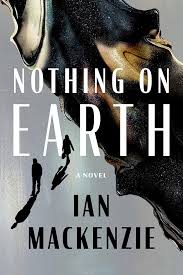
Around the time I hatched the idea for my third novel, Nothing on Earth, my daughter turned five years old. My last book had been published not long after she was born, and I hadn’t written much of anything since that time.
She was five, and then six, and so I can recall very precisely the cultural material that, as I worked on the new novel, I was ingesting—it was Dog Man. It was also Amulet, a graphic novel series about mystical rocks that give power to their possessors in a hidden world that exists parallel to ours. And there was Wingbearer, a beautifully illustrated fantasy story about a magical realm ruled by mythical birds in which a girl discovers heretofore unknown powers (which include talking to the birds). And Hilo, another graphic novel series about a gentle-hearted alien robot who lands up on Earth, makes friends, and does battle with a collection of intergalactic bad guys. And The InvestiGators, yet another graphic novel series, this one about a pair of detective alligators who solve ridiculous, often food-based crimes and whose enthusiasm for puns would make Thomas Pynchon blush. Oh, and Harry Potter.
I saw these things take possession of my daughter, and, if I’m being honest, they took possession of me as well.
When you’re a parent, and someone asks you what you’ve been reading lately, the honest answer is always whatever your kid’s been reading.
And somewhere in this blizzard of contemporary children’s entertainment, which I could see was, to my daughter, entertaining as shit, and which was often pretty entertaining to me as well, a disinhibiting idea took hold: I could write about entertaining shit, too.
I am fully aware that this trope—call it “writer of literary fiction goes skinny dipping in the warm, sultry waters of genre”—is, by this point in time, a hoary one, so I’m not trying to lay claim here to some radical intellectual breakthrough. (And, also, no one wants to see the average writer of literary fiction go skinny dipping.) At the time, though, it seemed radical to me; and so, armed with my unoriginal insight, I worked for the next three years to complete a draft of a novel about spies chasing after a mysterious metal that science can’t explain.
I didn’t realize, until the end of those years of writing, that exposure to the kind of entertainment my daughter enjoyed may have given me permission, but it didn’t plant the idea. The idea was planted a long time ago, when I myself was young and first falling into the thrall of the raw power of storytelling. What I didn’t understand as I was writing the book was that the kid whose favorite writer was Michael Crichton and whose favorite TV show was The X-Files had sneaked back into the cockpit and taken the controls.
***
When I sent the manuscript of Nothing on Earth to my agent, I wrote to her, with a bit of tongue in cheek, that it was “like a Michael Crichton novel written by Joan Didion.” Crichton came to mind because Crichton was special to me. In the popular conception, he gets lumped in with the other megalodons of the bestseller list from the 1990s—King, Clancy, Grisham—but I never read those guys. Crichton was my guy.
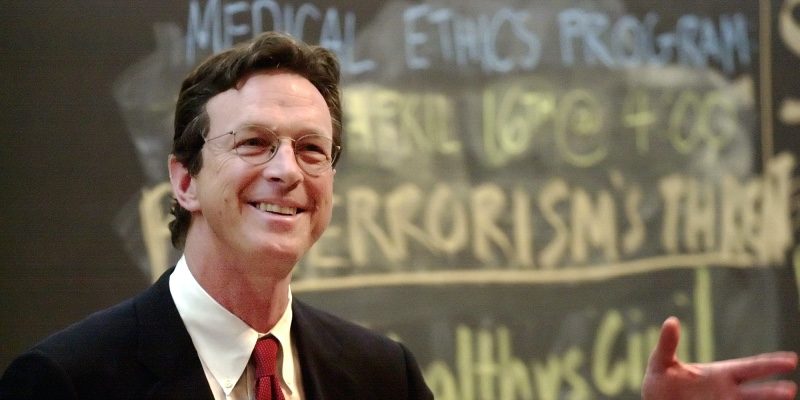
I don’t recall now how much I knew about Crichton, the person, when I was feverishly reading his books as a kid. “Pop novelist” was the epithet Stephen King used in a warm tribute written after Crichton died, and that seems about right. His books were like pop songs, in the air, easily found, easily enjoyed. But he had a rich life, a fascinating persona, beyond the novels that made him famous. He was brainy—that’s one of the commonplace details in profiles of him, the Harvard education (undergrad and medical school), the rangy mind that vacuumed in shelves of knowledge for the purposes of producing books that could withstand at least a few waves of scientific interrogation, but also because he was, in a non-transactional way, curious. He traveled widely. He was improbably tall. He lived in L.A. and interpolated himself deeply into the film industry. In 1992, he was one of the fifty most beautiful people alive, according to People Magazine. And he knew Joan Didion personally, it turns out. Toward the end of his life, his pronouncements of doubt about the science of manmade climate change gave his public persona a right-wing aura.
This last element is worth unpacking a bit. In Sphere, as each of the civilian experts brought into the deep to analyze and explain the nature of the submerged craft tries and then fails to do so by applying his or her discipline, Crichton undertakes an inquiry into human expertise as it ricochets off the unknown. To the extent that a critical literature around Crichton exists, it emphasizes—correctly—that in his work there is a throughline of doubt; of wariness about the confidence of experts. Like a lot of things these days, it’s a viewpoint that has become politically coded. But unlike Disclosure or Airframe or—above all—State of Fear, his spate of latter-day thrill-eds, Sphere unpolemically inhabits this epistemology of doubt that colors so much of his work. In some of the writing about Crichton during his lifetime, I’ve seen this intellectual thread described as “conservative”; and, while his public statements in the last decade of his life offered a red-state flavor—in particular that position on climate change, which he made a point of bruiting publicly, including at a congressional hearing—it doesn’t strike me as inherently partisan to question received wisdom and to point out that human knowing has its limits. Indeed, close attention to his writings and public comments during his life doesn’t support a simple political reading; rather, it leaves the impression of a mind that was inquiring, ambitious, heterodox, rigorous, and unsettled.
***
Thinking back to the pure, glue-sniffing pleasure I took from Sphere when I initially encountered it, and then to the separation from it and other books like it that took place alongside a growing self-awareness of my own writerly ambition, I find myself asking a question that it seems I long ago should have known the answer to: Why did I want to be a writer? Sphere was the kind of thing I was reading—and comic books, and Anne Rice’s vampire fantasias—when I decided that all I wanted to do in life was write, and yet when I got serious about writing, that wasn’t the kind of thing I started writing at all.
Wanting to be a writer was a thing I knew about myself long before I could have articulated a reason. A ten-year-old boy dead certain that he wants to organize his life around typed words on pages is a curious thing, to say the least. Now, more than three decades later, I’m not sure I’m any closer to being able to offer a coherent rationale, although I do have a more general theory about how a person stumbles into the mistake of wanting to be a writer.
In the broadest terms, I’d say, there are two types of people who want to write novels: the storytellers and the sentence-makers. I’m sure there are other sorts of writer, and I’m sure there are other ways to think about it, and certainly there are some who inhabit both sides of the divide; but, of the two types I’ve identified, I was very much the second. Sentences, and the paragraphs they created, and even the white space around them—the sense that a page of words was so perfectly sculpted that it couldn’t have been sculpted any other way—this was the thing I wanted to do, this was the source of joy in writing. Landing a sentence, putting the right words in the right order—something that surprises while also seeming inevitable—is not unlike hitting a good shot in tennis, making the ball do exactly what you want it to do, improbably manipulating physics in your favor. In a sense, the sentence was the plot. A good sentence makes you want to read it, and then read the next.
If I were ever made to consider my influences, in terms of what I have cared about in my writing, I would mention a line of Salter’s, a page from Hardwick, the serrated edge of some dialogue in Didion, the mood in a chapter by Greene. The first passage of W.G. Sebald’s Austerlitz generates for me a deep, inward hum whose lingering resonance now competes with the pleasure I once got from reading and rereading Sphere when I was a child. As a matter of influence, I wouldn’t ever have named Crichton.
So it came as a surprise, when I read Sphere again for the first time in decades, to realize how deep that underwater space orb was submerged inside me.
***
It’s no mystery why Jurassic Park endures, in all its forms, while Sphere has slipped into the general fog of memory which obscures the majority of Crichton’s bibliography that isn’t Jurassic Park. Spielberg’s version is one of the best movies ever made. All-time great, inner-circle cinema hall of fame. Sphere, on the other hand, when it was belatedly converted to film—surely because of the post-Jurassic Park box office pixie dust that attended to any Crichton product (how else to explain the movie version of Congo?)—flopped, both critically and commercially. As far as I recall, I never watched it when I was younger, but after rereading Sphere, I sat down and gave it a shot.
It’s not as bad as its reputation suggests, but it isn’t a good movie. Its flaws are made worse by the squandering of a peak ’90s cast: Samuel L. Jackson, Sharon Stone, Dustin Hoffman, and an up-and-coming Liev Schreiber. The movie has none of the visual interest, sharp humor, character development, or filmic charisma of Spielberg’s dinosaur tale. And, once you’ve read Sphere, you realize why no one, prior to the success of Jurassic Park, sought to make a movie out of it: the book is unfilmable. It’s unfilmable in part because the sequences of suspense and terror involve ethereal creatures that are little seen and only sort of exist; it’s unfilmable because it’s a cerebral, claustrophobic book whose psychological stakes on the page were never going to translate to the screen; and it’s unfilmable because, whatever his talents as a writer of techno-thrillers, Crichton was terrible at describing human beings moving around in physical space and the practical layout of an environment. No matter how many times I read the descriptions of the underwater habitat and drowned spacecraft, and of the characters moving within and between the two, I was never able to generate more than the murkiest image in my mind’s eye of what the hell was going on. This difficulty carried over into the film. Jurassic Park didn’t have that problem. The genius of dinosaurs is that they look like dinosaurs.
***
When I was a kid, I was attentive to what my parents were reading, even if I didn’t read the same things. My mother was a devotee of paperback mysteries and, above all, Sue Grafton’s “Alphabet Series”; I recall my delight at learning that the publication date of Grafton’s latest (“L” Is for Lawless, anyone?) coincided with my mom’s birthday so I could give it as a present. My father gravitated toward elevated crime fiction—Elmore Leonard, Dick Francis, Carl Hiassen, as well as more left-field picks like Allan Gurganus. Nowadays, he does things like reread Ulysses for sport, but when I was a kid, mass-market paperbacks ruled the roost.
And my dad read Crichton, too, of course. In retrospect, I see that this was important for me. It wasn’t just that I liked it: my dad liked it, too. My dad, the guy who knew every answer on a given evening’s episode of Jeopardy!, who always had an erudite bit of history available to refer to. He liked Crichton. That mattered to me in a way I’m sure I didn’t understand at the time. It ratified my own taste.
***
As I mentioned, I recently reread Sphere. (Ulysses will have to wait.) It remains a tremendously enjoyable book. I’m a restless reader, with as many as a dozen books on my nightstand that I’m in the middle of, but I consistently found myself reaching for Sphere above the others jostling for my attention. With that said—and I wasn’t surprised to discover this—the experience of reading Sphere at forty-three lacked the kinetic, something-bursting-inside-my-chest feeling of reading it that I recall from my first encounter when I was eleven.
If I were going to recommend a science-fiction novel I’ve read recently, it wouldn’t be Sphere. It would be In Ascension, by the Scottish writer Martin MacInnes, an amazing book that was long-listed for the Booker in 2023 and should have won it. MacInnes brings to bear, atop the chassis of a science-fiction premise about something strange in outer space, such qualities as lyric intensity; brilliant, specific evocation of the numinous encounter between human intelligence and the natural world; and the feeling of swimming in another person’s consciousness. Crichton doesn’t give you any of that. But what matters, I think, isn’t what it’s like to read Sphere now, as an adult, with all the infrastructure and nonsense that crowds an adult mind; what matters is what is was like to read the book as an eleven-year-old. And that, I can attest, was great. The gift now is to know that at any point in one’s life it’s possible to be so enraptured by a book. The fact that I don’t enjoy it as much now—although I still really enjoyed it—doesn’t mean it’s aged. It means I have. Seems like it happened so fast. I hope my daughter takes her time.
***
Publishing a novel is an act of outrageous ego. You’re asking for hours of a stranger’s time; maybe a stranger who hasn’t even been born yet. Parenthood is also an act of ego, the inception of your genetic material inside someone whose primary job is to outlive you, but it’s embodied in a very different way—people aren’t paying attention to you; you’re paying attention to her.
Crichton never had to ask for our attention. Each new book of his commanded the crowds. After Jurassic Park, he could have Xeroxed pages of the phone book and still cleared enough on a new title to put a dozen kids through college. But even as his writerly predilections hardened and became, at least to me, less entertaining, less compelling as stories, I don’t have the sense that he was ever mailing it in. All the available material on Crichton’s approach to his vocation as a writer suggests that he worked hard at it. His sort-of-memoir, Travels, which I read only recently after diving back into Sphere, gives a portrait of a man who took life—including writing—seriously.
Serious writing, though, came to mean for me something other than Crichton. It took me a long time to find my way back to him, to a bookshelf in which Austerlitz sits comfortably alongside Sphere. And, if I’d not gone back to Sphere as an adult, I wouldn’t have realized that the ending of my new novel contains a kind of oblique homage to it; I like to think that my subconscious smuggled it in, a trace of the boy I once was, first falling in love with books.
In a way, this is a story about taste—how it changes, how it doesn’t. Before our daughter was born, I gave my wife a copy of Bee Wilson’s First Bite, certain as I was that how to feed our daughter, and imbue her with healthy eating habits, would be one of the leitmotifs of motherhood. The premise of Wilson’s book is that your taste isn’t inherent; you learn as you go along. I recall my wife marveling at the finding that it takes up to seventeen encounters with a certain food to know if you like it or not. I think we have taste buds for reading, too, and one’s tastes change over time, or mature, after some number of encounters. Sebald, for instance, I enjoy the way I enjoy carmenère; it wasn’t something I acquired overnight. But the fun of Crichton’s best novels, at least as I experienced them when I was a kid, is that one taste is enough, one bite. After that, you’re hooked.
His books made him astronomically wealthy, and he died in a mansion—two months after David Foster Wallace, weirdly—but it’s also the case that, like Wallace, he died too young. Along with Travels, I also recently read for the first time his late novel Prey, from 2002—it was pretty good. Silly, but pretty good, a solid techno-thriller; and, oddly, the only novel he wrote in the first person, a voice he inhabited with a lanky, lived-in ease. He might’ve had one more in him.
***
My daughter turned nine earlier this year, and not long afterward she became obsessed with a book series called Warriors. It concerns a race of anthropomorphized cats that belong to rival clans and have names like Patchpelt and Firepaw. As far as I can tell, there are approximately 17,000 books in the series, which are published under the name Erin Hunter, a pseudonym for an under-the-hood operation of writers-for-hire. (I’m available, by the way, if anyone in the Warriors C-suite is reading this; as a longtime writer, the “for hire” part interests me, with its suggestion of paychecks.) From what I can tell, based on the summaries my daughter provides, the cats do battle and perform ceremonies, in what sounds like a cat Wakanda.
Point is, my daughter loves it so much—it, the world the books make for her. In the evening, in bed, she reads until we come in and turn out the light. Then, in the morning, she wakes up, turns on the same light, and reaches immediately for the book on her nightstand. She’s right back in it. I hope she never isn’t.
*
Ian Mackenzie’s Nothing on Earth is now available from Unnamed Press.

Ian Mackenzie
Ian MacKenzie is the author of the novels Nothing on Earth, Feast Days, and City of Strangers. He was born and raised in Massachusetts and has lived in Ethiopia, Myanmar, Brazil, and New York City. He now lives in Mozambique with his wife and daughter.