
The Strange History of the Poyais Scandal, the World's First Great Bond Fraud
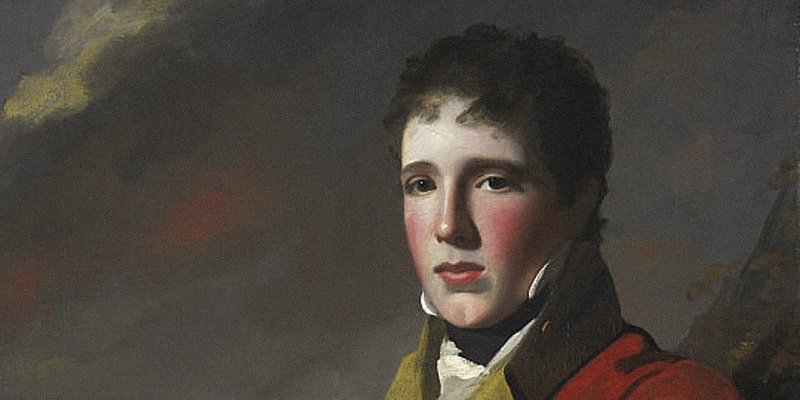
Gregor MacGregor was a Scottish mercenary, the Cazique of Poyais, and a world-class con man.
The following is an excerpt from
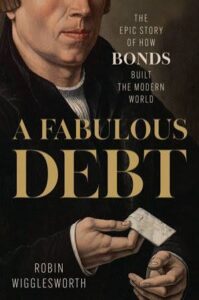
A Fabulous Debt: The Epic Story of How Bonds Rule the Modern World, by Robin Wigglesworth.
Gregor MacGregor had a great story to tell, and the Scottish adventurer would gladly tell it to anyone who would listen in the coffeehouses of Change Alley or the City of London’s gentlemen’s clubs.
Born on Christmas Eve 1786 in Glengyle, Scotland, MacGregor joined the British army as soon as he turned sixteen. After fighting under the Duke of Wellington in Portugal, he married into money. When his wife tragically passed away, MacGregor went to South America to seek work as a mercenary. There the adventurer quickly found employment with various governments and revolutionary movements, including with Simón Bolívar in Venezuela, whose cousin he married. It was already a Netflix-worthy life, but then MacGregor reinvented himself again.
MacGregor fought for a local king in present-day Honduras, who gratefully gifted the mercenary the land of Poyais, a verdant territory the size of Wales, and made him its cazique, or prince. In 1821, the ennobled Scottish adventurer returned to London to attend George IV’s coronation, raise money for his new country, and entice settlers to its gold-riddled rivers, fertile fields, and bustling capital of St. Joseph.
The Cazique of Poyais was quickly the toast of the town. MacGregor even had ballads written extolling the virtues of his country, which were sung on the streets of England and Scotland. Several hundred Brits were enticed into selling their estates, packing up their possessions, and setting sail for the promised land.
Investors were similarly thrilled. In October 1822, Poyais successfully sold a £200,000 bond in London. The elaborately decorated bond certificates were backed by a promise that “WE, GREGOR THE FIRST, Sovereign Prince of the Independent State of Poyais and its Dependencies,” would repay the loan from “all the revenues of the STATE OF POYAIS.”
The only catch? Poyais was a humongous, comically elaborate lie. Its flag, the regalia, the elegant land certificates, the coat of arms, the intricate hierarchy of titles, the complex tricameral system of government, the detailed uniforms of the Poyais army—all were just figments of MacGregor’s imagination. The unfortunate settlers landed on what was fittingly called the Mosquito Coast. Far from the settled paradise MacGregor had described, there was just hellish heat, brutal humidity, and stagnant waters with “a most pestilential smell,” according to one settler.
They were beset by tropical storms, yellow fever, malaria, several suicides of desperation, and other more mysterious maladies that they were unable to identify. Of the 250 settlers who sailed on the first two ships bound for Poyais, about 180 died and fewer than 50 returned to Britain. The tragedy would have been even worse had not the Royal Navy received news in 1823 that Poyais was a scam, and intercepted another five ships bound for the imaginary Eden. The Poyais bond became worthless as the news hit the City of London, but not before MacGregor had fled for France with the proceeds.
It is said that the only difference between tragedy and comedy is time, so it should now be fine to laugh at the Poyais debacle, despite the terrible mortal toll. But the scheme was not as outlandish as it might seem today. Maps were rudimentary back in the early nineteenth century, and the Americas were a mystery to most people in Europe. But it was known that swaths of Latin America were being freed from Spanish rule, with new countries—brimming with potential—steadily emerging from wars of independence. Many of these governments were in need of European expertise, goods, and capital for economic development, and the best place to find it was in London, which by the 1820s was the indisputable commercial entrepôt of the age.
It had also decisively supplanted the Netherlands as the best place to borrow money. Investors who had made a fortune buying Consols were now looking for new opportunities. After all, the slow but steady repayment of the Napoleonic war debts, an unusually long stretch of continental peace, and an economic boom had pushed the yield on British government bonds to well under 4 percent by 1822. By the end of the century it would fall under 3 percent, breeding a popular aphorism about how low yields warped the sensibilities of even the stereotypical phlegmatic Brit: “John Bull can stand many things, but he cannot stand two per cent.”
Luckily, internationally connected bankers like Nathan Mayer Rothschild and the Barings were happy to marry the rising international need for capital with the British hunger for yield, tying the knot in the London bond market. Between 1818 and 1832, more than two dozen foreign governments sold bonds in London. These bonds offered much juicier discounts and higher interest rates than plain old Consols—with yields typically north of 7 percent.6 Indeed, some boasted such high interest rates that they violated British usury laws and had to be issued “offshore” in Paris.
The speculative frenzy that had developed was the perfect environment for MacGregor’s scam. The £200,000 Poyais bond carried a 6 percent interest rate and was priced at 86.5 pence on the pound, for a yield of 6.9 percent, not far from the effective interest rate offered by Chilean or Colombian bonds at the time.
The South Sea Bubble had by then passed out of the memory of anyone alive, and the 1720 Bubble Act was finally repealed in 1825—just in time for what became known as the Panic of 1825, arguably the first true global financial crisis.
***

Robin Wigglesworth
Robin Wigglesworth is the editor of the Financial Times’ finance blog Alphaville. He focuses on the biggest trends reshaping markets, investing, finance, and economics across the world, writing longer-form features, analyses, profiles, and columns. Before joining the Financial Times in 2008 he worked at Bloomberg News.