Revenge Novels: Best Read Cold
10 Crime Novels Featuring Satisfying Comeuppance, Bloody Vengeance, and Ice-Cold Revenge
Revenge is a topic that has been written about since Grendel’s mother took her retribution in Beowulf and it shows no sign of reducing in popularity. Many classic novels touch on themes of revenge in an age when people often felt powerless. If you were the wrong sex, class, or race, you rarely had a voice. As much as I’d like to think times have changed, people still struggle to be heard every day.
As individuals we put a lot of emphasis on justice, and when people treat us unfairly we want to put it right. There’s a lot to be said for the satisfaction of the bad guys getting their comeuppance and the good guys living happily ever after, because that’s how we’d like life to be. Fair.
Revenge books, and indeed, crime books in general, appeal to our sense of order. It’s a character saying, ‘no, you can’t do that and get away with it.’ The most powerful stories, for me, are the ones where I identify with a character and could see myself falling into that situation. We keep being drawn to these books, perhaps, because we’ve day-dreamed of taking revenge on those who’ve hurt us. But, being good law-abiding citizens, we’d never act on those wicked thoughts.
That’s where our favorite stories come in…
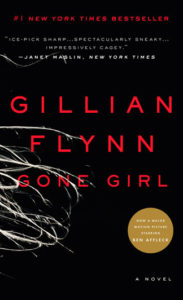
Gillian Flynn, Gone Girl
Made hugely popular by the film of the same name, this book is a taut thriller. When Amy disappears, husband Nick becomes a key suspect. At first you feel sorry for them both; by the second half of the book you realize that neither of the main characters are likable or reliable and nothing is as it seems. Amy takes revenge to a whole new level as she tries to frame Nick for her own murder. Oh Nick, you should have kept it in your pants. Hell hath no fury like a woman scorned.

Stephen King, Carrie
The moral of this story is, don’t mess with a sixteen-year-old girl with telekinetic powers. Bullied by her classmates and mother, and even laughed at by some of her teachers, Carrie White goes on a rampage that kills her tormentors. Teenage cruelty at its worst and revenge to match. I remember reading this when I was about twelve and then practicing telekinesis every night with my hairbrush. In case you were wondering, it didn’t work. I’ve been slightly obsessed with King ever since.
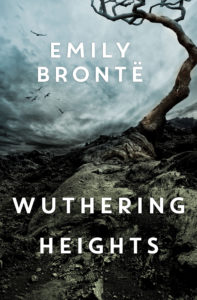
Emily Brontë, Wuthering Heights
This is one of those classics that I must have been forced to read at school. I remember expecting to find it crushingly boring and then being surprised at how creepy and atmospheric it was. After being bullied and humiliated by Catherine’s brother, Heathcliffe runs away and comes back as a wealthy man ready to exact his revenge. So good, songs have been written about it.


Alexander Dumas, The Count of Monte Cristo
If I’m being honest, the cartoon ‘Dogtanion and the Three Muskehounds’ led me to Dumas. (Did you have that in the US, or was it just something shown in the UK?) But, once there, I never looked back. The Three Musketeers guided me to The Count of Monte Cristo where wrongful imprisonment leads to adventure and revenge. Edmond Dantès escapes after fourteen years of imprisonment to pose as The Count and take revenge on those responsible for his downfall—over a ten-year period. You have to admire his patience. A case of revenge being a dish best served cold.

Stephen Fry, Revenge (AKA The Stars’ Tennis Balls)
In this homage to the afore-mentioned Count of Monte Cristo. Ned Maddstone (an anagram of Edmond Dantès) has a charmed life as head boy, talented sportsman with a career in politics ahead of him until a jealous school friend has him arrested and he is put in a mental hospital. Years later Ned is back to take revenge and take down everyone who betrayed him. Talk about holding a grudge…
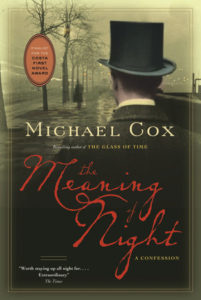
Michael Cox, The Meaning of the Night
A captivating story which begins with the wonderful line, “After killing the red-haired man, I took myself off to Quinn’s for an oyster supper.” Edward Glyver is so intent on taking revenge on his rival, Phoebus Rainsford Daunt, that he kills a stranger just for the practice. Set in Victorian England it’s a wonderfully atmospheric and captivating story. But get comfy, it’s over seven-hundred pages long.
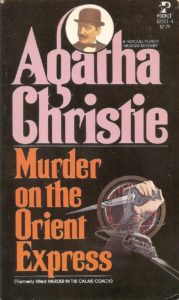
Agatha Christie, Murder on the Orient Express
Is it okay to admit that I only recently discovered Christie? I read this book because everyone was talking about the film and I always like to read the book before watching the film if I can. When a murdered man isn’t who he said he was, Poirot uncovers his connection to the kidnapping of a three-year-old girl and the people who have vowed to take revenge on him. A classic locked-room thriller with the seemingly impossible murder. I finally see why people love Christie’s books so much and wonder why I waited so long to embrace them myself.
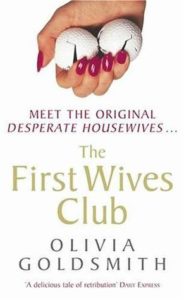
Olivia Goldsmith, First Wives Club
This is revenge at its funniest and I had to squeeze it on to this list. This is one of those rare occasions where the film is better than the book thanks to its stellar cast. Three wronged wives plot revenge on their husbands. As Ivana Trump says in the film, ‘Don’t get even, get everything.’ A lot of revenge thrillers have unreliable or unlikeable narrators but, with these relatable women, their victories are your victories, and when they succeed it is all the more satisfying.
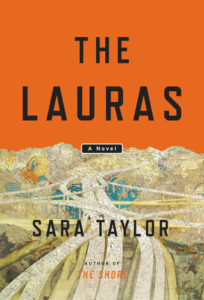
Sara Taylor, The Lauras
In The Lauras, a mother takes her thirteen-year-old child, Alex, on a road trip across the US. She talks about the ‘Lauras’ she’s met in her life, and visits places where she was fostered, or where she lived in derelict buildings. It’s a part road-trip, part coming-of age novel where Ma takes revenge upon those who mistreated her. The more compelling narrative here, though, is the one about Alex, who doesn’t identify as male or female. I can’t think of another book that has challenged me to explore identity separate from gender.
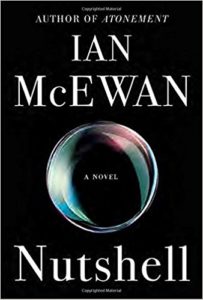
Ian McEwan, Nutshell
Nutshell is an ambitious story based on Shakespeare’s Hamlet, but with a unique spin. This version is narrated by a fetus. Yes, a fetus. Hamlet is a well-known revenge story, but McEwan takes a brave move in retelling it this way. Aware of his mother’s affair (after all, he can hear everything that’s going on) the fetus discovers his mother’s plot to kill his father for his money. What’s a fetus to do? Vow to take revenge, of course—just as soon as he’s born.

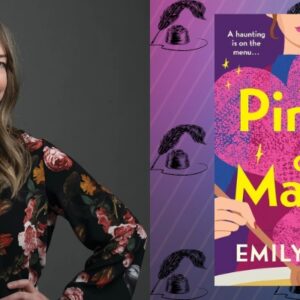
Jo Jakeman
Jo Jakeman was the winner of the Friday Night Live competition at the York Festival of Writing in 2016. Born in Cyprus, she worked for many years in London before moving to the countryside with her husband and twin boys. The Exes’ Revenge was her debut thriller. Her latest book is The Safe House, now available from Berkley Books.