

Rosemary's Grandbabies: How a New Wave of Horror Changed America
Adapted from the new book, 'Body and Blood: Catholic Horror in America'
The 2024 film Immaculate opens with a prayer whispered in the dark. A sweet-faced Catholic nun kneels before a portrait of the Virgin. She recites the Hail Mary and asks breathlessly for help “now and at the hour of our death.” Then comes the desperate effort at escape: the girl sneaks to her superior’s bedroom, steals her ring of keys, and takes off running across the convent yard. Her habit streams behind her and makes a ghostly figure.
She reaches the iron gate and is struggling with its lock when a group of faceless nuns appear. With a supernatural steadiness that overcomes the young nun’s desperate motions, the figures seize the girl and bury her alive in a coffin. Soon we learn why she was trapped in the convent. Young nuns there are victims of a conspiracy, in which priests rape them, surveil their pregnancies, and control the births that happen.
American horror borrows a lot from Catholicism. There is the bleeding statue and the twitching stigmatic, the catacomb piled with bones, the possessed child and the exorcist priest. But nothing terrifies US audiences as reliably as the Catholic (or purportedly so) triptych of female captivity, sexual violence, and reproductive control. The story of the girl held captive by lecherous priests and sadistic nuns is perennial: it falls out of fashion with one generation only to return like clockwork the next.
On one level, this Catholic story is evergreen because it communicates a durable set of wonders Americans have: about people who play by different rules than our modern ones, who answer to things that are old, powerful, and impenetrable, who live near us but who we don’t understand. For most of its history, the U.S. was a very Protestant place, and it’s easy to see how captivity stories have spun out of Protestant imaginings of Catholic weirdness (Cloister! Celibacy! Confession!) and its consequences.
But today captivity stories in films like Immaculate can also feel uncannily like real life: as it turns out, Catholic actors have perpetrated sexual violence and reproductive control. What happens when the fantasies turn out not to be fantastical?
Catholic captivity horror in the U.S. dates to the nineteenth century and to texts like The Awful Disclosures of Maria Monk (1836). The Awful Disclosures was a fictionalized and ghostwritten “memoir” about a woman held prisoner in a convent in Montreal. The book portrays the Hotel Dieu nunnery as a gothic house of terror: coffins, dungeons, torture, and death.
Monk and other women trapped inside are raped by priests, and the infants they birth are murdered and their small bodies thrown in a pit in the cellar. Monk explains to her reader that she can’t refuse clerics because they are different and more powerful than ordinary men, and that “one of my great duties was, to obey the priest in all things.”
The Awful Disclosures was written to entertain American Protestants who feared an onslaught of Catholic immigrants as well as the priests and women religious who moved from Europe to minister to them. It sensationalized things about these newcomers and their religion that contradicted Protestantism, and by extension didn’t quite fit with U.S. society and politics.
The text was also written to make money. The Awful Disclosures was one of the bestselling books in the U.S. before the Civil War, and it inspired dozens of imitations. Published accounts of “escaped nuns” remained popular well into the twentieth century.
By the 1960s, the Catholic character of captivity horror seemed less pronounced in Roman Polanski’s Rosemary’s Baby (1968). In the film, Rosemary is a sweet-faced urbanite rather than a sweet-faced nun, and her captivity happens in a Manhattan apartment building instead of a convent.
While there is plenty in Rosemary’s Baby that nods to the captivity stories of earlier generations—Rosemary is a lapsed Catholic who dreams of JFK, and Pope Paul VI flickers across television screens in the film’s background— Rosemary’s captors aren’t priests. Instead, it is her husband Guy and a conspiratorial coven of neighbors who happen to be satanists. Guy drugs and rapes Rosemary, or maybe he helps the devil to rape her. And once pregnant, Rosemary, like the nuns before her, falls under house arrest.
After nearly dying during pregnancy, she gives birth, and the coven takes her infant for its esoteric rites. When she finally sees the baby, Rosemary recoils at its monstrosity. “What have you done to its eyes?!” she cries.
“Satan is his father,” a neighbor explains. “He came up from hell and begat a son of mortal woman.”
Only at the last-minute do Rosemary’s maternal instincts creep in. She moves to the horrible infant. “Aren’t you his mother?” Rosemary smiles and we hear a lullaby.
In her review of Rosemary’s Baby, critic Penelope Gilliat described the film as “an exercise in Gynecological Gothic.” Film scholar Andrew Scahill unpacks this turn of phrase. In Gynecological Gothic horror, he explains, “the womb is a contested terrain, and the pregnant female…finds herself alone against a conspiratorial establishment which seeks to control the reproductive function of her body.”
Rosemary’s Baby added the twist of monstrous birth to this terror of mysterious reproductive control. Now the captive woman wasn’t only ritualistically raped and conspiratorially surveilled, she also faced the knowledge that “her unborn child is somehow not her own, its monstrosity apparent by the manner in which it displays a sentience independent and opposed to her[s].”
If Rosemary’s Baby suggested that the Gynecological Gothic stalked spaces like the Upper West Side, almost sixty years later the Catholic-ness of the genre has come roaring back. It has shown up in indie productions like the 2018 Irish found footage film The Devil’s Doorway, in which two priests discover a woman chained in the dim recesses below a Magdalen laundry. The woman dies in childbirth, and her infant is stolen by the laundry’s nuns for their own Black Mass.
In the United States, it shows up in movies like The First Omen (2024) and Immaculate, both of which also feature nuns and monstrous births. In the latter, Sydney Sweeney plays Sister Cecilia, an American nun who has accepted the cloistered life in Italy. Her tormentors are again priests, and this time they are trying to re-incarnate Christ through a eugenic reproductive experiment gone mad.
Cecelia is impregnated against her will, and the film ends with an escape worthy of Maria Monk, as she flees through catacombs beneath the convent then squeezes through the birth canal of a stone window while in active labor. Where Rosemary’s Baby ended with maternal acquiescence, Immaculate offers its reversal: its closing image revels in Cecilia’s murder of her monstrous offspring, a rejection of the conspiracy and her own unwilling motherhood.
Why do so many recent films explore the Gynecological Gothic, again, in its full Catholic-ness? Is it simply that Catholicism is always weird, and its clerics timelessly creepy? Certainly, a Hollywood movie like Immaculate, which made $35 million worldwide, is banking on what filmmakers recognize as a tried-and-true draw.
But there’s also this: we live at a moment where the Catholic Church, and powerful people associated with it, have made headlines for sexual violence and the control they exert over women’s reproductive bodies. In Tuam, Ireland in 2014, a historian uncovered evidence of a mass grave adjacent to a former mother-and-baby home run by nuns of the Bon Secours order. The bodies of hundreds of infants had been disposed in an underground septic tank.
In the United States, the first decades of the twenty-first century have seen dozens of Catholic dioceses declare bankruptcy because of claims of sexual abuse; we know now that thousands of priests engaged in sexual activity with children and teenagers in the US and that their superiors hid their behavior. When survivors describe what clergy did to them, their accounts sound like captivity stories.
And in 2022, the U.S. Supreme Court struck a devastating blow to women’s reproductive autonomy in Dobbs v. Jackson Women’s Health Organization, when it decided that the Constitution doesn’t protect the right to abortion. While the Court isn’t a Catholic entity, it has a Catholic majority among its nine justices, and each justice who endorsed Dobbs either was raised or is currently practicing as a Catholic.
What do we do, then, when a tradition of anti-Catholic captivity narratives—with their rapist priests, brutal nuns, and babies buried in basements—collides with documented history? As the horror of captivity has passed through generations, first on paper and then film, its recent adaptations expose a disquieting truth: the qualities of Catholicism that have long haunted the American imagination are not safely contained to fiction, and they cannot be wholly dismissed as fabrications born from discomfort at religious difference. They have damaged real girls and women, and boys and men too.
The Gynecological Gothic was never only an expression of Protestant anxiety. It is also the hair-raising recognition that sometimes paranoid fever dreams aren’t dreams at all.
***

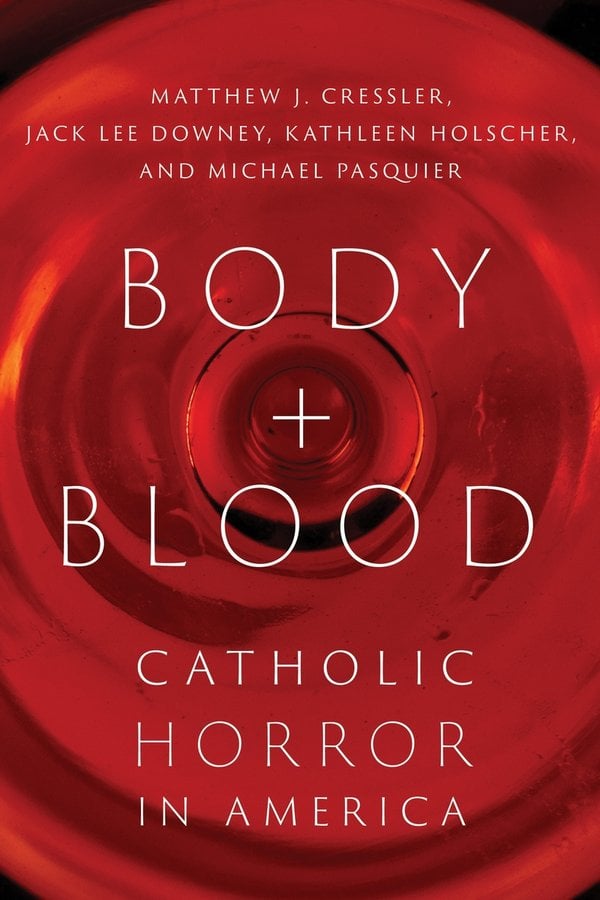
Matthew J. Cressler, Jack Lee Downey Kathleen Holscher, and Michael Pasquier
Matthew J. Cressler is an independent scholar, the author of Authentically Black and Truly Catholic: The Rise of Black Catholicism in the Great Migrations, and creator of the educational webcomic series Bad Catholics, Good Trouble. Jack Lee Downey is Associate Professor of Religion and Classics, and John Henry Newman Chair in Roman Catholic Studies at the University of Rochester. He is the author of The Bread of the Strong: Lacouturisme and the Folly of the Cross. Kathleen Holscher is Associate Professor of Religious Studies and American Studies at University of New Mexico and author of Religious Lessons: Catholic Sisters and Captured Schools Crisis in New Mexico. Michael Pasquier is the Jaak Seynaeve Professor of Christian Studies and Professor of Religious Studies and History at Louisiana State University. He is the author of Religion in America: The Basics.