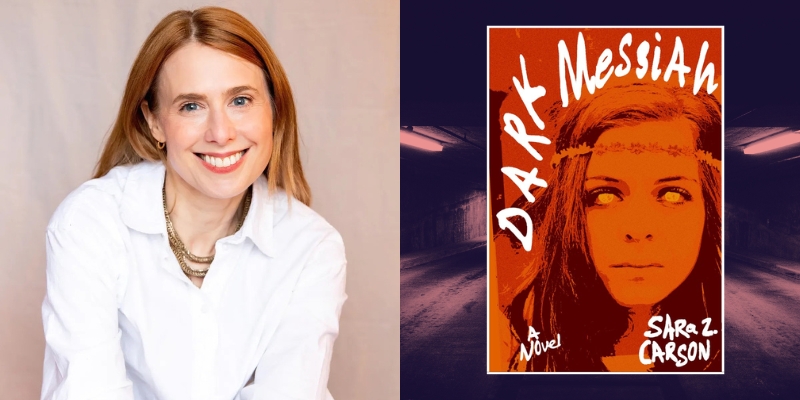
Sara Z. Carson on Cults and Writing a Novel Inspired by the Horrors of Jonestown
The author of Dark Messiah records the life of a teenage girl lost in the legendary massacre
“Whenever I see your interview with Don Harris of NBC, I am so saddened by your constricted and contorted body language that does not match your positive words. Obviously, you were saying what you were told. Even your Aunt Carol who wanted you home could not break through your fear. I wish that you could have realized your dreams and felt the comfort of those who loved you. Bless you, dear, lovely Judy.”
–Anonymous comment on Jonestown & Peoples Temple: A Digital Archive
*
I was on a summer holiday in the mountains of northeast Pennsylvania several years ago, at a small nighttime gathering. Sitting outside, slapping away mosquitoes, the conversation turned to what I always turn it to: cults.
“You should write a fiction book about Jonestown,” my future publisher recommended.
Where to even begin? I thought. I was writing another (now temporarily shelved) fiction book; the topic seemed too impossible to cover efficiently.
Jonestown was a sweeping tragedy. There were institutional failures, including government-run social safety nets, exploitation of the people in our society who “matter less” than others (elderly, impoverished, non-white), systematic racism, media bending to bullying, and political expediency, that made tragedy almost inevitable.
In the middle of the story was Jim Jones, the charismatic preacher who started his life as an advocate for racial equality and ended it by forcing the murders and suicides of over nine hundred of his followers in the home they built in the Guyanese jungle.
Jones benefitted throughout his final decade from the breakdown of imagination and the abdication of responsibility by leadership that could have stopped him, a violence-embracing, unstable hand of God who would do anything he could to avoid accountability or being revealed as a fraud. Not content with simply taking his own life, Jones would bring everyone with him, whether they wanted to go or not.
Even as a lifelong armchair scholar of cults, when I started writing my debut novel, Dark Messiah, in late 2020, I wasn’t interested in exploring the “why” behind a man who did so much harm, and the people who enabled him.
But the people who followed a man like him deserved to be explored. The late Laura Johnston Kohl, a high-ranking member of Peoples Temple, whose 2010 memoir, Jonestown Survivor: An Insider’s Look, shifted my own thinking about the organization, said, “Survivors were talked about as brainless, and sheep led to the slaughter. I want people to know that those of us who made the commitment, made the commitment because we wanted the world different—we wanted it better.”
I believed that, and by focusing on the many admirable virtues of the members of this organization—the idealism, the passion, the desire to belong to something and to each other—I found Judy Houston, a fourteen-year-old girl who died at Jonestown.
*
My research took me through many books and articles, including the indispensable website Jonestown & Peoples Temple: A Digital Archive.
This website hosts hundreds of photos showing a very different side of Peoples Temple than the news broadcasts from 1978. They’re filled with multi-generational smiles, of people playing sports, farming, sewing, cooking, building, teaching each other, enjoying each other’s musical performances.
While some of it is likely propaganda (Jones famously lied about the potential for farming on the land the Temple purchased), so many of the photos are filled with undeniably real joy. What’s also jarring is the number of young people: when the final count was taken, three hundred and three of the dead were under eighteen years old or younger.
Scrolling through the photos of these young people—infants to teenagers—I came across Judy. She, along with her older sister, Patty, and her mother, Phyllis, died in Jonestown. Her father, Bob Houston, had already died under mysterious circumstances (to say the least) in 1976, shortly after announcing his intention to leave Peoples Temple.
After their father’s death, Judy and Patty were quickly shuttled to Jonestown. Bob’s death ignited attention in the media and, eventually, the government, led by Congressman Leo Ryan. Ryan’s efforts to reach Jonestown, along with a number of other concerned family members and friends of Temple members based in his district, would be the catalyst for the sprawling tragedy of Jonestown. Ryan’s relentless inquisition—and what he would find—would become the final tipping point that led a charismatic conman and narcissist to his own end.
Judy’s parents joined Peoples Temple in 1969, when she was five years old. She was a passionate young member, considered bright and enthusiastic, writing a letter home in September 1977 that described the school schedule they would embark on in the commune (which was included in another outstanding resource, And Then They Were Gone: The Children of Peoples Temple, San Francisco to Jonestown).
When Congressman Ryan was finally able to visit, Jones and his trusted leaders constructed a trompe l’oeil of ebullient communism, in which every member was so happy to be there, did not want to leave, was being well-fed and cared for, and had simply never experienced anything so wonderful. As a central cause of the visit, the Congressman took a number of photos of Judy, Patty, and Phyllis, to prove that all three women were alive and well.
In this NBC News report, reporter Don Harris—who was also murdered at Jonestown—asks her about her experience. She reports dutifully that she is very happy. Her words say one thing; her entire being reflects a rigid effort to not mess up her lines. Patty performs this as well.
In the news footage from Congressman Ryan’s carefully planned visit, she can be seen clapping, too long and too hard, when Leo Ryan tells them that he sees why the members love Jonestown so much. The relief on her face—along with everyone around her—is devastating, what I imagine is a palpable battle between knowing that she is deceiving herself and wanting so badly to be in a safe place, where bad things won’t happen.
Writing in the shadow of the #MeToo movement—one of the rare instances in recent history when women were given a window to share about the velvety nightmare of necessary compliance that is being female in America—gave her story, along with the stories of all of the young women in Jonestown, an additional poignance.
How often are women intimidated into resisting their own instincts, and their own sense of danger? How often have we been cajoled into actions we don’t want to take—hugging someone we don’t want to hug, spending time with people who make us feel unsafe, laughing off “jokes” that aren’t really funny and aren’t actually jokes—because our rationalizations are easier to manage than the actions that will lead to discomfort?
I think about how many days and nights Judy and all the other young people who were there spent trying to be “good,” trying not to fight back, trying to behave the way they were supposed to. And how their nascent sense of personal agency was beaten back by the threat of punishment and marginalization.
How many times had these young women been told that everything would be fine if they just went along?
*
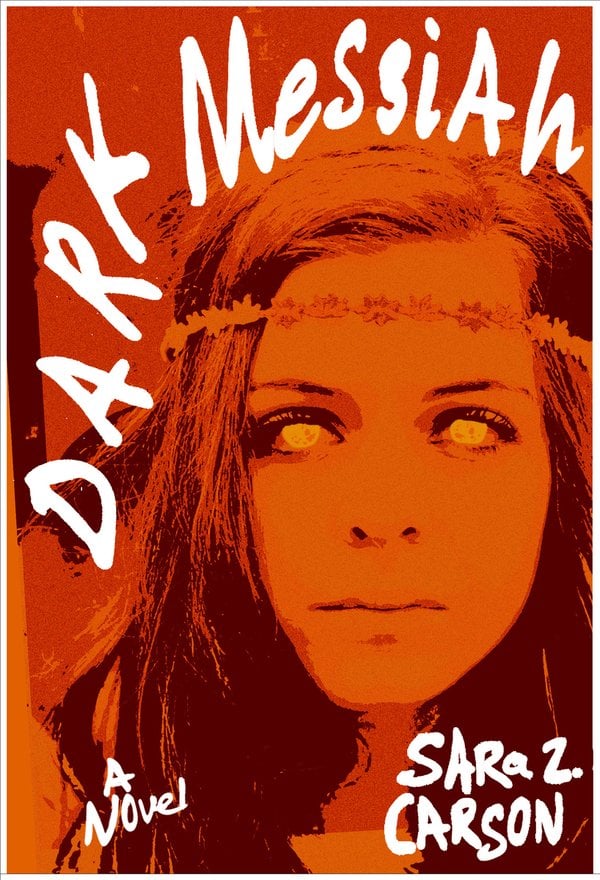
We don’t have a lot of information about Judy—about what she hoped for and dreamed of, what she wanted to be, who and what she loved. I wanted to give that to her through Nell, my own teenaged protagonist in Dark Messiah, who has been brought into an organization that was going to give her a sense of direction and help her heal from the bad decisions one makes as a teenager. Once the easy answers give way to something darker, she’s left at the dark crossroads of understanding if the end justifies the means, if salvation is attainable, and if she even wants to survive.
The cynic in me recognizes that Judy Houston and her family did not fit the traditional profile of the rank-and-file members of Peoples Temple. They were white, and they had enough privilege to draw the attention of leadership and media when others could not. Nell inherits that same unearned visibility. I gave her privilege on the page because Judy had a version of it in life, whether either of them asked for it or not.
Nell’s privilege gives her access to leadership, to the preferential treatment that some members receive, and she becomes aware, as time passes, of the role that privilege plays in her own experiences and ability to survive.
Nell is, of course, fiction. So is the cult she joins, the people she meets, and “Dad,” the man at the center of it all. Recent years have given me plenty of monstrously behaved men from whom to draw inspiration, from politicians to actors to executives.
My mind and my heart are always drawn back to that hope, the hand-clapping, the forced happiness of that moment in which Congressman Ryan—who would die less than twenty-for hours later because of Jones—stated, “I can tell you right now that the few conversations I’ve had with some of the folks here already this evening that whatever the comments are, there are some people here who believe that this is the best thing to ever happen to them their whole life.”
The sincere hope that this meant the storm had passed is written on her face as the camera sweeps by.
I want that to be real for her. And for all of them.
***

Sara Z. Carson
Sara Z. Carson is a public relations professional who lives with her family in Brooklyn. Dark Messiah is her first book.