

The Sordid History of New York City's Nightclub Crime Scene
Jason Allison dissects 5 headline-grabbing moments that inspired his new novel
Nightclubs encourage depravity. I think that’s why I was drawn to them, despite being a straight-edge square. The New York City spots of my youth offered seminude dancers, sex and coke in the bathrooms, eye-opening gender fluidity, and a pulsing beat that pushed the crowd onto the floor. Tunnel, Limelight, Club USA, Roxy, Mars, Twilo, and Palladium all pulsed with an energy I never found anywhere else.
Not that I was cool, you know? But I had aspirations. Then I joined the NYPD, and police work changed my opinion of the scene.
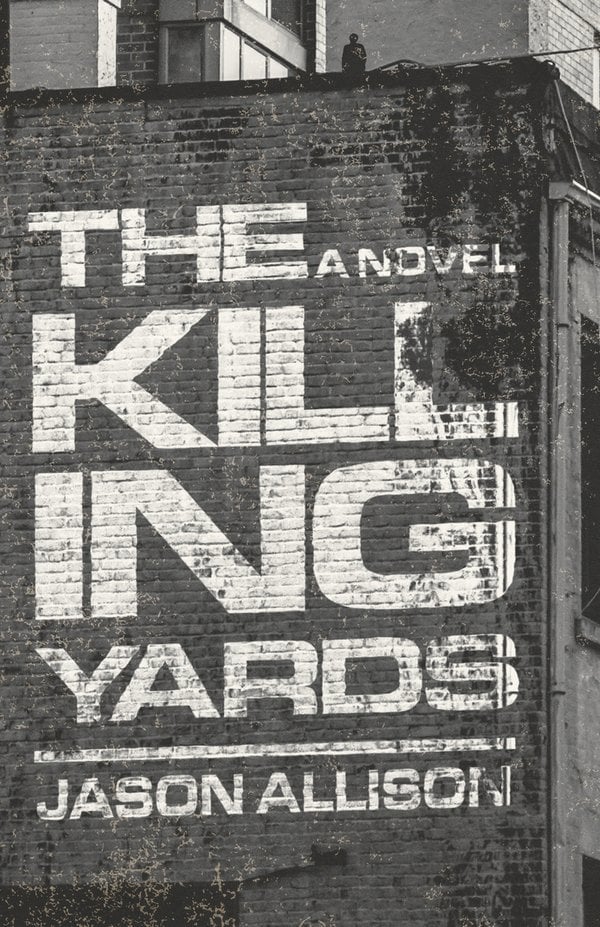
Cormac McCarthy wrote in Blood Meridian, “There is no such joy in the tavern as upon the road thereto.” And he’s right. It comes down to combustibility. Clubs are sweatboxes packed with testosterone and liquor and drugs and money. Fights popped off on the regular; gunshots sometimes followed. The long history of crimes linked to NYC nightspots helped inspire my novel, The Killing Yards, which chronicles an underworld war to control Manhattan’s hottest club.
Here’s a taste of the real-life mayhem that goes down when the music gets turned up.
*
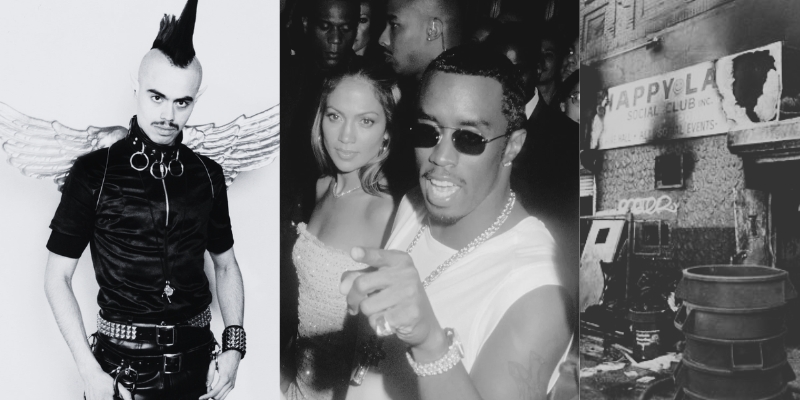
Sean Combs and Jennifer Lopez Arrested After a Shooting in Club New York, 1997
Before he was a convicted sex offender, Combs/Diddy/Puff Daddy circled a different kind of violence. On December 27th, 1999, the NYPD charged him, Jennifer Lopez, and Jamal “Shyne” Barrow with weapons charges after a shooting inside Club New York wounded three. The beef popped off after Matthew “Scar” Allen traded words with Combs’ crew. Puffy allegedly tossed a pistol from his fleeing Lincoln Navigator; Shyne dropped his into the SUV’s footwell.
I cannot convey how huge a story this was at the time (we didn’t have Instagram, ok?). Combs and J Lo were dating, Tupac had gotten killed in 1996, Biggie went down a year later, and the Bad Boy/Death Row Records feud still percolated. After a seven-week trial featuring sixty witnesses, a jury acquitted Diddy on all counts. But we all know how his story ended.
Steven Venizelos Murdered Inside The World, 1991
Located in the East Village, The World built its rep in the 1980s as a hyper-trendy destination for the uber artsy and downtown chic. But neighbors complained about noise and violence, and the place lost its liquor license in 1989. Steven Venizelos bought and reopened The World the following year—without squaring away the whole legal right to serve alcohol issue. The NYPD shut the place down after just three nights. The World hosted a few private events and booze-free nights for underaged kids, but the spot mostly stayed closed—and hemorrhaged cash.
On June 28th, 1991, a worker found Venizelos dead on an interior balcony. He’d taken two rounds to the face and one to the chest from a small caliber revolver. There were no signs of a struggle, indicating Steven knew his killer. Like so many murders in the days before ubiquitous surveillance and DNA and cell phones, the case quickly went cold. Venizelos’s murder remains unsolved.
Terrence Davis Killed Outside Tunnel, 2001
Remember what I said about combustibility? Davis—all of sixteen when he died—is the prime example of knucklehead violence amplified by booze and the beat. After a dance floor dispute, security showed Davis and his crew the door. A mid-ejection chain snatching only made a dicey situation worse.
On the street, the parties concerned immediately got into a brawl. Davis got stabbed, his boys let rounds go, another victim went down, shot but alive; we’re talking a full-on mini riot at 3 a.m. Davis’ friends rushed him to St. Clare’s Hospital in Hell’s Kitchen, but he didn’t survive. They were kind enough, however, to bring the gun they’d used in the shooting, which the NYPD recovered from their SUV outside the ER. We don’t catch the smart ones.
Tunnel, it should be noted, was one of the many clubs owned by Peter Gatien, a nightlife legend and frequent target of local and federal law enforcement. He’ll pop up again in a few.
“Angel” Melendez Killed and Dismembered by Michael Alig and Robert Riggs, 1996
We’ve reached the big one. The lurid, sensational story that spawned James St. James’ excellent nonfiction book Disco Bloodbath and the less excellent Macauley Culkin movie Party Monster. In the mid-nineties, Michael Alig was the king of the Club Kids, a crew of professional party boys (and girls). Extravagant and outrageous by design, they drew crowds and condemnation. And ingested all the drugs.
Angel Melendez was one of Alig’s dealers, and Alig owed him. On March 17, 1996, an argument brewed up, ending with Alig and “Freeze” Riggs killing Melendez and chopping up his body in their Manhattan apartment. Allegedly high (which seems totally believable), Alig and Riggs packed Melendez’s body into suitcases, hailed a cab, and dumped him in the Hudson. Despite Alig telling anyone with an ear he’d killed Melendez, the disappearance went unresolved until September, when kids playing on the Staten Island waterfront stumbled onto the corpse-stuffed bag. As one did in 1990s New York.
All that time the NYPD was busy trying to flip Alig against—wait for it—Peter Gatien, who law enforcement believed was running an open-air drug market in Tunnel. City officials wanted Gatien’s clubs shuttered, his liquor licenses revoked, and the man imprisoned. The gruesome killing of Angel Melendez tanked their Alig-as-star-witness plan.
In October of 1997, Alig and Riggs pled guilty to manslaughter. Alig got paroled in 2014, and the SELECT Fair showcased his artwork the following year. In 2020, he OD’ed on heroin. In 1998, a jury acquitted Gatien of federal charges related to a years-long DEA investigation. He’d later plead guilty to tax evasion and get deported to his native Canada, where he opened yet another nightclub. Angel Melendez never got his shot at redemption.
The Happy Land Arson, 1990
The worst fire to hit NYC since the Triangle Shirtwaist Company disaster consumed an illegal Bronx nightclub on March 25th, killing eighty-seven Honduran immigrants. A man who’d argued with his ex, a worker at the club, got tossed by security. Enraged and possibly intox, he filled a jug with $1 worth of gas from a nearby station, threw the container into the club and set it off.
Flames blocked the spot’s only exit, and smoke took victims down fast. Some bodies were found in piles; others on barstools, still clutching their drinks. A grizzled, seen-it-all detective I met once spoke of the fire’s aftermath with a haunting solemnity. Because the scene was horrible—and could have been prevented.
Sixteen months earlier, the state had rescinded Happy Land’s liquor license. Reports cited a lack of sprinklers, fire exits, and emergency lighting. The City lodged an order to vacate in November of 1988, but the party went on. In July 1989, the owner got pinched for selling alcohol without a license. But the party went on. And kept on, until one angry man lit a match.
Are nightclubs dangerous? They’re not safe, that’s for sure.
Do I regret all those nights I spent in them? Not a chance.
***

Jason Allison
A native New Yorker, Jason Allison spent two decades with the NYPD, mostly as a detective. He now resides in Massachusetts with his wife and their Golden Retriever. The Killing Yards is his first novel.