
Thomas Kenniff on Writing a Prosecutor After Twenty Years as a Defense Attorney
The author of Tuxedo Park mulls the courtroom questions only legal fiction can ask.
For the last two decades I have made my living defending people the government has accused of crimes. When I finally sat down to write a novel, I handed it to a prosecutor.
That surprised me more than it surprised anyone who knows me. I spent twenty-five years trying criminal cases before I ever tried to invent one. I prosecuted hundreds as an assistant district attorney and defended soldiers as a JAG officer, including from a law office I stood up in a combat zone in Iraq. For the last twenty years I’ve been a defense attorney in New York, most notably for Daniel Penny. I’ve sat at both tables.
The reason isn’t nostalgia for my old side. It’s that once I started looking for the decision a story could be built on, I kept arriving at the same one, and it doesn’t belong to the defense.
Start with the charging decision, because fiction gets it exactly backward. On screen, a prosecutor stares out a window, wrestles with his conscience, and decides to do the right thing.
In a real district attorney’s office the question is narrower and far less cinematic: can I prove this beyond a reasonable doubt to twelve people who did not see it happen? Not whether he did it. Not whether he deserves it. Whether I can prove it. Those are different questions, and the distance between them is where most of the actual work of American criminal justice takes place.
That distance is the most interesting thing I know about the criminal law, and it sits entirely on the prosecutor’s desk. He is the only person in the building who has to decide, before anyone else weighs in, what a case is worth—and to live with the possibility that he is right about the man and wrong about the proof. A defense attorney is handed the case he has. A prosecutor chooses.
Fiction flatters that choice and then misunderstands it. It gives the prosecutor the moral center by default, as though the job were mainly a matter of conscience, and demotes the defense attorney to obstacle. Both are compliments nobody earned. The job is judgment under uncertainty, performed on a deadline, with somebody’s life on the other end of it.
Fiction also cannot tolerate how slowly any of this moves. A film compresses a homicide case into two hours; television gives it forty-two minutes. Last year I defended a man in DeKalb County, Alabama, who shot a neighbor on his own front porch. The shooting was in May of 2023. He was not indicted until February of 2024. The trial did not begin until March of 2025, and the charges were not dropped until that July. Two years and two months of a man’s life, most of it spent waiting.
There is no montage for that stretch. There is only the waiting, and what the waiting does to a family.
Nor is the work built on surprises. The unannounced witness, the document produced mid-cross, the confession delivered from the stand—it happens, but nowhere near as often as we are conditioned to believe, because discovery rules exist precisely to prevent it. Real advantage comes from preparation so thorough it is tedious to describe: knowing the file better than the other side does, anticipating the answer before you ask the question, and having the discipline not to ask the one question too many.
The hardest thing for a novelist to accept is that juries frequently decline to provide an ending. A story needs a verdict. Real juries hang. In that Alabama case the jury deadlocked, the judge declared a mistrial, and months later the district attorney decided not to try it again. No verdict, no scene on the courthouse steps—just an ending that arrived sideways, in a court filing, long after everyone had gone home.
Endings can also arrive in ways nobody at either table would have outlined in advance. In the Daniel Penny case, after a nearly two-month trial, the jury spent days deadlocked on the top count. The district attorney’s office dismissed that count during deliberations, and the jury returned a verdict of not guilty on what remained. Whatever else it was, it was not a third act.
And most cases never reach a courtroom at all. The overwhelming majority resolve in pleas, in hallways, in conversations no novelist would dramatize because nothing about them looks like drama. That is not a scandal; it is how a system with finite resources absorbs an infinite number of disputes. But it means the trial—the thing every legal thriller is built around—is the exception, not the rule.
For years I’ve fielded the same well-intentioned questions at social gatherings. What’s the most interesting case you’ve ever handled? What’s it like knowing your client may be guilty? How do you defend those people? None of them lend themselves to pithy cocktail party answers, and the last one least of all.
Nobody has ever asked me how I prosecuted those people. That question is assumed to have an easy answer, which is exactly why it doesn’t. The seat everyone thinks they understand is the one I wanted to write from.
Because there is one thing fiction can do that a trial record never will. A trial is built to answer a narrow question about a narrow set of facts. It is not built to explain why a person did what they did, what it cost the people around them, or what becomes of everyone still standing after the verdict comes in.
The rules of evidence exist in large part to keep all of that out of the room. A novel is the only place I know to put it back—and I gave it to the man who has to decide, before anyone else does, what the case is worth.
***

Thomas Kenniff
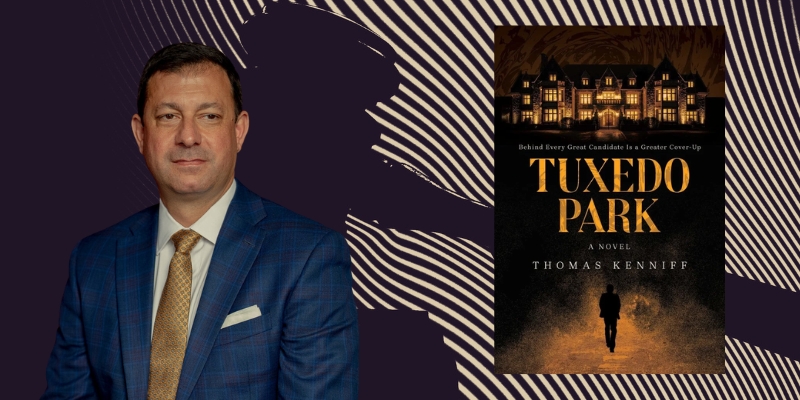
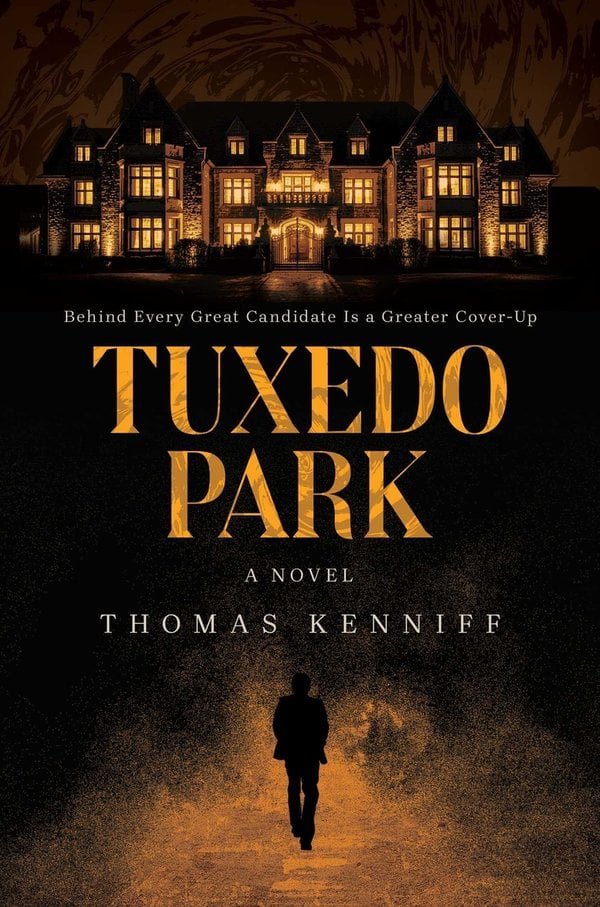
Thomas Kenniff is a founding partner of Raiser, Kenniff & Lonstein, a former Manhattan assistant district attorney, and a retired Army JAG major who served in Iraq. He represented Daniel Penny at trial. He is the author of the novel Tuxedo Park (Post Hill Press), out August 18.