
How Karen Mack Used Her Vegas Childhood to Co-Write One of Summer's Biggest Thrillers
Memories of an old-school city, from the co-author of 'The Kings of Vegas'
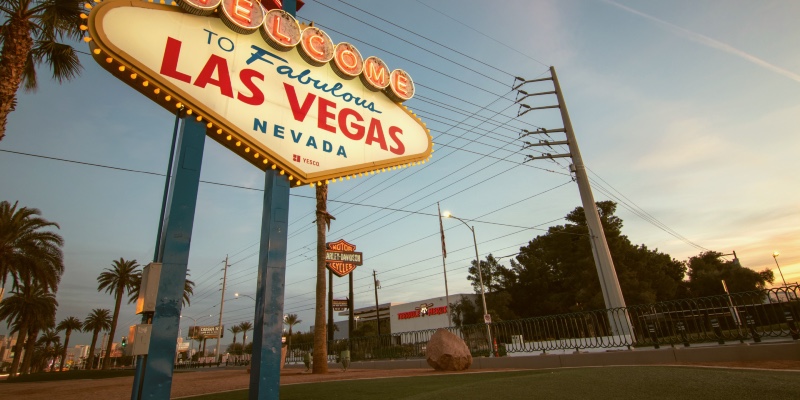
Whenever I’d tell people I grew up in Vegas, they always looked puzzled. The question they’d ask was, “You mean people actually live there?” Times have changed, obviously, with all the retirees moving in, but that wasn’t the case when I was a kid. My mother used to say that people would turn their back on her when she said she was from Las Vegas, assuming anyone who lived there, had to be part of the mob–or worse. We weren’t “connected,” as they say, but a lot of our friends were. Our neighbors had names like Ice Pick Willy and Dave “the Man” Berman. In fact, I thought “the man” was a normal middle name.
I grew up in a pink stucco house with palm trees in the yard. We had desert tortoises as pets and my father, to save a buck, would haul sand from the desert and dump it in our sandbox. My mother stopped the practice when she found scorpions crawling around our sand toys.
My family has lived in Las Vegas for three generations. My grandfather moved there in 1929, during the Great Depression, when his distiller (home distillery for bootleg whiskey) blew up in Los Angeles and he fled to Nevada. The move was fortuitous. Boulder Dam was being built and there was an influx of workmen who needed groceries, booze and a place to blow off steam. My grandfather was happy to accommodate, opening a small grocery store, junk yard and a Ma and Pa casino called The Jackpot.
This was back when cowboys rode horses down Fremont Street. A small town. Everyone knew everyone. As they say, “a sunny place for shady people.” So, when people ask me about early Las Vegas, I tell stories passed down from my grandfather and father about a city where opportunity and danger lived side by side.
My father graduated from Las Vegas High School—as did I. He married my mother when she was just 22 and she still remembers meeting Bugsy Siegel with his “beautiful blue eyes.” That was, of course, before he was assassinated through the window of his Beverly Hills home.
As teenagers, we raced pickup trucks to Sunrise Mountain. My Girl Scout troop rode horses (western of course). Our French class held its annual brunch at the Sahara, with showgirls from the Lido de Paris as special guests. The Rat Pack hung out in the Sands steam room. Mobsters skimmed casinos. The FBI tapped our phone lines. It was a colorful childhood.
Here’s a story for you. My dad used to hang out in the steam room at the Sands Hotel with the Rat Pack. One night he came home and told us that “Frank (Sinatra) got mad at someone, punched him out and drove his golf cart into the swimming pool.” And they had “a hell of a time getting it out.”
My father eventually became President of a Las Vegas casino. That’s when I became a casino kid. We would hang out at the casino—play elevator tag, roam the “Eye in the Sky” (the cat walks above the casino equipped with one-way mirrors where we could spy on the gamblers below). And if we could, sneak into the Counting Room where men were divvying up mountains of cash. Some money went here, some there and some of it got stuffed into duffle bags and carried away to Brooklyn, Detroit or the Cayman Islands.
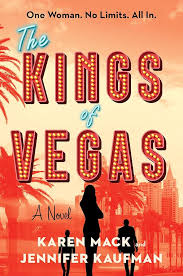
THE KINGS OF VEGAS draws on these experiences, recreating the vivid and authentic world I knew as a child growing up there. Many of the characters are composites of real people and the details of their lives—the way they worked, how they lived, and the rules they followed—are grounded in reality. The story captures the energy, risk, and layered social dynamics of Las Vegas, offering readers a window into a world where families like mine had to lead a normal life in a place that was not at all normal. It was glamorous, dangerous, and unlike anywhere else on earth. THE KINGS OF VEGAS is fiction but based on memories of how it was and how we lived.

Karen Mack
Karen Mack has co-written four novels with Jennifer Kaufman, including the national bestsellers Literacy and Longing in LA and Freud’s Mistress. She is also a Golden Globe and Emmy award–winning film and television producer. Mack was raised in Las Vegas, Nevada, where her family has lived for generations.