

Which international thriller should you stream this weekend?
A creepy classic, a cool French thriller, or a new film from Iran?
This month, I’m recommending three very different films—Nosferatu, which I first watched ages ago and am planning to see again on the big screen for Halloween; Le Samouraï, the inspiration for the Filipino filmmaker, Isabel Sandoval’s new film, Moonglow (2026); and It was Just an Accident, which I watched on a recent flight from Mumbai back to New York. Yes, good things sometimes happen on airplanes.
Creepy, early horror film… silent, yet chilling
Nosferatu (1922)
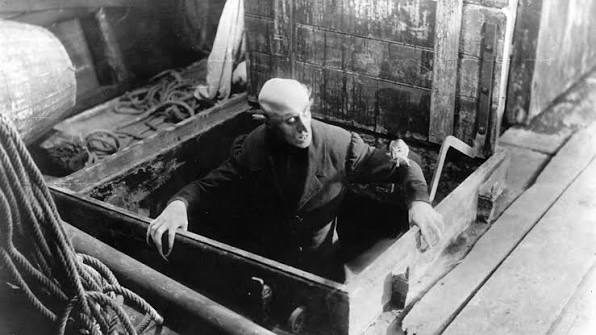
The great German silent-era filmmaker, F. W. Murnau, made Nosferatu: A Symphony of Horror in 1922. It was an unofficial adaptation of Bram’s Stoker’s Dracula, which was published in 1897. I know the idea of watching a silent film can be daunting, but you should give this one a chance. The visuals are haunting—moody and filled with dread—and more clearly than most, Nosferatu makes you see how much of the power of cinema comes from images, the way they’re shot and combined, as well as actors’ faces and bodies, and not from dialogue.
Max Schreck gives an unforgettable performance as Count Orlock, a vampire who lives in a gothic castle in the Carpathian Mountains, and preys on the wife of his estate agent. Like Boris Karloff in Frankenstein, Schreck physically embodies his character, and creates a look and persona for the vampire that I don’t believe has ever been matched.
Murnau’s Nosferatu has influenced filmmakers across the decades, inspiring a 1979 remake by Werner Herzog, starring Klaus Kinski. Robert Eggers (The Witch, The Northman) staged a performance of the film at his high school (I wish I could have seen it), and later remade Murnau’s classic into a feature, Nosferatu (2024), starring Bill Skarsgård and Lily-Rose Depp. My advice: start with the original first.
Directed by F.W. Murnau, roughly 94 minutes, depending on the version you’re watching.
Streaming: Tubi (free with ads), Kanopy (free with your library card), and other platforms.
Note: this is a silent film with title cards and musical accompaniment.
Stylish, cat-and-mouse thriller
Le Samouraï (1967)
If you’re in the mood for a highly aestheticized thriller, look no further than Jean-Pierre Melville’s Le Samouraï starring Alain Delon as lone hitman Jef Costello. Moving effortlessly through the streets of Paris in his gray trenchcoat and fedora (today, he might be a Dior model), Costello carries out his assassination without a hitch. He lives alone in a crumbling apartment—its gritty gray walls complement the color of his trenchcoat—with only a caged bird for company. His lover, Jane Lagrange (played by Delon’s then-wife, Nathalie Delon) is equally gorgeous, as is Valerie (Cathy Rosier) the mysterious pianist at a nightclub that Jef frequents.
After his successful kill, Costello is brought into a police lineup but released for lack of evidence. Still, a dogged policeman thinks that something isn’t quite right about him. Now the tables are turned, and the cool assassin has become the one in the crosshairs.
Apart from the performances, pacing, and look of the film, I particularly appreciated that both female leads remained true to themselves and weren’t punished by the narrative for being whom they were (far from a given in a noir from this period). This is especially noteworthy for Valerie, a Black woman, who holds her own throughout.
Directed by Jean-Pierre Melville, 105 minutes.
Streaming: Criterion Channel
Morally complex and challenging
It was Just An Accident (2025)
One of the reasons I don’t mind long plane journeys is that I get to tune out daily life and spend hours catching up on films or TV series that I may have missed. This time, I was browsing through the “world cinema” selections on a flight from Mumbai, when I spotted It was Just An Accident by the award-winning Iranian director, Jafar Panahi.
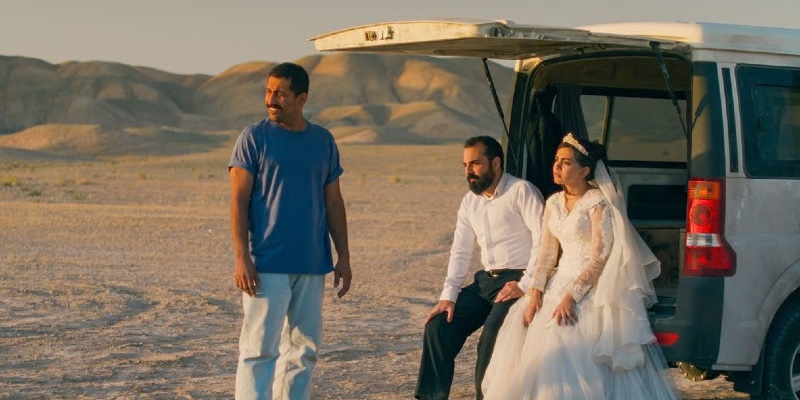
Mechanic Vahid (Vahid Mobasseri) encounters a man he believes to be his sadistic tormentor from prison (whom Vahid has never seen but recognizes on account of the sound made by his prosthetic leg). Vahid kidnaps his tormentor and is about to bury him alive in the desert when the man denies being Vahid’s captor, and Vahid begins to have doubts.
He assembles a group of fellow former-detainees and together, in a series of incidents that veer from humorous to horrific, they must decide who this man is and whether to take their revenge. The stakes are high. If they let him go, and he is indeed a functionary of the regime, he is sure to come after them.
Throughout It was Just An Accident, I wondered how Panahi was able to shoot this film in Iran, since the film is so clearly a critique of the current government. Panahi has been imprisoned twice, and it turns out that the film was “shot in secret on the streets of Tehran.” Some of the actresses in the film don’t cover their heads, and I wonder what might happen to them now that the film has been released. “[The Iranian government knows] that, as a social filmmaker, the moment they put me in any situation I’ll make a film about it,” Panahi has said. “If they hadn’t put me in prison, I would certainly not have made It Was Just an Accident.”
Directed by Jafar Panahi, 103 minutes.
Streaming on multiple platforms

Radha Vatsal
Radha Vatsal is the Film/TV Columnist for CrimeReads. She is the author of No. 10 Doyers Street and the Kitty Weeks mysteries, and her essays have appeared in the The New York Times, The Atlantic, the Los Angeles Review of Books, and elsewhere. She holds a Ph.D. in Film History from Duke University. You can find her on Instagram or email: rvatsal@lithub.com