Why Kevin Wade Chose to Write Crime Novels Set in the North Shore of Long Island
Living in a small, illustrious region, and writing about its mysteries.
I have written two novels, Johnny Careless and One Good Eye. They share two main things in common; both revolve around the adventures of a small-town Chief of Police named Jeep Mullane, and both take place within about a ten-mile radius of the small town where I’ve lived for twenty-five years. The North Shore of New York’s Long Island is about 30 miles east of Manhattan, its hamlets and villages strung along the coast of the Long Island Sound. It doesn’t have anything like the saturated branding of the Hamptons, but it already had famous colonies of great wealth, with their attendant grand estates, exclusive clubs, and skeleton-filled closets, when most of the Hamptons were still potato fields.
I’d always wanted to write a mystery novel. A detective or cop story with a relatable wiseass hero who navigates all sorts of treachery and peril, as well as his own faults and fears, with humility and wit. I’d read and reread hundreds of them and I was familiar enough with the range of conventions to at least know where to aim.
By the onset of the 2023 Writers Guild strike, after forty-odd years of writing for the stage, screen and television that felt like it had gone by quickly, I had nothing but time for the first time in a long time, and there’s no time like the present, as they say. I rifled through my writer’s toolbox, but I couldn’t find a hook. So I sat down at my desk, rolled up my sleeves, and scanned the bookshelf for a favorite author to “pay homage to” or “steal from”.
I landed on John D. MacDonald and his beloved, Florida-centric Travis McGee series. McDonald lived in and wrote from a home on Siesta Key, off Sarasota. In his gifted hands, Florida’s history and geography, and the natives, arrivistes, and transients who populate it, combined to become as compelling and multidimensional a continuing character in the books as the hero McGee himself. A crime story set in a landscape and culture that the author had a personal relationship and some personal beefs with landed on me as both promising and likely classified as being in the Public Domain. There is a long tradition of it in crime fiction — Robert B. Parker and Dennis Lehane’s Boston, Patricia Cornwell’s Viginia, Raymond Chandler and Joseph Wambaugh and Michael Connelly’s Los Angeles, Tana French’s Ireland, etcetera. In the little corner I would stake out was the late Nelson DeMille’s wonderfully entertaining novel The Gold Coast and, well before that and most famously, The Great Gatsby. Fitzgerald’s fictional East Egg and West Egg are generally thought to be stand-ins for North Shore enclaves. And I’m sure it’s been pitched before that the elastic quality of that masterpiece can handle one more tag – crime novel. Yes, the murder comes at the end, but it’s still a dead body floating face-down in a pool.
Johnny Careless opens with the corpse of Police Chief Jeep Mullane’s boyhood running mate Johnny Chambliss washed up on a local beach, missing most of his face. Jeep identifies him by the faded tattoo of lacrosse sticks on his ankle, a match for the one on Jeep’s own ankle, a relic of their shared youth. Johnny grew up the privileged scion of a wealthy and powerful family, Jeep the only son of an NYPD cop. The origins of their friendship – the very Long Island sport of supercharged travel-teams lacrosse – puts this odd couple together in their formative years in a way that felt authentic and organic to the setting. So I ran with it. The range of suspects and question marks – Johnny’s imperious, opaque parents, a betrayed ex-wife, a bitter former coach, and a few others – were culled from friends, frenemies, legends, lore and unsolved mysteries around the towns. The most significant twist, as well as the solution to the mystery of how Johnny met his end, popped up in a way that could only appear in an area like the North Shore. Some truly passionate skiers there – of a certain economic class – take summer holidays skiing the Andes in Chile. Johnny’s teenaged tryst with a hotel waitress there back in the day and the appearance of a teenaged Chilean player in a car-theft ring working the North Shore in the present collide in a way that’s both surprising and, given the careless callousness of Johnny and his clan, entirely possible.
The writing went quickly. The upstairs/downstairs, haves-and-have-lots-less dynamics that I hoped would help flesh out the storytelling provided as rich a vein as I had hoped for. The book didn’t make anybody’s bestseller list but did receive some very generous and supportive reviews and an Edgar Awards nomination for Best First Novel.
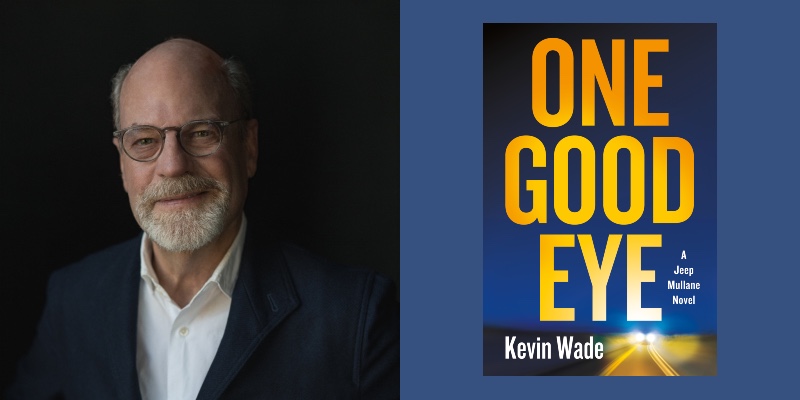
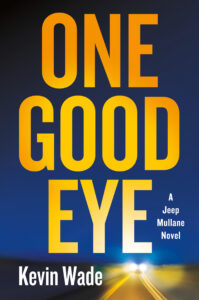
The second book, One Good Eye, did not go so quickly. This tangled web starts with Jeep Mullane sticking his nose in a blackmail scheme. The target, Jenny Racine, is the damaged and magnetic girl-next-door of Jeep’s high-school years, now a rich and famous entrepreneur. She returns to their hometown, and so under Jeep’s police command, for a victory lap that crashes full speed into an dug-up secret from their past.
My attempted reach was longer and broader; the mystery was not a cause-of-death investigation but an ongoing, escalating pileup of crisscrossed criminal activity. I took a lot of wrong turns that I’d managed to avoid in the first book. I worked to find my way back to ‘writing where I know’ or at least sticking to that roadmap as best I could. As it turns out, the old bad-guys chestnut Motorcycle Gang is alive and well and trafficking vices on Long Island, and rare collectible comics can have a usefully anonymous role in suburban blackmail payouts. I finished it a few days before the publisher’s deadline. It comes out on August 11th.
I don’t know if the bluebird of happiness is in my own backyard, but I did find a couple of books there.
***

Kevin Wade
Kevin Wade’s credits include the stage plays Key Exchange, Mr. & Mrs., and Cruise Control, and the screenplays for Working Girl, True Colors, Mr. Baseball, Junior, Meet Joe Black, and Maid in Manhattan. For television, he led the CBS drama Blue Bloods as the writer, showrunner, executive producer, and back-seat driver over its fourteen-year run. His first novel, Johnny Careless, was published in 2025.