
Fair Play Mysteries and Mother Nature's Fury
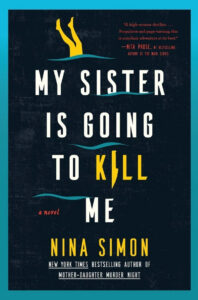
Nina Simon on deadly settings, human motives, and exploding mules
If you’re writing a Grand Canyon murder mystery, you’ve got to learn every way the Canyon can kill someone.
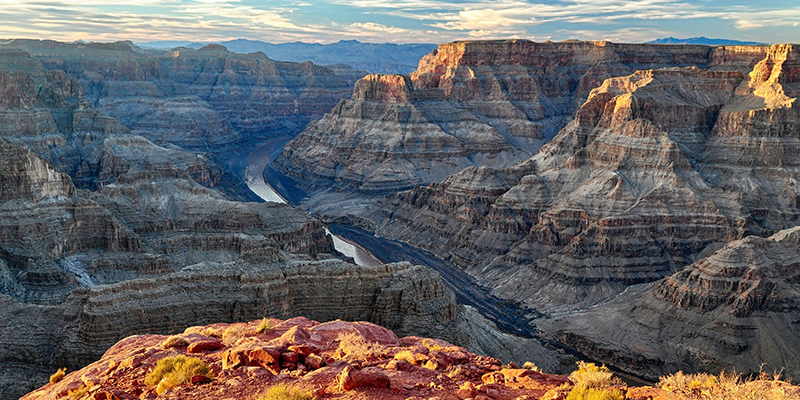
At least, that was my initial perspective when I started working on my new novel, My Sister Is Going to Kill Me. I’d already rafted, backpacked, and hiked in the Canyon. But I needed more dangerous material. My research trips were gorgeous, challenging, and perfectly safe. Well, almost perfectly safe. There was the time I had to find a non-existent trail in the dark, the time I hiked up to the North Rim without food, and the time I debated a delicate family issue with my sister on a slippery precipice… but those were my own bone-headed choices. Fundamentally, the Grand Canyon treated me well. Better than well. I fell absolutely in love with it.
This is not good. I write crime fiction, not romance. I wanted to represent the glory of the Grand Canyon in My Sister Is Going to Kill Me, but moreso, I wanted the setting to contribute to the murderous human drama in the story.
I shifted my research from experiential to armchair, with helpfully disastrous results. I read ranger post-mortems, watched GoPro footage, and asked rafting guides to imagine the worst things that could happen on river trips. I read dozens of adventure thrillers. I went down a YouTube cavern of Colorado River fiascos almost as deep as the canyon itself. I learned about people surprised by storms, snakes, rockslides, flipped boats, lost gear, and all the other dangers that turned joyful pleasure cruises into nightmares.
How much of this gruesome research made it into the pages in My Sister Is Going to Kill Me? Almost none of it.
The more I learned about the ways Mother Nature’s fury could wreak havoc on rafters, the more cautious I became about unleashing it in my story. The things that make a murder mystery satisfying—deliberate plotting, parsing of human motives, the ways peoples’ choices (heroes and villains alike) drive outcomes—are rarely delivered by the random, world-altering violence of wild places. It’s hard to write a fair play mystery if a landslide can smash someone out of the book for no reason.
I ended up inventing three “natural laws” about the dangers of the great outdoors to write My Sister Is Going to Kill Me:
- Nature’s threats are capricious, but a good murder is never random.
- Natural disasters generates pressure, not body count. How characters respond to those pressures is interesting and useful to the story.
- The ways characters use nature to further their own motives are rich sources of human conflict and deadly choices.
Here’s a bit more on each of these laws.
A GOOD MURDER ISN’T RANDOM
Whether you’re in the Grand Canyon or on top of a mountain, most of the dangers Mother Nature throws at us are capricious. Storms don’t decide whom to hit. Boulders do not choose under whose feet to give way. There are many deadly accidents in the Grand Canyon, but most are caused by human inattention, fatigue, and overheating. The sun comes for us all.
In this way, the Grand Canyon is a terrible fictional villain. Murderers target with intention. Mystery readers want villains who make deliberate choices, obscure their motives, threaten their victims, and dispatch them while maintaining devious alibis. We do not want villains who randomly drop a rock onto someone’s head or swallow someone in a massive wave.
There are some novels that incorporate the randomness of nature’s violence beautifully—for example, Chris Bohjalian’s safari thriller, The Lioness, deploys deadly animals to create shocking wows. But in a fair play mystery like MY SISTER IS GOING TO KILL ME, I opted to treat the Grand Canyon as a compelling setting, not a villain. I gave Mother Nature the ability to raise the stakes, but not the agency to kill.
NATURE CREATES PRESSURE. HUMANS RESPOND TO PRESSURE.
Raising the stakes is one of the most important tools in a thriller writer’s arsenal. And while I committed to not allowing the Canyon to kill anyone in my novel, I did go overboard in my first draft regarding the volume of natural disasters affecting the characters. Halfway through that draft, while contemplating a scene in which a murder coincided with a monsoon, a rock slide, and an exploding mule, I called my editor at William Morrow, Liz Stein. I asked Liz how much was too much when it came to a dangerous setting.
She told me something that changed everything.
Liz said: “What matters isn’t how a natural disaster endangers the characters. It’s how the characters react to the dangerous situation and what that reveals about their relationships, motivations, and personalities.”
Basically: the exploding mule is not what matters. What matters is person who uses the distraction of the exploding mule to hide a gun under a rock, protect a loved one, or throw someone into the Colorado river.
(Please be advised that there are no exploding mules in My Sister Is Going to Kill Me, due to the universal law that only extremely brave or foolhardy authors can get away with killing fictional animals. But I really wanted to explode that mule. Hence, this example.)
Fundamentally, murder mysteries are about people. Some people find joy in nature. Some find terror. And some use nature to create terror for others.
One of the books I devoured while writing was a rock climbing coming-of-age novel called Crux by Gabriel Tallent. The two teenage protagonists aspire to climb a dangerous crag. The rock itself—its steepness, the thinness of the holds, the lack of protection from a bad fall—puts the teens under incredible pressure. But it’s the choices the protagonists make—to climb or not to climb, to attempt the committing move or play it safe—that make them interesting. It’s their choices that make the story.
Similarly, following my editor’s advice, I decided to use diverse natural dangers of the Grand Canyon to put pressure on my characters, but then I focused on how those characters responded to each other in the context of those pressures rather than how they, say, moved out of the way of the exploding mule.
PEOPLE USE NATURE FOR THEIR OWN DEVICES
In a recent Crimereads essay, Natalie Moss urged us to move beyond ‘Man vs. Nature’ narratives, noting that the power balance between humans and wild creatures has fundamentally shifted. As Moss wrote: “We live in a time where human intervention has irreversibly changed the Earth’s surface. We have become the force of nature.”
To that end, I became interested not only in how fictional characters respond to natural pressures, but also how humans wield and weaponize nature for their own purposes. In My Sister Is Going to Kill Me, the murder mystery concerns a skin care company that plans to commercialize a psychotropic plant, Datura, that grows prolifically in the Grand Canyon. The company executives see Datura as their ticket to wealth, but other characters see the plant as a risk, a poison, or, in the words of one rafting guide, “a murderous goddess of hell.”
Fundamentally, murder mysteries are about people. Some people find joy in nature. Some find terror. And some use nature to create terror for others.
It is our human nature—the ways we scheme, threaten, hurt, evade, investigate, and confront the violence in each other’s hearts—that makes a story rich. Nature can be powerful, dangerous, and capricious. It can create pressure, and it can be used as a weapon or a source of salvation. But ultimately, it’s not about the poisonous plant, the fierce rapid, or the exploding mule. It’s about the people. What people do, with and to and for each other, is what makes crime fiction worth reading.
***
Nina Simon
Nina Simon is a New York Times bestselling author of family-centric whodunits including “Mother-Daughter Murder Night,” a Reese’s Book Club pick, and her recently published latest, “My Sister Is Going to Kill Me." Before turning to fiction, Nina wore many hats: NASA engineer, slam poet, game designer, museum director, and nonprofit CEO. Her work on community participation in museums, libraries, parks, and theaters has been featured in the Wall Street Journal, the New York Times, NPR, and the TEDx stage. Born and raised in Los Angeles, Nina now lives off-the-grid in the Santa Cruz Mountains with her family. More information can be found on her website, ninaksimon.com.