
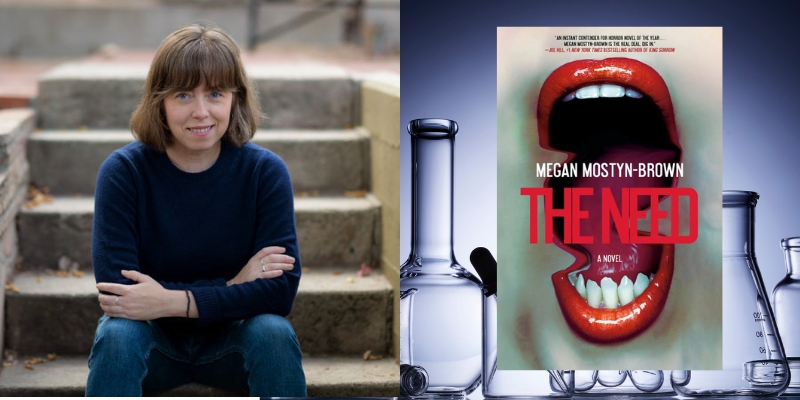
Megan Mostyn-Brown on Grounding Fictional Horror in Real Science
The author of The Need researches genetics to craft a compulsive cannibal character
Genetics have fascinated me since I was a teenager. My interest didn’t spawn from a well-meaning science teacher or an Oscar winning documentary. My interest in genetics came from one man—Dean Koontz. I devoured his novels as a teen. Like full on blew through his shelf at the local public library in record time. Tales of lab grown monsters and genetically altered dogs. Rare diseases. Secret government scientists. I didn’t care if the science was real or fake—I was in.
There’s something about grounding horror in science that makes it more terrifying. Bodies are weird. We live inside them every day and yet there are still so many things about them that can seem mysterious—scary even.
Sometimes, living in a body feels like driving a very expensive car without a manual. The weird mole on your arm. The cough that won’t go away. The rash you can’t identify. It could be nothing—or a sign that you’re dying. Only a doctor can diagnose you. And not all of us have easy access to one.
I’ve always found genetics particularly scary. Genes can lurk quietly in your DNA for years before they finally appear as a disease or a disorder. They sneak up on you like a home invasion—only in most cases there’s nothing you could do to prevent them. You’re an innocent bystander, saddled with a future you had no active hand in. It was literally predetermined for you. Written in your DNA.
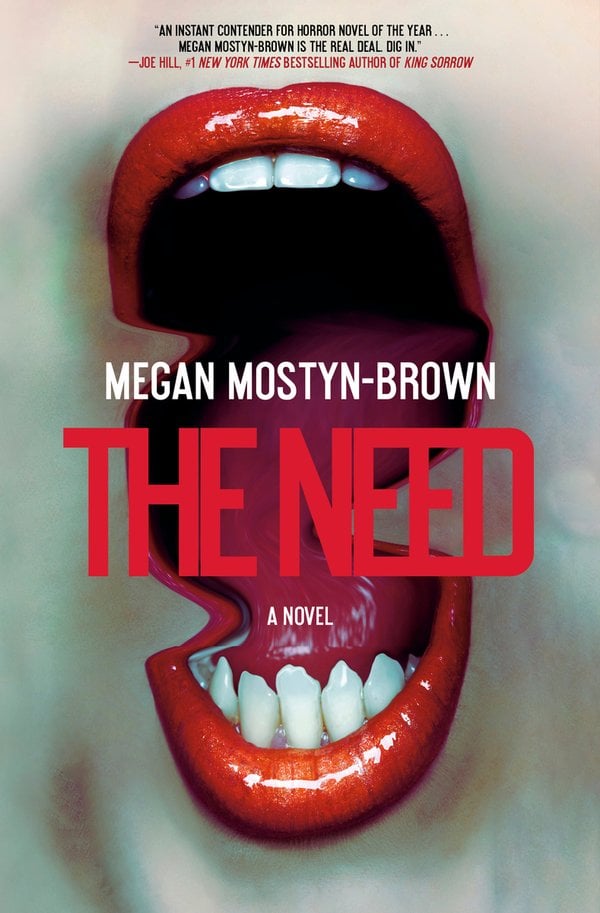
When I started writing my book The Need, I knew I had to try to root it in real world science. The book is about cannibals, which can be a pretty divisive subject matter. Werewolves are strong. Vampires are sexy. Witches have cool powers. But cannibals? They eat people. Sure, Mads Mickelson brought a certain “X factor” to Hannibal Lecter. But it’s hard to have empathy for a serial killer who dines out on his victims—literally.
Unless they can’t help it.
Cannibalism as a genetic disorder is not only a scarier prospect, but it forces the audience to grapple with the morality of people eating people in a different fashion. Someone who eats people because they want to, is an immediate villain.
But someone who needs to eat people for health reasons is a completely different story. It suddenly isn’t a moral failing on the character’s part– it’s their only way to survive. It’s hard to villainize someone who is sick. Someone who is saddled with a struggle they didn’t ask for. Someone who doesn’t have any hope of finding a cure.
It’s also more relatable. Suddenly, the audience is forced to consider what they would do if they were struggling with this disorder. Would they let themselves perish? Figure out how to satiate themselves ethically? Or go on a murderous rampage in the name of survival? The answers aren’t that simple because the line between good and bad are suddenly blurry. Very blurry.
It’s one thing to say someone’s a genetic cannibal. It’s another thing to actually write it. I knew that in order to make it feel like a realistic diagnosis and not just something characters say, I had to do research. Like I said I’ve taken a few online genetics courses here and there, but the truth is, I don’t have a brain for science, so I didn’t really retain the nitty-gritty details when I did take those courses. If you quizzed me on mitochondria I’d fail miserably.
Because of my non-scientific brain, I didn’t want to get bogged down in details. There is no such thing as a genetic cannibal, and I don’t have the science background to render one in medical textbook type detail. Bless the people who do. But early on in the process I released myself from the pressure of doing so, which honestly made the journey to create the disorder much more enjoyable.
I researched sickle-cell anemia, hemochromatosis and you’re run-of-the-mill anemia. I also did a deep dive into prion diseases, specifically kuru—which is something people get from eating human meat. I looked into gene therapy, lab set up and the proteins human meat provides, that animals don’t. I tried to stick to easily digestible articles, rather than scientific abstracts.
Even though I was making up science, I knew that if I got too down and dirty with the science, I would just confuse myself. I’m no Dean Koontz.
The last thing I did, which I highly recommend, is I reached out to a geneticist through the Hollywood, Health & Society at the USC Annenberg Norman Lear Center. The Hollywood, Health & Society is a resource for entertainment. They pair writers with experts in a variety of fields who can help with research in a wide variety of topics.
The geneticist I was paired with went through all the passages of my book that contained any science and helped me craft something that felt realistic. Even though I wasn’t getting super technical with my terminology, I was still happy to have someone check my work.
I hope that what I crafted makes the reader feel like genetic cannibalism could exist in the real world. That it creeps them out. That it makes them question what they would do if they were in my character’s shoes. Because horror that feels real is always more terrifying.
***
Megan Mostyn-Brown
Megan Mostyn-Brown is a playwright and TV writer/producer whoʼs written for shows on Fox, Netflix, AMC, Amazon, and Paramount+. The Need is her first book. She lives in Los Angeles with her partner, Jordan, and her dog, Tuesday.